When Rosimah Mohammad made the decision to take her nine-year-old grandson Muhammad Afif Ikhwan on a motorcycle ride from Kampung Pudu in Segamat to a programme at Felda Palong Timur, she was motivated by a simple yet powerful desire: to transform her grandson's childhood dream into reality. The journey through the oil palm estate on a hot Johor day represented more than just a practical means of transport—it embodied a grandmother's unwavering commitment to nurturing her grandson's aspirations and creating memories that would define his formative years.
Muhammad Afif had long harboured an admiration for Prime Minister Datuk Seri Anwar Ibrahim, an aspiration that consumed his thoughts as the event approached. The anticipation proved so overwhelming that the boy struggled to sleep in the nights leading up to the programme, his mind racing with the possibility of coming face-to-face with the person he so deeply admired. For many children in Malaysia, meeting the nation's leader remains an extraordinary privilege, and for this nine-year-old, the prospect elevated his excitement to levels that kept him restless until the moment of departure.
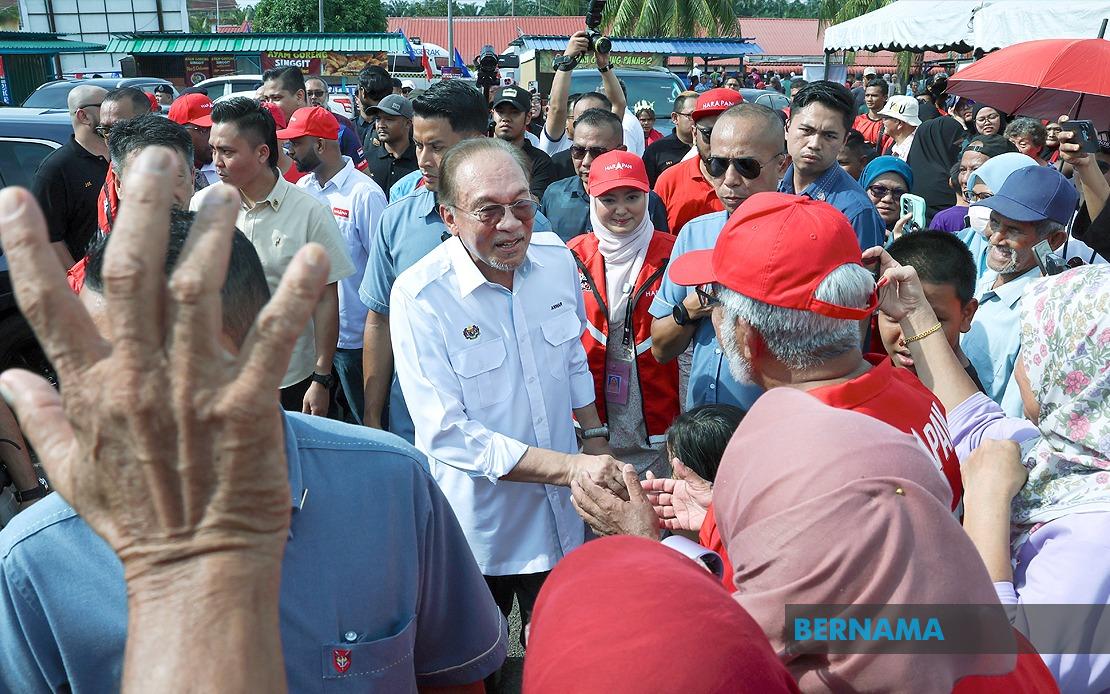
Upon arriving at the venue, Rosimah strategically positioned herself and her grandson near the pathway to the stage, calculating the best vantage point from which Muhammad Afif could observe the Prime Minister at close quarters. When Anwar began his procession towards the stage while acknowledging the gathered crowd, the moment Muhammad Afif had been dreaming about finally arrived. The boy gathered his courage and pushed through the throng of people, extending his hand in a gesture that transcended the typical formal greeting—it represented the culmination of months of anticipation and yearning.
What neither Rosimah nor her grandson could have anticipated was that their act of determination would be rewarded far beyond their expectations. Anwar not only reciprocated the handshake but made an extraordinary decision to invite the young boy onto the stage to stand alongside him during his address to the assembled crowd. This spontaneous gesture transformed a standard political event into a defining moment in Muhammad Afif's life, one that would be etched into his memory for decades to come. Rosimah, witnessing her grandson's profound joy in that instant, felt the weight of her effort vindicated as she observed the shock and happiness wash across his face.
The emotional resonance of this encounter extended far beyond the momentary interaction at the event. When Siti Aishah Shaik Ismail, PKR deputy information chief, visited the family's home in Kampung Pudu the following day representing the Prime Minister, she brought with her tangible tokens of Anwar's personal appreciation. A bicycle, school bag, and pair of shoes were presented as gifts, but more significantly, these items served as official acknowledgment from the nation's highest office that Muhammad Afif's dream was valued and worthy of recognition. The visit itself, orchestrated at Anwar's specific request, underscored a broader political message about accessibility and the importance of connecting with ordinary Malaysians, particularly the younger generation.
Perhaps most tellingly, Rosimah shared an intimate detail about how profoundly the experience had affected her grandson's emotional landscape. Each night, Muhammad Afif clutches the very shirt he wore during his meeting with the Prime Minister, using this tangible memento as a conduit to revisit the overwhelming emotions of that momentous day. This simple habit reveals how children internalize transformative experiences, converting a single encounter into a source of continued comfort and inspiration. The shirt has become more than clothing—it is a physical anchor to a moment when his hero acknowledged his existence and validated his worth.
For Malaysian readers, this narrative carries implications that extend beyond the heartwarming personal story. It illustrates the power of direct political engagement and the lasting impressions created when leaders demonstrate genuine interest in their constituents, particularly young citizens who will shape the nation's future trajectory. In an era where political cynicism often dominates discourse, this spontaneous moment of human connection between a sitting Prime Minister and a nine-year-old boy demonstrates that meaningful politics can exist at the personal, relational level. The story also reflects the resourcefulness and determination characteristic of Malaysian families, where grandparents continue to play crucial roles in nurturing children's aspirations and facilitating their life experiences.
The journey through the oil palm estate itself symbolizes the lengths to which ordinary Malaysians are willing to go in pursuit of meaningful experiences for their loved ones. The Felda scheme, historically central to rural Malaysian development, becomes the backdrop for a contemporary story about ambition, family bonds, and the enduring appeal of connecting with those in positions of influence. Segamat's location in the heart of Johor's agricultural region means that such journeys through plantation areas are commonplace for residents, yet this particular ride acquired significance through its purpose and outcome.
This incident also underscores the importance of political leaders remaining accessible and responsive to the aspirations of ordinary Malaysians, particularly children whose formative experiences with public figures can shape their future civic engagement. When leaders take moments to recognize and encourage young people's dreams, they invest not just in individual happiness but in the nation's social fabric and future democratic participation. Muhammad Afif's experience, multiplied across thousands of similar positive interactions, contributes to building a generation with faith in their leaders and confidence in the system of governance.
The grandmother's motorcycle ride through the oil palm estate has thus transcended its literal origins to become a story about human connection, familial dedication, and the transformative potential of a single moment of recognition. In Rosimah's determination and Anwar's responsiveness, we witness two expressions of commitment to matters beyond mere procedure or protocol—one rooted in family devotion, the other in political awareness of what truly matters to constituents. For Muhammad Afif, the shirt he hugs each night carries the weight of validation that his dreams are worth pursuing and that the world can sometimes surprise us with unexpected generosity.

