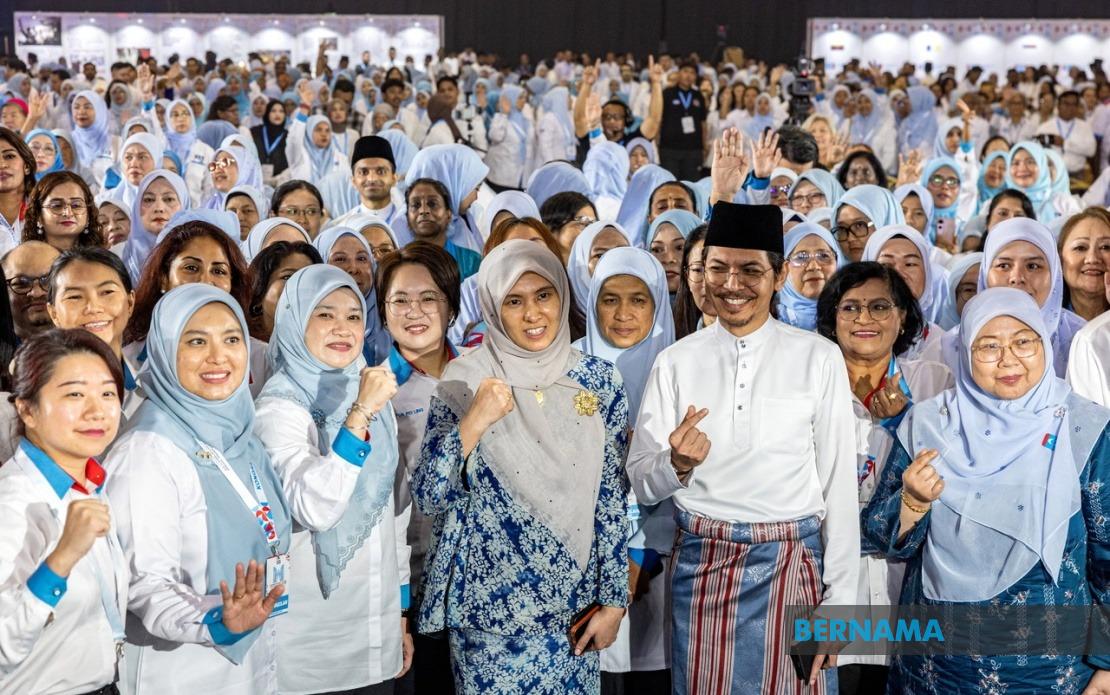
Elected representatives must establish robust networks at the community level to sustain meaningful engagement with voters, according to Muhammad Kamil Abdul Munim, chief of Angkatan Muda Keadilan (AMK). Speaking at the conclusion of debates surrounding the AMK Chief's Policy Address during the 2026 AMK National Congress in Melaka, he underscored how such connections form the bedrock of effective political leadership and party sustainability in Malaysia's competitive political landscape.
Maintaining proximity to constituents serves multiple strategic purposes beyond symbolic representation. Muhammad Kamil emphasized that strong community relationships enable political parties to effectively communicate their messaging while simultaneously insulating themselves against narratives advanced by opposition groups. In an era where political narratives are contested across multiple platforms and forums, the ability to engage directly with voters becomes increasingly valuable for controlling how parties and their policies are perceived at the local level.
The AMK chief articulated a comprehensive framework for political effectiveness that extends well beyond traditional campaign mechanisms. He identified five interconnected pillars: the physical presence of leaders in communities, the clarity and consistency of party messaging, the organizational machinery that drives activities, the communication channels through which parties reach constituents, and critically, the grassroots networks and community relationships that serve as the foundation for all other efforts. This integrated approach suggests that success requires simultaneous attention to multiple dimensions rather than concentration on any single element.
Muhammad Kamil's comments reflect a broader concern within Malaysian political circles about the sustainability of party organizations and ideological coherence. He advocated for a shift in electoral preparation strategies that moves beyond exclusively national-level narrative crafting. Instead, parties must simultaneously address specific issues and priorities that matter to communities within their respective constituencies, acknowledging that voter concerns are frequently rooted in local contexts rather than national abstractions.
The question of party renewal and member education emerged as another significant theme in his address. Muhammad Kamil specifically called upon local-level leaders to intensify engagement programmes and activities involving grassroots members, with particular emphasis on relatively new party recruits. This focus on onboarding processes reflects recognition that sustained party growth depends on converting newly recruited members into ideologically committed activists who understand and embrace the organization's core principles.
Particular concern was evident regarding the potential disconnect between party members and organizational ideals over time. Muhammad Kamil warned against allowing parties to gradually drift from their foundational mission and objectives, a tendency he suggested could occur when members lack comprehensive understanding of their roles and why they committed to their particular political platform. The risk, as he framed it, is that organizational membership becomes transactional rather than transformational, with members participating without deep conviction about the movement's broader purpose.
The emphasis on ideological clarity carries implications for how Malaysian political parties structure their operations. Rather than treating member education as a peripheral activity confined to periodic training sessions, Muhammad Kamil's remarks suggest it should be embedded within regular grassroots activities and community engagement programmes. This integration would enable parties to continuously reinforce their ideological foundations while simultaneously demonstrating their value and relevance to constituents.
For regional observers monitoring Malaysian politics, these comments illustrate ongoing tensions within the coalition system between centralized strategic planning and localized political work. The AMK chief's remarks implicitly acknowledge that national-level coordination alone cannot substitute for the granular political organizing that builds durable voter support. This recognition aligns with global democratic trends showing that parties with strong local organizational capacity tend to maintain more stable electoral bases.
The timing of these remarks, coming before the 2026 electoral cycle, suggests Malaysian political parties are already recalibrating their approaches in anticipation of voting. Muhammad Kamil's emphasis on grassroots preparation indicates that Angkatan Muda Keadilan intends to invest substantially in community-level organizing rather than relying primarily on media campaigns or national platforms. This strategy may provide competitive advantages in constituencies where opposition parties have similarly invested in grassroots networks.
The broader context for these observations includes Malaysia's evolving political economy, where younger voters increasingly demand authenticity and demonstrated commitment from political representatives. Grassroots networks that create genuine interaction between leaders and constituents can more credibly demonstrate such commitment than distant, centralized political machinery. This generational shift may partly explain why experienced party leaders are now emphasizing the importance of local engagement as a strategic priority.
Muhammad Kamil's framework for political effectiveness through grassroots engagement also reflects lessons from recent electoral outcomes across Southeast Asia. Countries including Thailand, Indonesia, and the Philippines have demonstrated that parties successfully combining strong national narratives with intensive local organizing capacity perform more effectively during elections. Malaysian parties increasingly recognize that replicating this combination is essential for maintaining or improving their electoral performance.
The challenge facing Malaysian political organizations lies in translating such strategic objectives into sustained implementation. Maintaining continuous community engagement requires consistent resource allocation, sustained attention from leadership, and development of local cadres capable of managing grassroots activities. These investments demand long-term commitment rather than periodic campaign-season mobilization, representing a significant shift in how some Malaysian political parties have historically organized their work.
As Malaysia approaches its next electoral cycle, Muhammad Kamil's emphasis on grassroots networks and community relationships signals that competitive political parties increasingly recognize the limitations of traditional campaign approaches. The interplay between national narrative control and local community engagement will likely define electoral success for Malaysian parties over the coming years, making his remarks about organizational renewal and grassroots connectivity particularly consequential for understanding how the country's political landscape may evolve.

