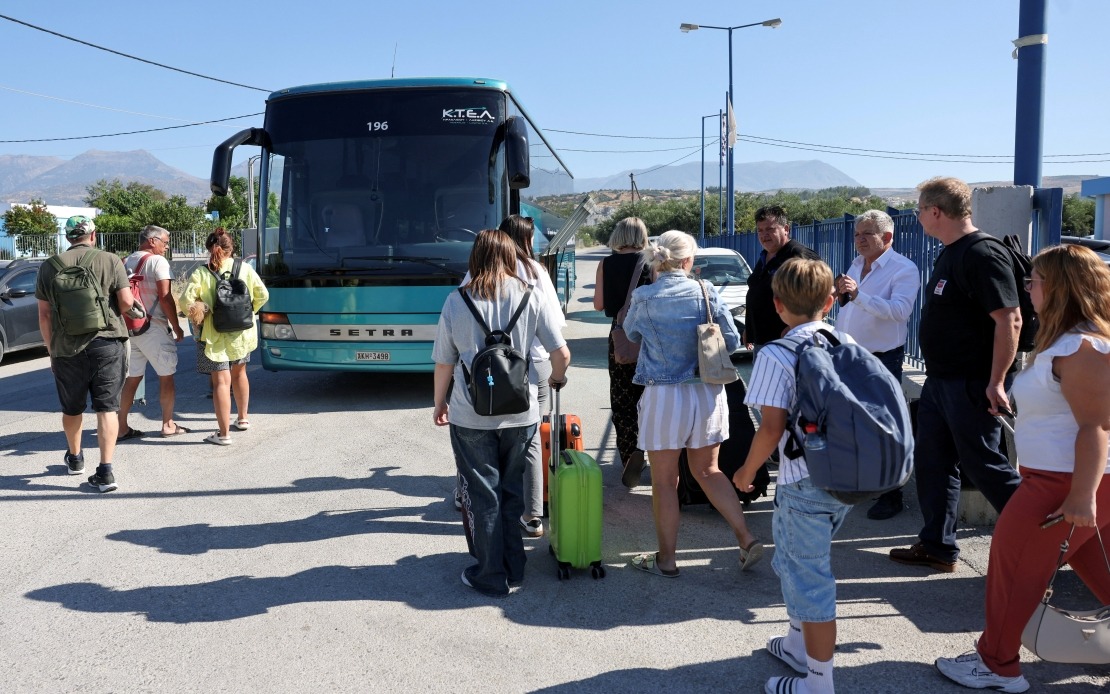
Greece has declared a state of emergency in the Agios Vasileios municipality located within the Rethymno regional unit on Crete, as one of the country's most severe active wildfires continues to devastate the southern Mediterranean island. The declaration came as local authorities ordered the immediate evacuation of approximately 8,000 residents and tourists from areas threatened by the advancing blaze, marking an escalation in response to what has become the nation's most pressing fire crisis in recent times.
The wildfire has spread across an extensive front spanning more than 15 kilometres, according to reports from Greek national broadcaster ERT. The sheer scale of the fire front demonstrates the severity of the situation, particularly given that Crete, Greece's largest island, contains significant concentrations of both permanent residents and seasonal tourists during the summer months. The rapid expansion of the fire across such a considerable distance reflects the challenging conditions under which firefighting operations are being conducted.
Multiple fire fronts have emerged across the region, complicating containment efforts. A particularly concerning development occurred when a new blaze ignited near Asomatos village and advanced towards Preveli, a renowned coastal destination famous for its pristine beach and long-standing appeal to international visitors. This movement towards populated tourist areas raised alarm among authorities managing both the immediate emergency response and the broader implications for Crete's vital tourism sector during peak season.
Extreme meteorological conditions have severely hampered firefighting capabilities and created dangerous circumstances for emergency responders. Wind gusts reaching velocities of up to 125 kilometres per hour, combined with visibility reduced to near-zero levels, have rendered aerial firefighting operations impossible. Water-dropping aircraft and helicopters, typically crucial assets in combating large-scale wildfires, have been grounded due to the hazardous conditions, forcing authorities to rely heavily on ground-based firefighting teams.
The evacuation process has presented significant logistical challenges. Approximately 700 evacuees were accommodated overnight in an indoor sports facility, while thousands of others sought refuge with relatives or friends across safer areas. Tourists were systematically relocated to hotels situated in regions unaffected by the fires, requiring coordinated efforts between local authorities and hospitality operators throughout Crete.
A dramatic maritime rescue operation underscored the severity of the situation along Crete's threatened coastlines. The Hellenic Coast Guard coordinated the evacuation of 51 people from the Preveli coastal area, utilising a patrol vessel assisted by two civilian boats operating under challenging sea conditions. These evacuees were successfully transported to Agia Galini, a seaside settlement further along the southern coast, demonstrating the multi-faceted approach required to manage the crisis.
Ground-based firefighting resources have been mobilised extensively throughout the affected regions. More than 190 firefighters, accompanied by fire engines and specialised forest firefighting teams, have been deployed across multiple active fire fronts. Local authorities and civilian volunteers have supplemented professional firefighting personnel, yet the fierce winds and difficult terrain continue to obstruct their containment efforts. The substantial commitment of human resources reflects the critical nature of the emergency and the determination of authorities to prevent further territorial losses to the flames.
The damage inflicted by the wildfire extends across diverse categories of land and property. Farmland and cultivated agricultural fields have been destroyed, threatening local food production and farmers' livelihoods. Grazing areas that support livestock operations have been consumed by flames, and residential properties have been damaged or destroyed entirely. Livestock losses have compounded the economic toll on affected communities. These impacts will extend far beyond the immediate crisis period, affecting regional agricultural output and individual family circumstances for months to come.
Authoritarian investigations into the fire's origin remain ongoing, though weather conditions continue to dominate the response narrative. Crete has been placed under a very high wildfire risk warning as meteorological forecasts indicate that strong winds are expected to persist. This meteorological outlook suggests that the crisis management phase may continue for an extended duration, with authorities unable to relax vigilance even as initial fire containment progresses. For Malaysian and Southeast Asian readers, the Crete situation illustrates the escalating wildfire challenges facing Mediterranean and southern European regions, a pattern increasingly relevant to tropical and subtropical fire-prone areas as climate patterns shift and extreme weather events intensify globally.

