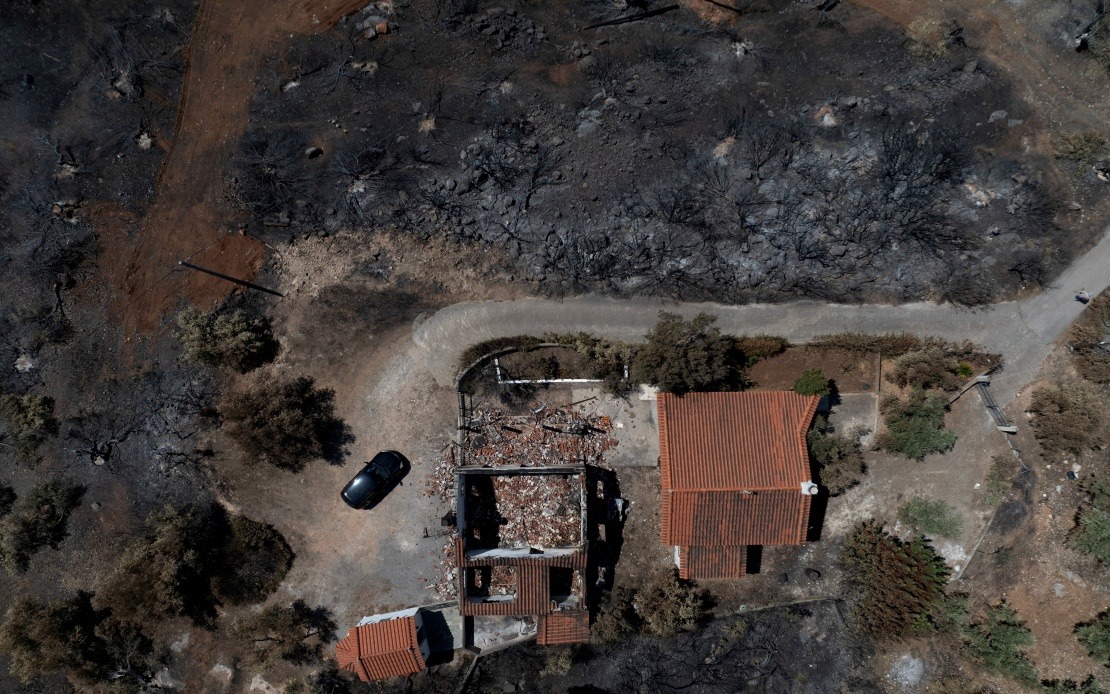
Greece has issued its highest-level wildfire warning for the densely populated regions surrounding its capital, signalling an escalating crisis that reflects the mounting climate pressures facing the Mediterranean. Authorities in Athens activated a "red alert" on Wednesday for Thursday's conditions across Attica, Viotia, and Evia, classifying the wildfire danger at the maximum Category 4 level. The declaration underscores how climate change is intensifying fire seasons across Southern Europe, with temperatures soaring and moisture levels plummeting during the critical summer months.
The activation of this extreme alert status triggers a comprehensive emergency response spanning the entire civil protection apparatus. Greece's National Civil Protection Mechanism shifts into full operational mode, deploying coordinated teams from the fire service, police, and military across affected areas. Ground and aerial patrols fan out across vulnerable territories, while the government imposes strict restrictions on vehicle access and visitor movement in forests and other high-risk zones. These preventive measures reflect lessons learned from previous catastrophic fire seasons that have devastated communities and destroyed critical infrastructure.
Public authorities have issued urgent appeals for residents to exercise extreme caution, emphasizing that even minor human activity could trigger uncontrollable conflagrations under such hazardous conditions. Any activity with ignition potential—from unattended campfires to improperly discarded cigarettes—poses genuine threats when atmospheric and vegetation conditions align to create tinderbox scenarios. The messaging carries particular weight given that many Mediterranean fires originate from human negligence rather than natural causes, suggesting that community cooperation becomes as vital as official response capacity during peak-risk periods.
Even as officials announced the new alert, firefighting crews were simultaneously battling a blaze that erupted near Koropi, southeast of Athens, demonstrating the relentless pressure facing emergency responders. The fire ignited in low vegetation within the Driggia district around midday on Wednesday, quickly drawing substantial resources to contain its spread. The response mobilized 52 firefighters including three specialized forest commando units, supported by 14 ground vehicles, four helicopters, and two water-dropping aircraft coordinating aerial suppression efforts. Modern technology including thermal and optical drone cameras provided real-time intelligence, while local authorities contributed water-tanker support, illustrating how contemporary firefighting integrates multiple resources and expertise levels.
The intensity and coordination of this single-fire response hints at the sophistication required to manage Greece's wildfire challenge, yet such deployments strain finite resources when multiple simultaneous incidents erupt across the country. An arson investigation team was dispatched to establish whether the Koropi fire resulted from deliberate action, accident, or natural ignition, information that could inform prevention strategies if patterns emerge. The methodical investigation process runs parallel to active suppression, balancing immediate firefighting needs against long-term accountability and understanding of fire causation.
Simultaneously, firefighting operations continued against a far more destructive blaze that ignited the previous week and has since consumed vast territories across the Viotia region before spreading into western Attica. Satellite monitoring through the European Union's Copernicus system confirms this major fire has charred approximately 14,424 hectares—an area exceeding 35,000 acres—destroying forests, agricultural land, and potentially threatening communities and infrastructure across its path. The sheer scale of this ongoing conflagration illustrates how individual fires can evolve into regional disasters within days, particularly when weather patterns and terrain conspire to accelerate spread and intensity.
The human cost of Greece's wildfire battle crystallized tragically on Sunday when two firefighting helicopters collided midair during operations against the major Viotia-Attica blaze. A Danish pilot and a Greek aerial coordinator perished in the collision, a reminder that aerial firefighting operations themselves carry substantial risks despite their critical importance in modern fire suppression. These deaths underscore the exceptional dangers that personnel accept when conducting low-altitude aerial work near active fires, amid smoke and thermal disturbances that can compromise visibility and navigation. The incident resonates across the European firefighting community, which increasingly relies on aerial assets to manage fires that exceed ground-based suppression capacity.
Greece's wildfire emergency reflects broader climatic transformation reshaping Mediterranean ecosystems and threatening millions of residents across Southern Europe. Rising temperatures extend fire seasons, reduce vegetation moisture content, and intensify atmospheric conditions that promote rapid fire spread. Countries from Spain to Turkey face similar pressures, creating a regional crisis where multiple nations simultaneously compete for helicopter resources, firefighter expertise, and international assistance during peak summer months. The concentration of hazardous conditions during August—Europe's hottest month—coincides with peak tourist season, multiplying evacuation challenges and community disruption.
For Malaysia and other tropical Southeast Asian nations, Greece's escalating wildfire situation offers cautionary perspective on climate change impacts, even though Southeast Asia faces distinct environmental threats. While the region confronts different fire dynamics rooted in land-use practices and monsoon patterns, the underlying pattern of intensifying climate extremes appears universal. Greece's investment in multi-layered response systems—from satellite monitoring to international aerial resources to coordinated interagency protocols—demonstrates how affluent nations with substantial resources struggle to manage climate-driven disasters. This reality carries implications for developing economies with more constrained budgets and infrastructure, suggesting that adaptation and prevention investments become increasingly critical as climate impacts accelerate globally.

