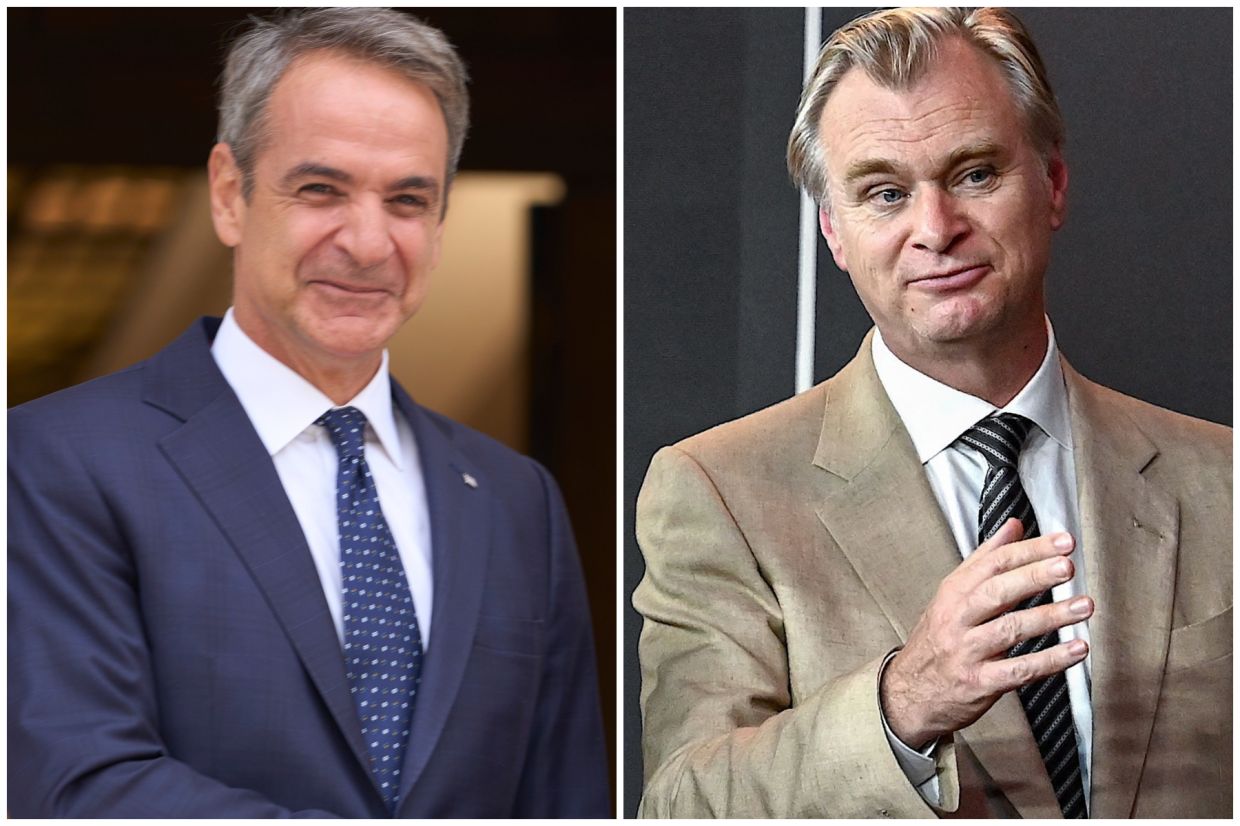
Greek Prime Minister Kyriakos Mitsotakis has extended his congratulations to acclaimed British filmmaker Christopher Nolan, recognising the director's latest cinematic endeavour as a significant catalyst for renewed global engagement with ancient Greek culture and civilisation. The two figures connected via teleconference on Monday, July 27, following the exceptional commercial trajectory of Nolan's film adaptation of Homer's classical epic, which has captured the imagination of international audiences and dominated cinema screens worldwide.
The film's box office performance has been extraordinary by any measure, claiming the top position across US cinemas for two consecutive weeks and accumulating approximately US$640 million in global revenue. This commercial triumph has translated into tangible cultural dividends, with entertainment platforms documenting measurable upticks in consumer interest surrounding classical literature and ancient history. Spotify has specifically reported heightened activity in its audiobook offerings, with translations of Homer's work experiencing surge in downloads and streaming activity, suggesting that Nolan's cinematic interpretation has successfully bridged the gap between contemporary audiences and millennia-old narratives.
In his formal response, Mitsotakis articulated appreciation for what he characterised as the film's contribution to "boosting global interest in ancient Greek civilisation." The prime minister's office released a statement emphasising the productive tension between Greece's profound cultural inheritance and the innovative storytelling techniques that contemporary filmmakers can deploy. "Such productions bridge Greece's rich cultural heritage with contemporary creativity," Mitsotakis observed, framing the project as a mutually beneficial endeavour that elevates both the source material and the filmmaker's artistic vision.
The project's decision to utilise Greek locations for substantial portions of filming has provided additional grounds for official celebration. Messenia and Corinth, both situated within the Peloponnese region of southern Greece, served as key shooting locations. This geographical choice carries symbolic significance, as the Peloponnese functioned historically as the cultural epicentre of Bronze Age civilisation during the period Homer immortalised in his epics, thereby creating authentic geographical continuity between the ancient narrative and its modern visual interpretation.
However, the film has not emerged from production without controversy, both domestically within Greece and internationally across social media platforms. Domestically, Greek cultural commentators have levelled criticism at casting decisions, noting that the production relied heavily on international talent for primary roles, with Greek performers relegated predominantly to supplementary and background positions. This concern reflects broader anxieties within European film industries regarding the dominance of Anglo-American production practices and the sidelining of local talent in heritage-focused projects.
Internationally, the film has attracted criticism from unexpected quarters, most prominently from technology entrepreneur Elon Musk, whose substantial social media following amplifies his commentary on cultural matters. Musk has utilised the X platform repeatedly to express disapproval of Nolan's directorial choices, contending that certain casting decisions constituted a "desecration" of the source material. The billionaire's objections centred specifically on the casting of Lupita Nyong'o in the iconic role of Helen of Troy and the inclusion of transgender actor Elliot Page as the Greek warrior Sinon. These critiques surfaced months before the film's theatrical release, generating substantial cultural discourse that paradoxically may have amplified public awareness of the project.
The casting controversy reflects deeper ideological tensions within contemporary film criticism, particularly regarding how classical narratives should be adapted for modern audiences. Defenders of Nolan's artistic choices have emphasised the director's creative prerogative to reimagine established narratives through contemporary lenses, arguing that classical mythology has consistently evolved across generations and cultural contexts. Critics, conversely, have contended that certain adaptation decisions fundamentally alter the essential character of cherished source material.
Mitsotakis's public endorsement, however, signals the Greek government's strategic alignment with the film's global success narrative, prioritising the tourism and cultural diplomacy benefits derived from elevated international interest in Greek history and heritage. By congratulating Nolan specifically on the "great box office success" whilst simultaneously highlighting production elements filmed within Greek territory, the prime minister positioned Greece as an active participant in, rather than merely subject of, the film's creative process.
For Malaysia and Southeast Asian observers, this episode illuminates broader questions concerning how non-Western nations engage with international cultural productions rooted in foreign classical traditions. As regional film industries develop capacity for larger-scale productions, comparable debates surrounding authenticity, representation, and cultural adaptation will inevitably arise. The Odyssey controversy demonstrates how contemporary casting practices intersect with classical narratives, creating friction points that demand consideration of who possesses authority to interpret historical cultural material for contemporary audiences.
The film's sustained commercial performance suggests that audiences worldwide remain genuinely invested in classical storytelling when presented through sophisticated contemporary filmmaking techniques. For content creators and cultural institutions throughout Asia, this phenomenon underscores the enduring commercial and cultural viability of heritage-focused narratives, provided such projects achieve sufficient production quality and secure adequate distribution mechanisms. The question of how local talent and perspectives integrate into such international productions remains unresolved, presenting an ongoing challenge for the global film industry.

