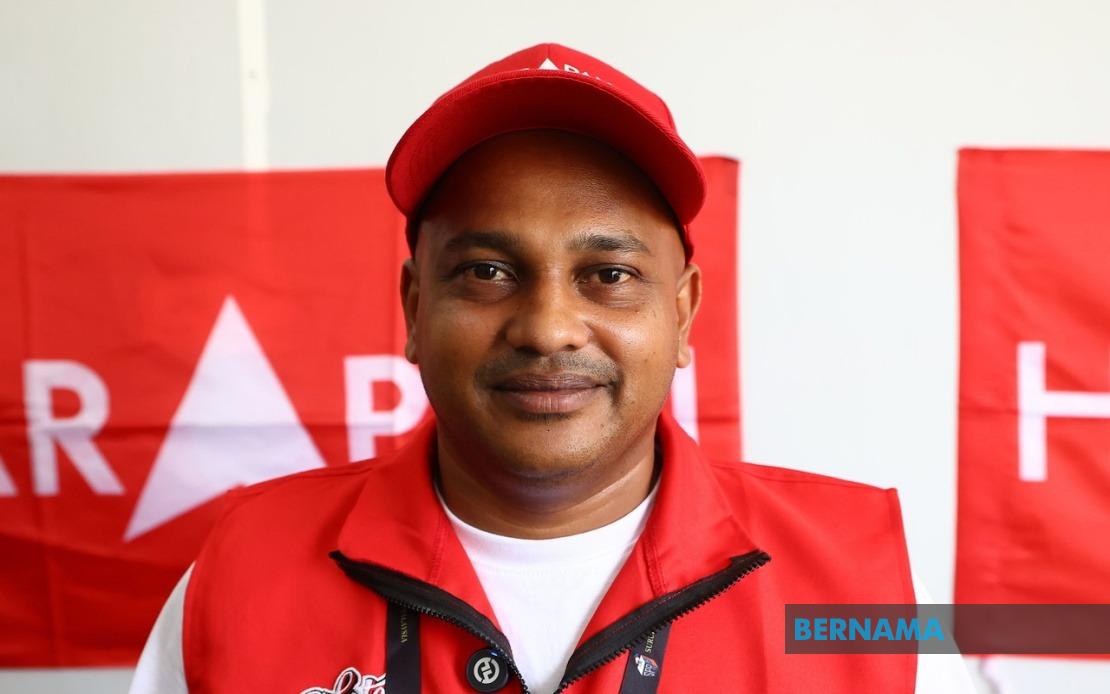
Guna Balakrishnan, the Pakatan Harapan candidate contesting the Layang-Layang state seat in the upcoming Johor election, has committed to a focused initial agenda should voters grant him the mandate. Speaking at the coalition's campaign headquarters in Kluang, the candidate outlined four specific areas he believes require immediate attention, each stemming from concerns raised directly by residents during his constituency engagement efforts. This targeted approach reflects a strategy increasingly common among Malaysian candidates seeking to demonstrate practical, implementable governance rather than sweeping electoral promises.
The four planks of his initial action plan centre on improving street lighting infrastructure, expanding telecommunications and internet services, mitigating wild animal encroachment in residential areas, and stemming the systematic theft of oil palm fruit—a persistent problem in agricultural regions across Johor. Balakrishnan framed these priorities as representative of the most pressing grievances he encountered during door-to-door campaigning, suggesting they reflect genuine community pain points rather than party-driven agendas. This ground-level approach to policymaking represents an attempt to build credibility through responsiveness to local needs rather than broad ideological positioning.
On the street lighting question, Balakrishnan set a measurable but modest target: resolving between 50 and 60 per cent of reported deficiencies within the first 100 days. This circumspect projection may reflect awareness of municipal budget constraints and the logistical complexities involved in upgrading electrical infrastructure across a constituency. By acknowledging that complete resolution would extend beyond his initial period, the candidate demonstrates realism—a quality that can either enhance or undermine voter confidence depending on local expectations. The Layang-Layang constituency encompasses 25,181 registered voters spread across an area where infrastructure provision remains uneven, making the lighting issue both a practical and symbolic concern.
The telecommunications pledge appears more optimistic. Balakrishnan indicated that addressing internet and coverage gaps could be accomplished within the 100-day window because essential backbone infrastructure, including feeder systems, already exists in the constituency. The task, as he articulated it, involves installing supplementary transmitters in underserved zones rather than building foundational networks from scratch. This represents the kind of incremental infrastructure improvement that falling within a representative's purview, especially in constituencies where the private sector has already invested substantially. For rural and semi-urban Johor voters increasingly dependent on digital connectivity for commerce, education, and communication, such targeted expansion carries genuine significance.
The wildlife encroachment issue reflects a growing tension in Johor's development trajectory. As human settlements expand into formerly forested areas and agricultural land fragments habitats, encounters with wild boars, elephants, and other large fauna have multiplied. Residents face crop destruction, property damage, and occasionally direct threats to personal safety. Addressing this requires coordination between state wildlife authorities, local government, and agricultural departments—suggesting that any candidate's ability to deliver concrete results depends heavily on bureaucratic cooperation beyond the state assembly member's direct control. Balakrishnan's inclusion of this issue acknowledges its emotional and material weight in constituent concerns, though actual progress will depend on institutional capacity he may not directly command.
Oil palm fruit theft, while seemingly a niche agricultural concern, represents a significant source of economic loss and frustration for smallholder planters and larger operators alike. Theft from ripening palms is sufficiently organized and persistent in certain areas that it functions as a shadow tax on agricultural productivity. A state representative committed to reducing such losses must coordinate with police, engage plantation management, and potentially support farmer vigilance initiatives. The fact that Balakrishnan elevated this to his top four priorities suggests either substantial theft-related complaints from his canvassing or recognition that palm growers constitute an electorally significant demographic in Layang-Layang.
Beyond his initial 100-day commitments, Balakrishnan's broader manifesto encompasses flood mitigation, road network improvements, digital access expansion, women's entrepreneurship support, enhanced vocational training opportunities, and the establishment of a senior citizen activity centre. This more comprehensive agenda positions him within the contemporary Malaysian development discourse emphasizing inclusive growth, skills development, and social safety nets. The emphasis on Technical and Vocational Education and Training reflects national skills-shortage concerns, while the women's entrepreneurship component acknowledges evolving economic participation patterns. The proposed senior citizen facility addresses demographic aging across Malaysia's constituencies.
The electoral context amplifies the significance of Balakrishnan's platform. Layang-Layang is contested in a three-way race involving Barisan Nasional's Chua Jian Boon and Perikatan Nasional's incumbent Abd Mutalip Abd Rahim. In such fragmented contests, candidates gain advantage by clearly differentiating their proposals and demonstrating specificity rather than generality. Balakrishnan's enumerated 100-day plan provides voters with concrete metrics against which to judge performance—a potentially double-edged commitment that enables accountability but also creates vulnerability if implementation falters.
The timing of the election—scheduled for July 11 with early voting on July 7—compresses the campaign period and elevates the importance of clear messaging. In such compressed cycles, candidates must communicate their platforms efficiently, making Balakrishnan's structured four-point initial agenda an effective communication tool. The approach contrasts with more elaborate manifesto documents that many voters find difficult to recall or evaluate. By anchoring his candidacy to four specific, time-bound objectives, Balakrishnan creates a framework through which voters can assess whether he delivers on his word.
For Malaysian voters increasingly skeptical of political promises, Balakrishnan's emphasis on pragmatic, implementable objectives within defined timelines offers a different pitch than broader ideological appeals. Whether this approach succeeds in Layang-Layang will partly depend on whether the electorate values demonstrated competence and specific deliverables over party affiliation or other factors. The Johor state elections, viewed nationally as a bellwether for peninsular Malaysian politics, will test whether such targeted, accountability-focused campaigning resonates across the broader electorate or remains a niche positioning within competitive constituencies.

