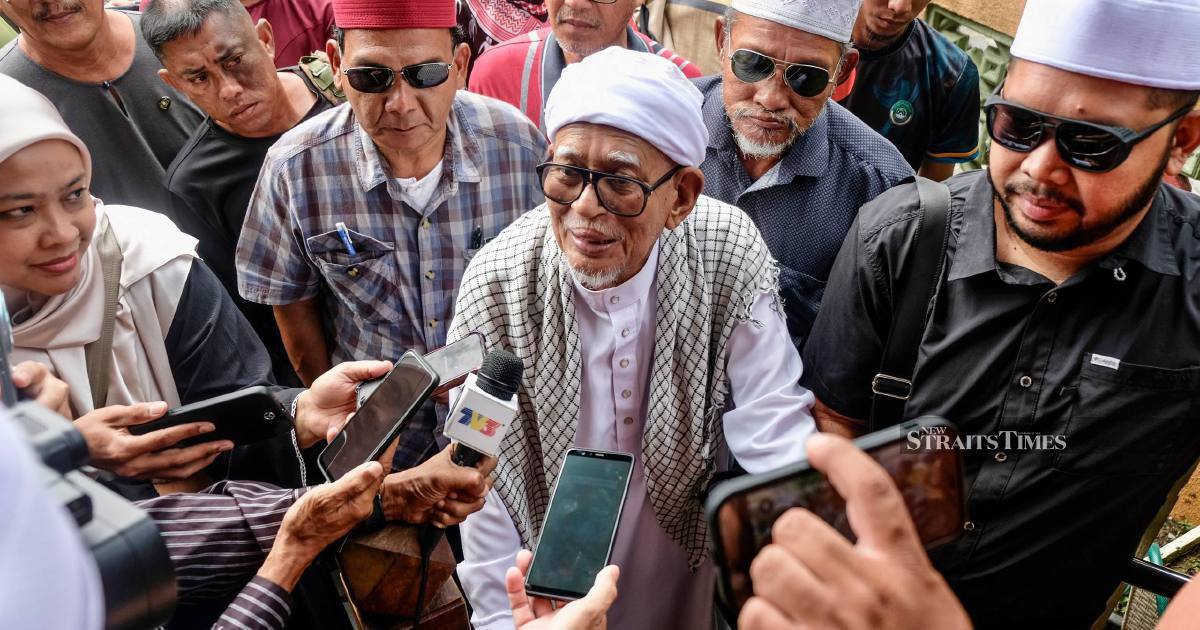
Tan Sri Abdul Hadi Awang, president of PAS, has taken issue with Prime Minister Datuk Seri Anwar Ibrahim's decision to skip the special parliamentary sitting convened to debate the Royal Commission of Inquiry report into Lembaga Tabung Haji, the country's pilgrimage savings fund. Speaking in Marang, Hadi suggested that the premier's attendance at such a significant occasion should have been prioritised, given the gravity of the inquiry's findings and the parliamentary time allocated to discuss them.
The Tabung Haji RCI, which concludes months of investigation into the fund's management and financial challenges, represents a crucial moment for parliamentary accountability. The special sitting provided lawmakers with an opportunity to scrutinise the commission's recommendations and chart a course forward for the institution that manages savings for millions of Malaysian Muslims preparing for the Hajj pilgrimage. Hadi's remarks underscore broader questions about executive presence and engagement during legislative deliberations on major national issues.
Lembaga Tabung Haji has faced considerable scrutiny in recent years as the fund grappled with significant financial difficulties and investment losses that affected the savings of ordinary Malaysians. The establishment of the RCI reflected public concern and parliamentary pressure to understand what went wrong and identify systemic weaknesses requiring correction. The inquiry process has been extensive, examining governance structures, investment decisions, and oversight mechanisms across multiple years of operation.
The PAS leader's criticism reflects a wider expectation within parliament that when major government institutions face intensive public examination, the Prime Minister should demonstrate personal commitment to the process by witnessing debates and being available to address concerns directly. In parliamentary systems across the Commonwealth, prime ministerial attendance at significant policy debates is often viewed as a measure of the government's seriousness regarding the matter at hand.
Tabung Haji's difficulties have touched virtually every segment of Malaysian society, as the fund serves predominantly lower and middle-income contributors who rely on it as a dedicated savings vehicle. Many Malaysians invested their earnings in the fund with the expectation of receiving returns to help finance their religious obligations. The investment losses and management issues therefore represent not merely a corporate or financial failure but a breach of public trust that has material consequences for ordinary families.
The RCI's final report and recommendations carry significant implications for how the fund will be restructured and managed going forward. Parliamentary discussion of these findings provides an opportunity for lawmakers to raise constituent concerns, question officials responsible for oversight, and ensure that reform measures adequately address identified problems. The special sitting format acknowledges the urgency and importance of these deliberations within the legislative calendar.
Hadi's position reflects both parliamentary tradition and the specific context of Malaysian politics, where party leaders often use their platforms to hold the government to account on matters of national significance. The PAS president's remarks carry particular weight given that his party has supported the government in key legislative votes, positioning him as a voice commanding attention from the executive branch.
The absence of the Prime Minister from such proceedings may signal varying interpretations depending on one's perspective. Some observers might view it as an indication that the Premier was attending to other pressing matters of state, while others might see it as a missed opportunity for leadership visibility during a sensitive national issue. Political analysts suggest that optics around such decisions matter considerably in Malaysian politics, where personal engagement by senior leaders is often interpreted as reflecting their priorities and commitment levels.
Tabung Haji's recovery and restoration of public confidence represents a complex challenge involving regulatory reform, governance improvements, and potentially substantial capital restructuring. The RCI report likely contains detailed technical recommendations requiring careful parliamentary examination and expert implementation. The special sitting provided a formal mechanism for this essential scrutiny to take place within the legislative chamber.
Hadi's comments contribute to ongoing discussions about parliamentary accountability and executive responsibility in Malaysia. They reflect expectations that matters of significant public importance warrant direct engagement from the country's highest political leadership, particularly when national institutions managing public funds have experienced substantial difficulties. The debate surrounding the PM's attendance ultimately touches on broader questions about how governments should respond to institutional failures and public concern.
The Tabung Haji situation extends beyond immediate financial management to encompass questions about regulatory oversight, ministerial responsibility, and the adequacy of existing accountability mechanisms. Parliamentary proceedings examining the RCI findings offer one forum where these systemic questions can be aired and addressed, suggesting that such sessions warrant priority attention from all levels of government leadership committed to ensuring institutional integrity.

