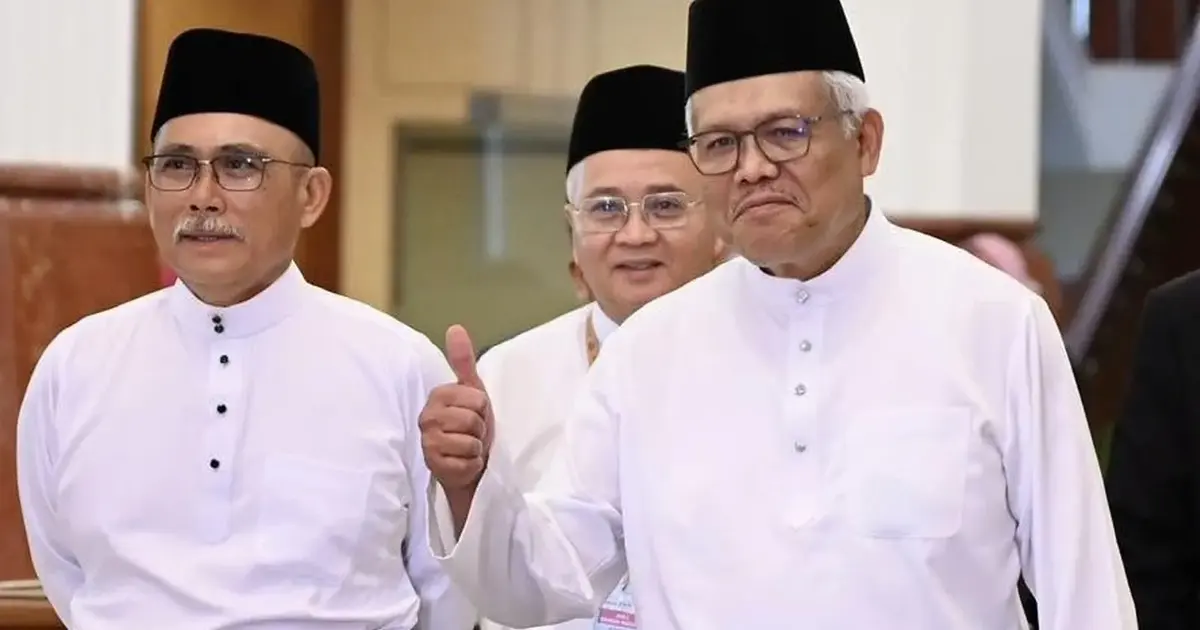
Hamzah Zainudin's elevation to the position of opposition leader has been justified by suspended Bersatu vice-president Kiandee on the grounds that the Larut Member of Parliament commanded substantial parliamentary support from two major opposition blocs. According to Kiandee, this appointment reflected the political arithmetic within Parliament and represented the consolidation of opposition forces behind a single figure capable of leading the coalition from the front.
Kiandee's explanation centres on the breadth of support that Hamzah garnered across the opposition ranks. The suspended party official contended that PAS, as a major component of the opposition alignment, threw its full weight behind Hamzah's candidacy. This bloc vote was described as comprehensive, suggesting the Islamist party operated as a unified entity in endorsing his leadership. The significance of PAS's support lies in its substantial parliamentary presence and its role as a stabilising force within opposition configurations in Malaysian politics.
Beyond PAS, Kiandee highlighted that a clear majority of Bersatu's parliamentary contingent also rallied behind Hamzah's appointment. This is a noteworthy detail given that Bersatu has experienced internal divisions and competing power centres since its formation. The fact that a majority of Bersatu MPs sided with Hamzah suggests that his candidacy transcended factional interests within the party and represented a consensus position among its legislators. The concentration of support within Bersatu's parliamentary wing demonstrates the weight that legislative numbers carry in opposition calculations.
The appointment of an opposition leader is rarely a routine procedural matter in Malaysian politics. Instead, such decisions typically reflect weeks of negotiation, backroom dealings, and strategic positioning among opposition parties seeking to present a united front against the government. The fact that Kiandee felt compelled to publicly articulate the basis for Hamzah's selection suggests that there may have been competing claims or alternative candidates, making explicit justification politically necessary.
Hamzah's position as the Larut MP provides him with a constituency base and direct linkage to grassroots politics. His selection as opposition leader carries implications for how the opposition intends to challenge the government's legislative agenda and articulate alternative policy positions. An opposition leader serves not merely as a figurehead but as the principal spokesperson responsible for framing narratives, coordinating parliamentary tactics, and representing the collective interests of the opposition to both Parliament and the electorate.
The reliance on demonstrable numerical support—from both PAS and a Bersatu majority—suggests that opposition leadership selection has moved toward more transparent, consensus-based mechanisms rather than backroom imposition. This approach lends legitimacy to the appointment and reduces the likelihood of later challenges to Hamzah's authority from within opposition ranks. However, the fact that only a majority of Bersatu MPs backed him, rather than the entire party, indicates that dissenting voices remain within the party on this question.
For Malaysian readers and regional observers, this development signals the degree to which opposition politics remains fragmented and dependent on negotiated arrangements between distinct parties rather than operating as a seamlessly integrated bloc. PAS and Bersatu each bring different constituencies, ideological orientations, and political histories to the opposition arrangement. That they could align on a single leader represents a tactical achievement but does not necessarily suggest underlying strategic unity on policy matters or long-term governance alternatives.
Kiandee's status as a suspended party official adds a particular dimension to his explanation. His suspended status implies internal party conflicts or disciplinary measures, raising questions about whether his public statement reflects an unofficial effort to shape narratives about party decisions or represents an authorised communication on behalf of party leadership. The circumstances surrounding his suspension and his continued engagement with party matters remain pertinent context for assessing the weight of his pronouncements.
The appointment also reflects the broader structural reality of Malaysian opposition politics, where no single party commands sufficient parliamentary numbers to unilaterally claim the opposition leadership mantle. This necessitates coalition-building and inter-party agreements that distribute prestige and responsibilities across the opposition ecosystem. The selection of Hamzah, presumably from one of the constituent parties, may have involved compensatory arrangements or understanding with other opposition leaders regarding future decision-making processes.
Looking ahead, Hamzah's tenure as opposition leader will be tested by his capacity to maintain cohesion among PAS and Bersatu MPs, coordinate with other opposition parties, and articulate a compelling alternative vision to government policies. The reliance on majority support from Bersatu rather than consensus suggests potential vulnerabilities if dissenting Bersatu MPs become emboldened to challenge his authority or if party loyalties shift in subsequent parliamentary sessions. The stability of his position depends partly on whether the governing coalition experiences defections or weakness that might tempt opposition MPs toward alternative alignments.
The implications for Malaysian politics extend beyond opposition internal dynamics. A functioning, credible opposition leadership strengthens parliamentary institutions by ensuring robust scrutiny of government policies, alternative policy articulation, and competitive democratic processes. Conversely, opposition fragmentation or leadership instability weakens the legislature's capacity to serve as an effective check on executive power. Hamzah's appointment represents an attempt to consolidate opposition effectiveness, though the durability of this consolidation remains uncertain given the underlying divisions within and between opposition parties.