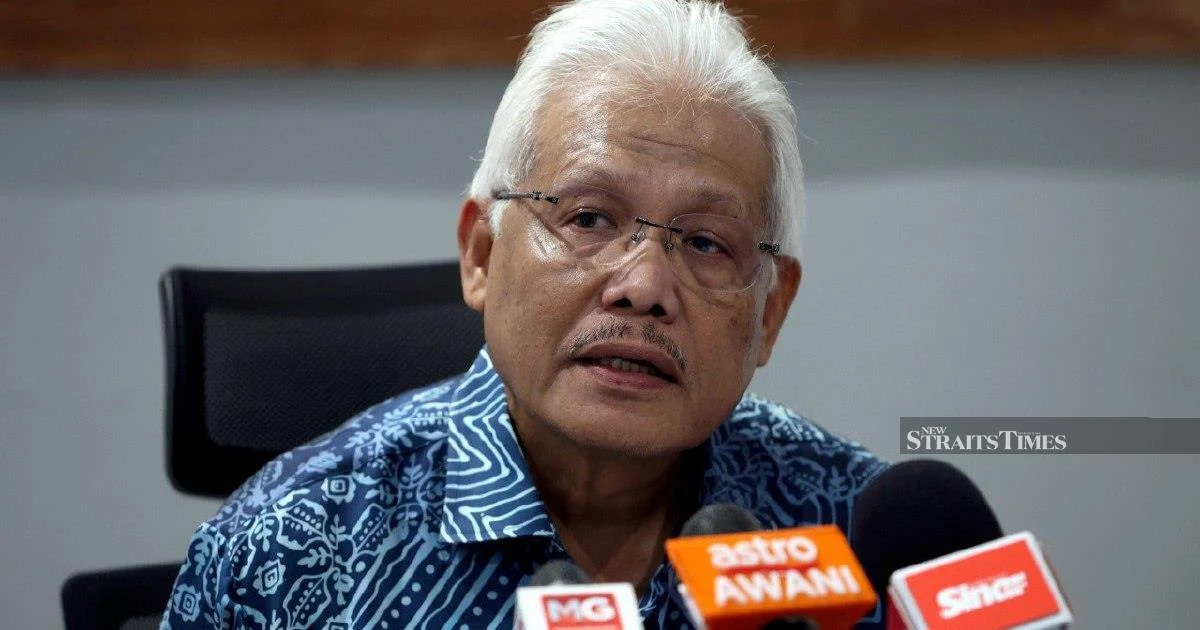
Hamzah Zainudin's newly rebranded Parti Wawasan Negara has signalled its willingness to serve as a mediating force between the country's two dominant Malay-Muslim political parties, Pas and Umno, in an attempt to shore up communal political unity. The party, previously operating under the name Parti Cinta Malaysia, has recalibrated its positioning as a potential bridge that could help resolve underlying tensions and prevent the kind of factional splits that leadership warns could undermine national interests and public welfare.
The move reflects growing concerns within Malay political circles about the consequences of sustained rivalry between Pas and Umno, whose competition has intensified over representation of Malay and Islamic interests. By explicitly offering itself as an intermediary, Parti Wawasan Negara appears to be attempting to carve out a distinct niche in the political landscape—one focused on reconciliation rather than the confrontational posturing that has characterised recent inter-party dynamics. This strategy suggests the party recognises that escalating conflict between these two major political forces creates space for alternative players to position themselves as peacemakers.
Historically, tensions between Pas and Umno have fluctuated based on electoral cycles and shifts in their respective leadership philosophies. The two parties have alternately cooperated and competed, with periods of alignment interrupted by bitter disputes over ideology, Islamic governance models, and contestation for Malay voter allegiance. These cycles of cooperation and conflict have often left voters confused about party identities and concerned about the political instability such oscillation creates. Parti Wawasan Negara's intervention as a mediator would theoretically address these anxieties by advocating for sustained dialogue and institutional mechanisms that reduce zero-sum competition.
The rebranding itself carries symbolic weight. Moving away from Parti Cinta Malaysia to Parti Wawasan Negara—a name emphasising national vision rather than love of country—suggests an attempt to broaden appeal beyond ethnic and religious constituencies and position the party as concerned with systemic stability rather than partisan advantage. This reframing is crucial for credibility as a neutral broker; a party seeking to mediate between rivals must appear ideologically distant from both, motivated by principles of national cohesion rather than factional calculation.
For Malaysian readers and the broader Southeast Asian context, this development carries implications for political stability and governance. The cohesion of Malay-Muslim political forces has historically been consequential for national coalition-building, as these parties control significant parliamentary seats and influence ministerial appointments. When they are divided, governments become fragile, policy implementation suffers, and legislative gridlock can emerge. Pas and Umno's rivalry has, in recent years, contributed to coalition uncertainty that affected economic policy continuity and investor confidence.
Pas, particularly after its electoral gains in the 2022 general election, has become more assertive in promoting a specific vision of Islamic governance and has expanded its territorial control in several states. Umno, traditionally the dominant Malay party, has found its hegemony challenged both by Pas and by defections to other coalitions. This shifting balance of power has created a competitive environment where both parties are incentivised to differentiate themselves, often through escalatory rhetoric and conflictual positioning. A third party offering mediation must navigate this delicate power dynamic carefully to avoid appearing to favour either side.
Prti Wawasan Negara's credibility as a mediator depends heavily on whether it can demonstrate genuine neutrality and offer tangible mechanisms for dialogue. Successful mediation typically requires institutional frameworks—such as joint committees, regular forums, or shared policy initiatives—rather than merely rhetorical commitments to unity. The party would need to propose concrete structures that address specific points of contention between Pas and Umno, whether related to Islamic jurisprudence interpretation, electoral strategy in competing constituencies, or power-sharing arrangements within state governments.
From a practical standpoint, this mediation role could address several ongoing friction points. In states where both parties operate, territorial disputes and competition for nomination affect internal party morale and electoral performance. Pas and Umno contests in certain constituencies have sometimes resulted in divided Malay-Muslim votes, benefiting opposition parties. A mediator could help establish mechanisms to minimise such splits, perhaps through power-sharing formulas or mutual withdrawal arrangements in designated areas. Additionally, disputes over Islamic policy implementation at state level have created friction; mediation could facilitate convergence on standards without compromising either party's ideological commitments.
The success of this initiative remains uncertain. Political mediation is notoriously difficult, especially when parties derive electoral advantage from differentiation and conflict. Both Pas and Umno may be reluctant to accept Parti Wawasan Negara as a neutral broker if they perceive it as lacking sufficient stature or influence. Furthermore, if Parti Wawasan Negara itself harbours political ambitions beyond mediation, its role as an honest broker could be questioned. The party must therefore carefully calibrate its public positioning to emphasise that mediation serves national interest rather than party advancement.
Looking ahead, whether Parti Wawasan Negara can actualise this bridging role depends on its ability to build relationships with both Pas and Umno leadership, articulate specific proposals for institutional collaboration, and maintain credible distance from both parties' electoral calculations. Should it succeed even partially, it could contribute meaningfully to reducing political volatility in Malaysia's system. Conversely, if this mediation attempt fails, it may reinforce perceptions that Malay political divisions are structurally deep and resistant to resolution through intermediary intervention, with consequences for stability and policy coherence that extend far beyond the parties themselves.

