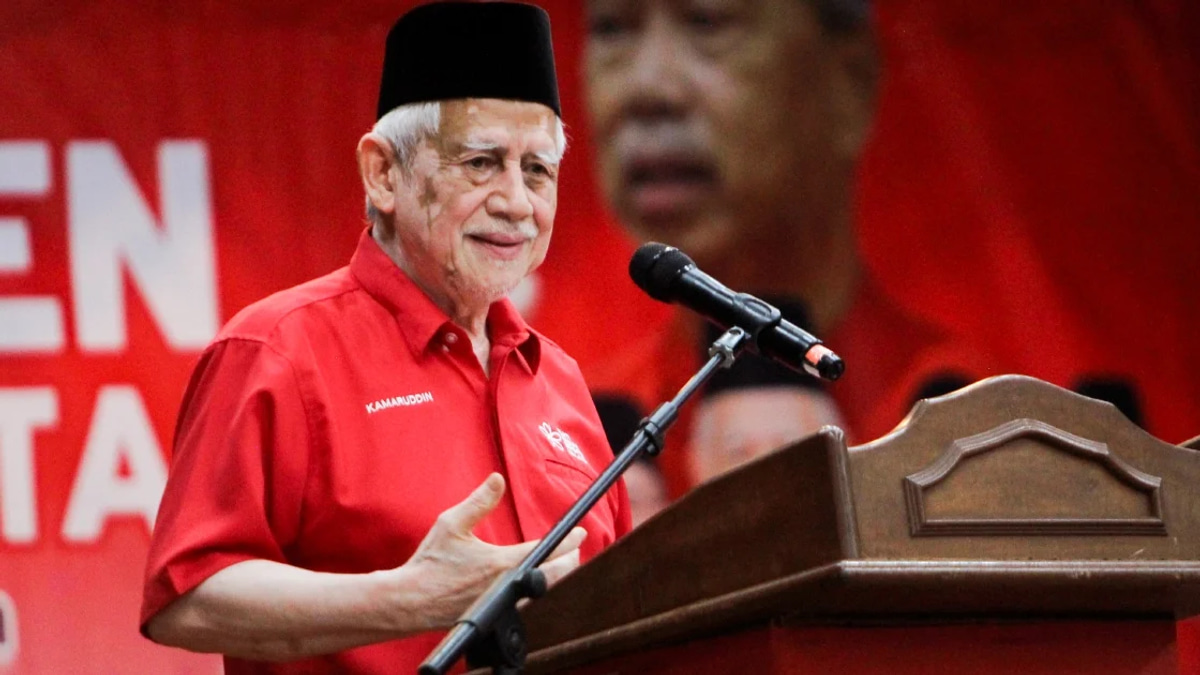
Hamzah Zainudin's re-emergence as a prominent figure within Perikatan Nasional signals a calculated repositioning by the PAS-led opposition coalition, according to political observers who view the move as central to the bloc's broader campaign strategy for the sixteenth general election. The prominent placement of the former Deputy Prime Minister represents more than a personnel decision; it reflects a coalition attempting to project a more palatable political identity to Malaysian voters concerned about extremism and polarisation.
The calculus behind elevating Hamzah centres on his perceived ability to broaden the coalition's appeal beyond its core Islamic conservative base. Within opposition circles, strategists regard him as the optimal candidate to lead their electoral push precisely because his public profile carries less ideological baggage than some PAS-affiliated figures. This perception matters considerably in Malaysian electoral politics, where swing voters in urban constituencies and among younger demographics often harbour reservations about parties perceived as religiously doctrinaire or socially restrictive.
Analysts emphasise that Perikatan Nasional's pivot toward what they term a "moderate narrative" addresses a critical vulnerability the coalition has faced since its formation. The bloc's dominance by PAS, a party with an Islamist ideological foundation, has historically constrained its ability to attract metropolitan voters and non-Muslim support. By positioning Hamzah—whose political career spans multiple coalitions and constituencies—as a central campaign figure, the opposition coalition attempts to communicate that it represents pragmatic governance rather than ideological imposition.
This strategic recalibration carries significant implications for Malaysian politics beyond the opposition's immediate electoral prospects. Should Perikatan Nasional successfully rebrand itself as a moderate alternative to the ruling coalition, it could fundamentally reshape the competitive landscape by offering fence-sitting voters a purportedly more centrist option. The effectiveness of this messaging will likely determine whether PN can consolidate its gains from recent state elections and translate them into meaningful parliamentary advancement.
Hamzah's political trajectory itself reflects the fluid nature of Malaysian coalition politics. His involvement with multiple major formations and his experience navigating complex inter-party dynamics within government structures position him as someone capable of bridging different factions. Opposition strategists appear to believe this background makes him an effective public face during an election campaign when the coalition must address concerns about internal cohesion and leadership credibility.
The stakes of this positioning extend beyond optics. Malaysian voters have demonstrated growing appetite for parties and leaders perceived as moderate on social issues while remaining economically pragmatic. Perikatan Nasional's reliance on Hamzah as a campaigning symbol suggests the coalition recognises that victory in GE16 depends partly on capturing dissatisfied segments of the electorate who reject both the ruling coalition's establishment status and perceptions of Islamic extremism within the opposition.
Regional observers also note that PN's moderation messaging aligns with broader Southeast Asian political trends where centrist positioning often proves electorally advantageous. Thailand's recent elections and Indonesia's coalition politics demonstrate that parties successfully balancing ideological commitments with pragmatic inclusivity tend to perform better than those perceived as ideologically monolithic. Malaysia's opposition appears to be learning these lessons.
The coalition's confidence in Hamzah as their standard-bearer also reflects calculations about how different voter demographics perceive him. Urban professional classes, business-oriented constituencies, and younger voters—demographics where PN has shown growth potential—may view him as more aligned with economic competence and less associated with religious conservatism than certain PAS figures. This demographic targeting remains crucial given that election outcomes often hinge on performance in Federal Territories and key urban centres.
However, the success of this rebranding exercise depends substantially on consistency and delivery. Analysts caution that projecting moderation while remaining beholden to coalition partners with more explicit ideological agendas requires careful navigation. Any perception of contradiction between campaign messaging and actual policy positions could undermine PN's credibility with swing voters they are attempting to attract.
The timing of Hamzah's elevation also matters contextually. Occurring amid economic uncertainties and public frustration with governance, the opposition coalition's pivot toward a moderate mainstream image attempts to position itself as a responsible alternative capable of managing national challenges. Whether voters ultimately accept this characterisation will significantly influence the competitive dynamics heading into the next general election cycle.