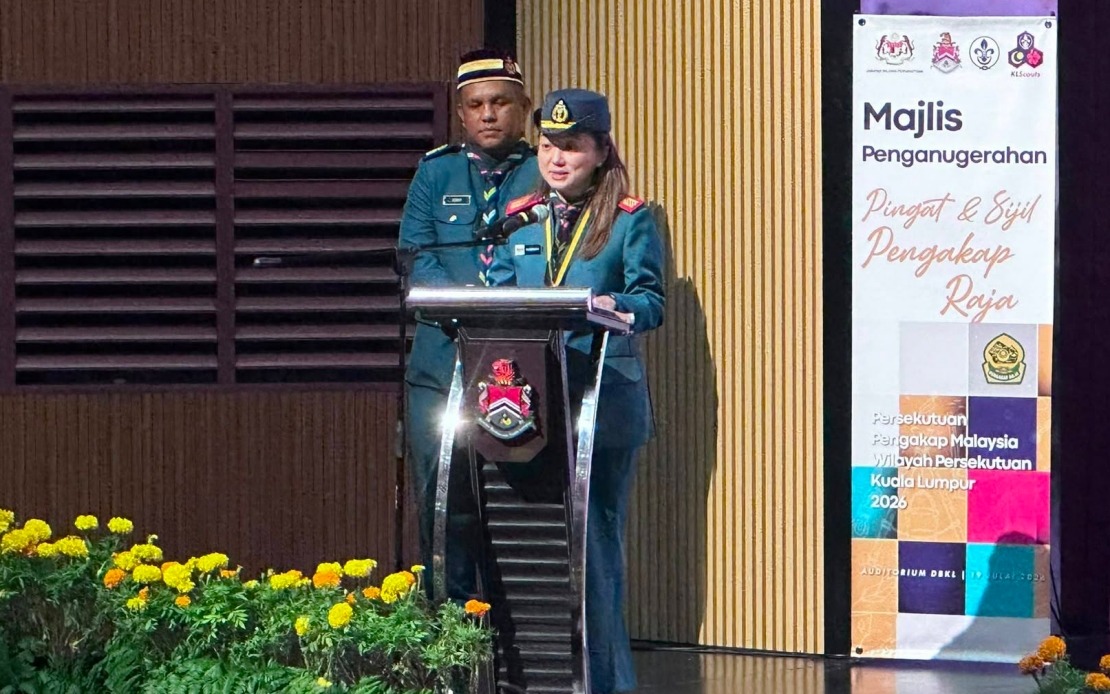
Hannah Yeoh, Minister in the Prime Minister's Department (Federal Territories), has been formally proclaimed president of the Federal Territories State Scouts Council at a ceremony held in Kuala Lumpur on July 19. The proclamation took place during the 2026 Kuala Lumpur Federal Territory King's Scout Medal and Certificate Presentation Ceremony at City Hall Auditorium, marking a significant moment for youth scouting in Malaysia's federal territories.
Accompanying the ceremonial appointment was a substantial financial commitment from the minister to strengthen scouting operations across Kuala Lumpur, Labuan, and Putrajaya. Yeoh pledged RM20,000 in ministerial allocation to enhance youth engagement through the scouting movement, demonstrating the government's continued backing for organised youth development initiatives in these critical urban and administrative centres.
The funding commitment was structured to address multiple priorities within the scouting community. The minister allocated RM10,000 specifically to the Kuala Lumpur Federal Territory branch of the Scouts Association of Malaysia to design and execute additional programmes during school holidays, recognising the importance of structured activities during periods when students are outside regular educational settings. Recognising potential barriers to participation, Yeoh further committed an additional RM10,000 to support training initiatives targeting young people who might otherwise face obstacles to joining established scouting programmes, whether due to socioeconomic constraints, geographical location, or other factors.
The appointment of Hannah Yeoh to this leadership role reflects broader government efforts to maintain high-level political engagement with youth organisations. Her position as a cabinet-level minister elevates the profile of scouting within federal territory governance and signals the administration's prioritisation of character development and civic participation among young Malaysians. This alignment of political leadership with youth-focused organisations is typical of countries seeking to channel national values and civic responsibility through structured youth movements.
Also appointed during the ceremony was Rosli Nordin, Executive Director of Kuala Lumpur City Hall (DBKL), who was proclaimed chairman of the Kuala Lumpur Federal Territory State Scouts Council. This dual appointment of ministerial and municipal-level leadership underscores the multi-tiered administrative commitment to scouting operations and demonstrates coordination between federal and city-level governance structures in supporting youth programmes.
The ceremony recognised exceptional achievement within Malaysia's scouting community through the presentation of distinguished awards. Fifty-eight young scouts received the King's Scout Certificate, the pinnacle achievement in Malaysian scouting that acknowledges scouts who have demonstrated mastery across demanding criteria including leadership competencies, practical skills, personal resilience, meaningful community engagement, and unwavering commitment to Scout principles and ideals. The King's Scout Award serves as testament to recipients' development into principled young leaders equipped with both practical capabilities and ethical grounding.
Beyond the highest honour, the ceremony acknowledged sustained contributions from the broader scout leadership corps. Seventy-five recipients were presented with Chief Scout's Commendation Certificates recognising their exceptional service, while 108 scout leaders received the Federal Territories Scouts Wangsa Certificates honouring their dedication to youth mentorship and organisational support.
The significance of these awards extends beyond individual recognition to reflect the philosophical underpinnings of the Malaysian Scouting Movement. The emphasis on leadership, resilience, community service and ethical commitment positions scouting as an institution dedicated to producing socially responsible citizens with demonstrated competence and integrity. For Malaysia specifically, this orientation aligns with national development priorities emphasising human capital development and civic cohesion.
The ceremonial gathering attracted significant representation from Malaysia's scouting hierarchy and political establishment. Major General Datuk Prof Dr Mohd Zin Bidin, Chief Scout of Malaysia, and Tan Sri Johari Abdul, a National Scout Council member and Dewan Rakyat Speaker, both attended, reflecting the cross-sector political and institutional importance of scouting activities. This convergence of parliamentary leadership, military representation and ministerial presence demonstrates how scouting remains embedded within Malaysia's governance and institutional networks.
For the Federal Territories specifically, the infusion of RM20,000 and high-level leadership attention addresses operational needs within urban scouting environments where youth engagement faces particular challenges. Urban scouting movements across Southeast Asia often struggle with participation rates amid competing recreational technologies and lifestyle options, making sustained political and financial support particularly valuable for maintaining programme viability and reach.
Yeoh's emphasis on accessibility through targeted funding for underserved youth populations reflects evolving approaches to youth development that recognise socioeconomic disparities in extracurricular participation. By explicitly allocating resources toward youth who might otherwise face barriers to engagement, the initiative acknowledges that scouting's full potential as a character-building and civic institution depends upon inclusive participation rather than access restricted to privileged demographics.
The appointment and accompanying funding announcement position Malaysia's scouting movement as a continuing focus for national-level political attention and resource allocation. This sustained engagement remains significant given global trends toward reduced youth participation in traditional organisations, where scouting continues to represent an institutionalised pathway for structured personal development, skills acquisition and values-based citizenship formation that complementary government, educational and community institutions value as foundational to social cohesion and national development.

