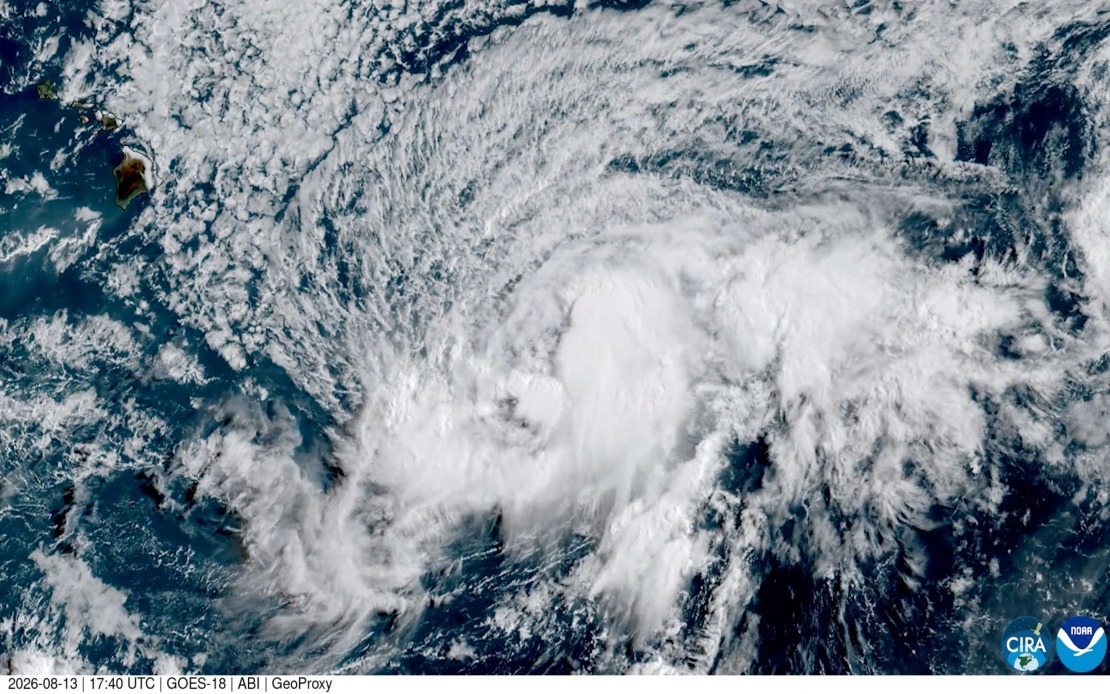
Tropical Storm Lala is on track to transform into a full hurricane as it approaches Hawaii's Big Island this weekend, according to forecasters with the National Hurricane Centre. The storm threatens to deliver destructive rainfall capable of triggering widespread flooding across the island, while its powerful winds could spark or accelerate existing wildfires in vulnerable regions.
Weather officials project that Lala will achieve hurricane strength by the time it makes its closest approach to the Big Island on Saturday. Should the system make landfall on the island itself, it would represent a meteorologically rare occurrence—the first hurricane to strike the Big Island since records began in 1871, more than 150 years ago. This long gap reflects the protective geography of the Hawaiian Islands and the typical weather patterns that steer tropical systems away from the state.
Historical documentation of that 1871 event remains limited. A University of Hawaii atmospheric scientist conducted archival research examining contemporary newspaper accounts to reconstruct details of that distant storm. The evidence suggests a Category 3 hurricane struck the northeast corner of the Big Island at that time. Vanessa Almanza, a meteorologist stationed with the National Weather Service in Honolulu, emphasized the exceptional nature of what residents currently face. In the satellite era—roughly the past seven decades—no hurricane has made landfall on the Big Island, making this event genuinely unprecedented in the modern meteorological record.
Almanza noted that current forecasting models show Lala tracking dangerously close to the southern tip of the Big Island, the point of greatest concern for potential landfall. This positioning makes the threat particularly serious, as it could expose densely populated areas and critical infrastructure to hurricane-force winds and torrential precipitation simultaneously.
In response to this escalating threat, the National Hurricane Centre issued a formal hurricane warning for the Big Island, signaling that hurricane-force winds are likely within the warning zone. Officials also expanded their cautions to neighboring regions by declaring a tropical storm warning for Maui County, which encompasses the islands of Maui, Molokai, Lanai, and Kahoolawe. This broader warning reflects the wider circulation of Lala's moisture field and wind systems, which extend well beyond the storm's center and pose a significant threat across the Hawaiian archipelago.
The potential impacts extend beyond immediate wind damage. Heavy rainfall could trigger mudslides and debris flows in elevated terrain, while flooding in low-lying areas could cut off access routes and isolate communities. For Hawaii's Big Island, which depends heavily on tourism and agriculture, such an event could disrupt economic activity for weeks or months. Emergency management officials have likely activated preparedness protocols, including sheltering arrangements, supply stockpiles, and evacuation plans for the most vulnerable populations.
From a broader perspective, this event underscores the changing nature of tropical cyclone activity in the Pacific. While direct hurricane landfalls remain statistically rare in Hawaii, the warming ocean temperatures that fuel tropical storm development are well documented. Climate researchers continue to examine whether warming sea surfaces are altering storm intensification rates or steering patterns, potentially bringing previously rare events into the realm of greater possibility.
For Malaysian and Southeast Asian observers, the Hawaii situation offers important lessons in hurricane preparedness and climate resilience. While typhoons in the western Pacific differ from Atlantic hurricanes, similar principles of early warning, infrastructure hardening, and community evacuation planning apply across tropical cyclone-prone regions. The rarity of the Big Island's threat—making it unfamiliar to many residents—parallels situations in parts of Southeast Asia where historical storm data may be incomplete or where communities have not experienced major systems in generations.
The extended lead time provided by modern forecasting—several days before Lala's approach—represents a critical advantage for disaster mitigation. Residents and businesses have time to secure property, stock supplies, and move to safety. This predictability contrasts sharply with many historical hurricanes, when warning systems did not exist and communities faced sudden, devastating impacts with no preparation time.
As Lala moves toward Hawaii, meteorologists will continue refining predictions about its intensity at landfall, exact track, and impacts. The coming days will test whether this storm follows forecasts or, as occasionally happens, takes an unexpected path. For Hawaii's residents and authorities, the uncertainty itself demands maximum caution and thorough preparation.

