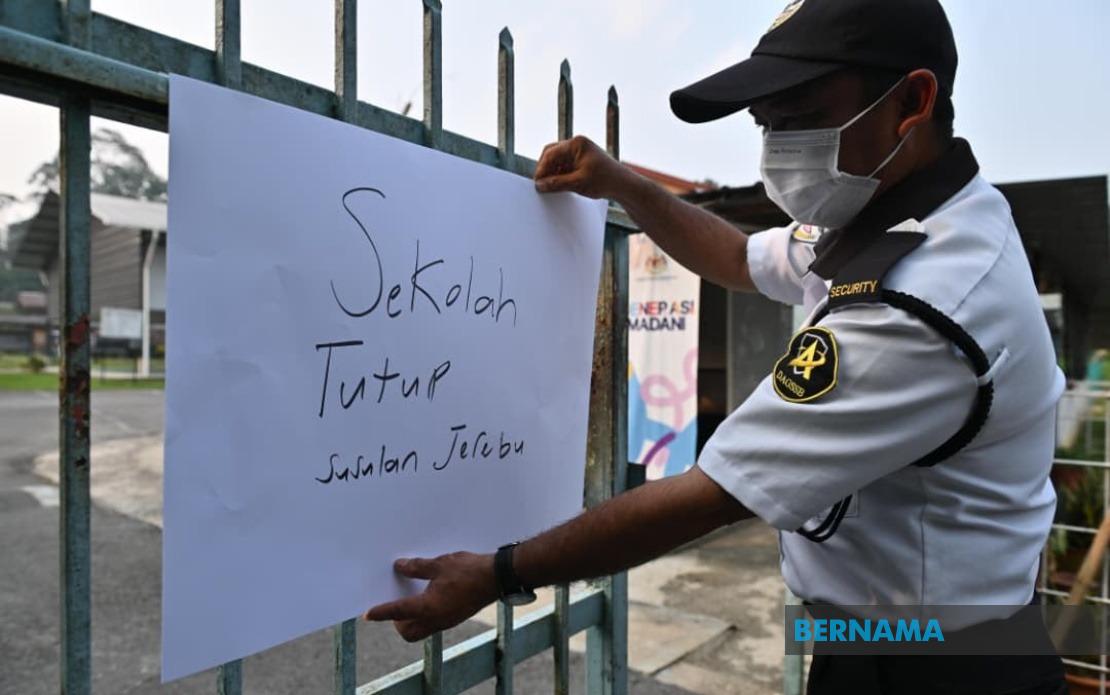
Sarawak's education system faced significant disruption on August 12 as authorities made the difficult decision to temporarily shut down 108 schools across the Serian district. The closures came in response to Air Pollutant Index readings that exceeded the critical 200 threshold, triggering established safety protocols designed to protect vulnerable student populations and staff members from prolonged exposure to hazardous air conditions. The Sarawak State Disaster Management Committee announced the action as part of its implementation of the National Haze Action Plan, which mandates immediate school closures when API levels reach or exceed 200.
To prevent educational setbacks during the temporary closure period, the Sarawak State Education Department moved swiftly to activate home-based teaching and learning programmes across affected institutions. This transition ensures that students continue their academic progress despite physical school closures, allowing teaching staff to deliver lessons remotely while maintaining curriculum standards. The decision reflects a deliberate balance between safeguarding public health and sustaining educational outcomes, recognising that extended school closures can create learning gaps that prove difficult to recover later in the academic calendar.
The air quality crisis unfolding across Sarawak represents an escalating environmental challenge that has gripped the state since the beginning of August. API readings have demonstrated a consistent and troubling upward trajectory over the past two weeks, with multiple districts now reporting pollution levels that fall into hazardous and very unhealthy categories. As of the afternoon of August 12, the situation had deteriorated sufficiently that two regions—Tebedu and Serian—were recording API measurements in the very unhealthy bracket, with readings of 212 and 202 respectively, while eleven additional areas including major urban centres such as Kuching, Sibu, and Miri registered unhealthy pollution levels between 101 and 200.
Understanding the API scale is crucial for comprehending the severity of the current situation facing Sarawak residents. The index operates on a graduated system where zero to fifty indicates satisfactory air conditions suitable for normal outdoor activities. Readings between 51 and 100 suggest moderate pollution requiring some precaution, while 101 to 200 classify air as unhealthy and warrant activity restrictions for sensitive populations. The very unhealthy category, spanning 201 to 300, represents a significant public health concern affecting broader segments of the population. Readings exceeding 300 cross into the hazardous zone, a threshold at which even healthy individuals face serious health risks from continued exposure.
The geographic distribution of pollution hotspots reveals a pattern affecting both rural and urban Sarawak, from the coastal regions including Miri and Bintulu to interior divisions such as Sri Aman and Sibu. This widespread nature of the haze suggests transboundary air pollution mechanisms, potentially linked to regional fire activity or atmospheric circulation patterns that transport pollutants across considerable distances. For Malaysian policymakers and residents, the Serian closures represent a tangible manifestation of environmental challenges that transcend individual state boundaries and demand coordinated regional responses.
The closure of educational facilities, whilst necessary from a public health perspective, creates logistical challenges and practical complications for families across affected districts. Many households require time to arrange home learning infrastructure, ensure adequate internet connectivity, and adapt to sudden pedagogical shifts. For working parents, the announcement necessitates urgent childcare arrangements, whilst single-parent households and economically disadvantaged families may face particular strain in accommodating school closures on short notice. Educational disruptions during critical academic periods can disproportionately impact students with special needs or those requiring intensive teacher support.
Authorities have explicitly cautioned residents against speculative discussion and misinformation regarding haze conditions, urging the public to rely exclusively on official government channels for accurate, timely air quality information. This guidance reflects concerns about how inaccurate reporting can generate unnecessary panic, undermine public confidence in government communications, or prompt counterproductive individual responses. In an era of rapid social media circulation, controlling information narratives around environmental crises has become increasingly challenging yet equally important for effective public health management.
The Sarawak State Disaster Management Committee has issued comprehensive public health guidance targeting vulnerable population segments, particularly children, elderly persons, pregnant women, and individuals with pre-existing respiratory or cardiac conditions. These groups face amplified health risks from sustained exposure to elevated pollution levels and require heightened vigilance regarding outdoor exposure. Even moderate physical exertion in highly polluted conditions can trigger respiratory distress or cardiovascular complications in susceptible individuals, necessitating conscious activity modification during haze episodes.
Broader Southeast Asian implications emerge from this pollution crisis, as transboundary haze has historically affected multiple nations throughout the region. The closure of Serian schools underscores how environmental degradation transcends political boundaries and creates humanitarian consequences across national borders. Malaysia's experience with regional air quality crises has previously prompted diplomatic engagement with neighbouring countries regarding agricultural burning practices and land management policies, highlighting the interconnected nature of environmental governance in Southeast Asia.
The immediate measures implemented in Serian represent a reactive response to acute pollution events, yet underlying concerns persist regarding long-term air quality management and prevention strategies. Sustainable solutions require addressing root causes of regional haze formation, investing in air quality monitoring infrastructure, and developing coordinated environmental policies across state and national boundaries. For Malaysian educators, policymakers, and families, this incident reinforces the urgency of integrating environmental sustainability considerations into educational planning and urban development frameworks, ensuring that future generations inherit healthier atmospheric conditions.

