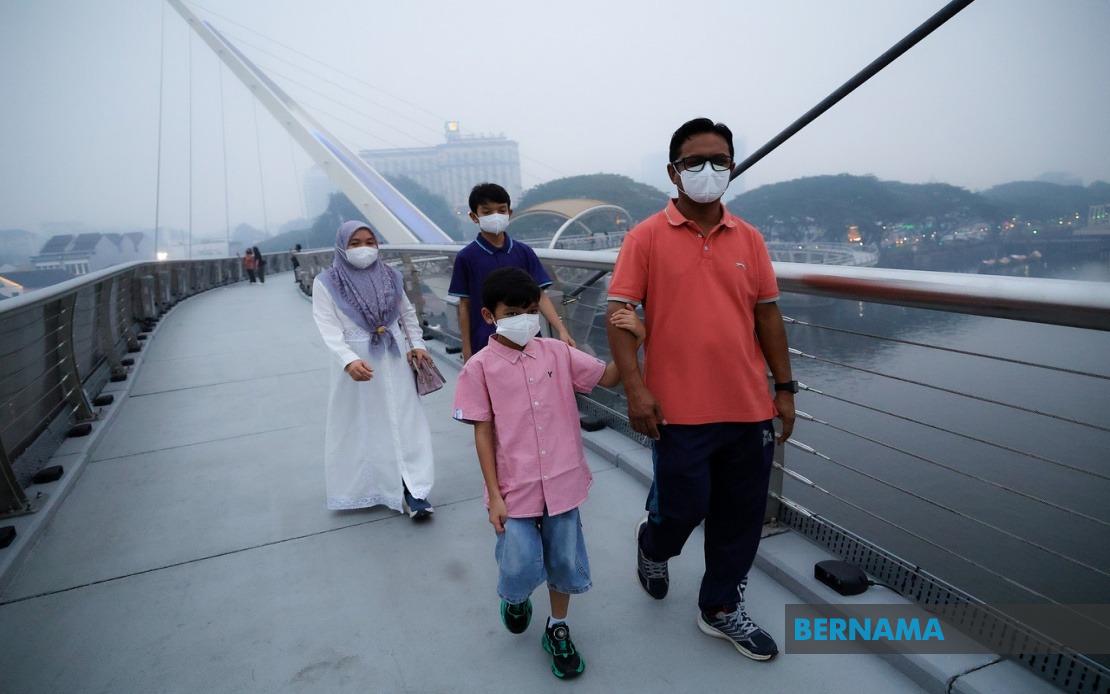
As haze continues to affect air quality across Malaysia, public health specialists are stressing the importance of vigilant monitoring and preventive action to safeguard respiratory health and wellbeing. The rising tide of pollution-related illnesses underscores the critical need for Malaysians to stay informed about daily Air Pollutant Index (API) readings and implement timely health precautions before air quality deteriorates further.
Dr Anas Ahmad Jamhari, a lecturer at Universiti Sultan Zainal Abidin's Faculty of Health Sciences, emphasises that checking daily API readings from the Department of Environment should become a routine step before venturing outdoors. He particularly highlights the importance of heeding warnings when API levels climb above 100, a threshold that signals mounting health risks. The guidance extends beyond mere awareness—experts stress that individuals must translate knowledge into action by adjusting their daily routines according to pollution levels rather than waiting until conditions become severe.
For those whose work or essential errands require outdoor presence during poor air quality episodes, proper use of N95 masks becomes critical. Dr Anas explains that the mask's effectiveness hinges entirely on correct application and secure fit. A loose-fitting mask, one that is frequently adjusted or removed, or masks compromised by moisture or damage provide minimal protection against fine particulate matter. He notes a particular concern regarding facial hair, which compromises the seal necessary for the mask to function as intended. Similarly, mask effectiveness diminishes significantly for children when the size fails to ensure proper coverage and seal, a common oversight in family protection strategies.
The nature of haze itself requires deeper understanding beyond its visible impact on visibility. Rather than being simple smoke, haze comprises a complex mixture of fine particles and chemical compounds that pose distinct respiratory threats. PM2.5 particles, the finest fraction of this pollutant mixture, present the most serious concern because their diminutive size allows penetration deep into lung tissue where larger particles cannot reach. Once lodged in the respiratory system, these particles initiate oxidative stress reactions that trigger inflammatory cascades, damage delicate lung cells, and progressively impair the lungs' capacity to function normally. This mechanism explains why haze exposure carries both immediate acute effects and long-term chronic health consequences.
Beyond mask-wearing, experts advise eliminating unnecessary outdoor exertion during haze periods. Activities such as jogging, cycling, and organised sports should be suspended when air quality deteriorates because physical exercise accelerates breathing rates and deepens lung penetration of pollutants. This creates a compounding effect where the very activities intended to improve health inadvertently amplify exposure to harmful particles. Dr Anas observes with concern that many people persist with outdoor exercise routines regardless of API classifications, substantially elevating their risk profiles for both short-term respiratory distress and cumulative lung damage.
Inside homes, residents should adopt comprehensive pollution-reduction strategies. Maintaining sealed doors and windows during haze episodes prevents infiltration of outdoor pollutants, but this measure must be paired with eliminating indoor pollution sources. Cigarette and vape smoke, incense and candle burning, and smoke-intensive cooking activities all contribute to indoor air degradation that compounds external haze effects. Vehicle air conditioning systems should be configured to recirculate cabin air rather than drawing fresh air from outside, preventing polluted air from entering the sealed interior. Simultaneously, authorities must enforce immediate cessation of open burning activities that directly contribute to haze formation.
Datuk Dr Zainal Ariffin Omar, a public health medicine specialist, introduces an often-overlooked dimension to haze preparedness by highlighting the interaction between air pollution and meteorological conditions. High temperatures accompanying haze episodes create a dual health threat that extends beyond respiratory concerns alone. Elevated temperatures combined with compromised air quality substantially increase risks of heatstroke and dehydration, particularly among vulnerable populations. The conjunction of high heat and poor air quality, often occurring during El Niño phenomena, demands a comprehensive public health response addressing both simultaneous hazards rather than focusing narrowly on API readings in isolation.
Dr Zainal argues that treating haze as a predictable seasonal occurrence paradoxically reduces public preparedness for subsequent episodes. When communities view haze as routine, they frequently maintain normal activity patterns and delay precautionary measures until conditions become acute. This passive approach undermines the effectiveness of prevention strategies that succeed only through consistent early implementation. Instead, continuous public awareness campaigns should emphasise that haze represents a genuine health emergency requiring proactive, sustained response across the entire population.
The urgency of expert warnings gained concrete validation through recent Ministry of Health surveillance data revealing a catastrophic surge in haze-related illness during Epidemiological Week 34. Asthma cases at sentinel healthcare facilities skyrocketed more than eightfold, escalating from 219 cases in the preceding week to 1,811 cases—a dramatic five-fold increase that overwhelmed respiratory specialists across the country. Conjunctivitis cases similarly surged from 146 to 720 during the identical period, indicating widespread ocular inflammation from airborne irritants. These figures demonstrate that haze episodes translate directly into measurable public health crises manifesting across multiple body systems simultaneously.
The concentration of illnesses among sentient facilities signals that community-level impacts likely exceed reported numbers, as many cases go unreported when individuals self-treat or avoid healthcare facilities during haze episodes. This underreporting obscures the true disease burden, potentially creating complacency among policymakers and the general public regarding the severity of haze-related health threats. Public education initiatives must emphasise that early symptom recognition and immediate medical consultation prevent progression to severe respiratory compromise requiring intensive care.
Experts universally advocate for strengthening public awareness through clear, accessible messaging that avoids technical complexity while conveying essential protective information. Current communication approaches often fail to translate expertise into actionable guidance that ordinary Malaysians can implement reliably. Simplified, consistent messaging about API threshold actions, mask selection and fitting, activity restrictions, and medication requirements would substantially improve population-level compliance with health recommendations. Such campaigns prove most effective when targeted toward vulnerable populations including children, elderly individuals, and persons with pre-existing respiratory or cardiovascular conditions.
The recurring nature of haze episodes across Southeast Asia positions Malaysia within a broader regional air quality crisis requiring coordinated multinational responses. Transboundary pollution originating from agricultural burning in neighbouring jurisdictions necessitates regional environmental cooperation and mutual monitoring protocols. Simultaneously, domestic preparedness for inevitable future haze seasons demands investment in public health infrastructure, respiratory specialist capacity, and pharmaceutical stockpiles of asthma medications. Individual vigilance in monitoring API readings and adopting protective measures, while essential, remains insufficient without systemic preparation at institutional and governmental levels.

