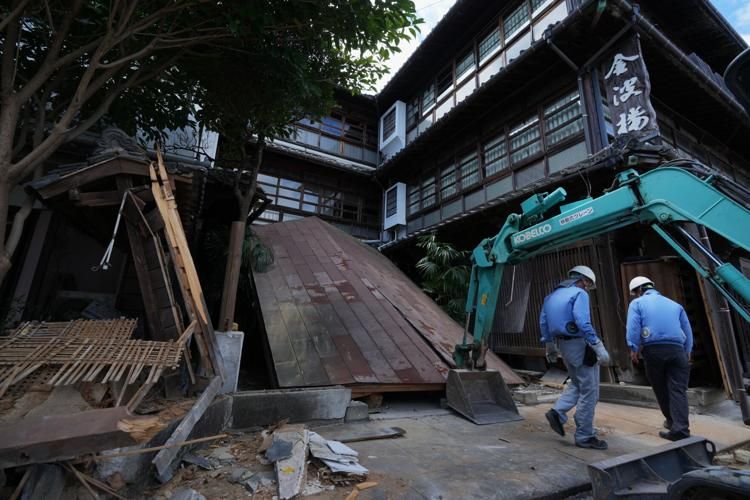
A woman in her seventies has become the latest victim of Japan's devastating Kumamoto earthquake, succumbing not to the initial tremor but to heat stroke while sheltering in her vehicle—a tragedy that underscores the compounding dangers facing survivors in the southwestern prefecture. The fatality, discovered Thursday in an unventilated car, raised the official death toll from the magnitude 7.1 earthquake that struck Kyushu's Kumamoto Prefecture on Tuesday to 36 confirmed deaths, with authorities warning that similar incidents could recur as the region continues to experience extreme temperatures alongside an unfolding humanitarian crisis.
The woman's death represents precisely the scenario that officials and disaster management experts had anticipated with growing anxiety. As thousands of evacuees opt to shelter in their vehicles rather than crowded evacuation centers, the combination of high external temperatures and sealed car environments creates a deadly trap for those unaware of the dangers. Kumamoto Governor Takashi Kimura responded to the tragedy by expressing deep sorrow whilst urging vehicle-based evacuees to continuously operate their air-conditioning systems or relocate to properly cooled evacuation facilities. The prefecture has begun distributing informational materials warning shelter residents about heat-related risks, emphasizing the importance of hydration, physical movement to prevent blood clotting, and seeking refuge in temperature-controlled environments.
The context of this death reveals the multifaceted crisis confronting Kumamoto's residents. Japan Meteorological Agency recordings showed temperatures reaching 36.6 degrees Celsius in Kumamoto city on Saturday, with forecasts suggesting further increases as the week progresses. Such extreme heat during an active disaster recovery phase creates overlapping vulnerabilities: survivors already traumatized and displaced find themselves navigating recovery efforts whilst simultaneously exposed to potentially fatal heat conditions. This convergence of earthquake damage and meteorological stress distinguishes the current situation from typical disaster scenarios and demands coordinated responses addressing both structural recovery and immediate health threats.
The shelter landscape itself presents profound challenges. Approximately 9,000 people remain housed in makeshift facilities including converted community centers, school gymnasiums, and converted classrooms—many lacking adequate air-conditioning systems. These crowded conditions create secondary health hazards beyond heat exposure. Experts have long critiqued Japan's emergency shelter standards, noting that inadequate sanitation, absence of privacy, and poor ventilation compound the psychological stress of displacement whilst amplifying risks for infectious disease transmission and other health emergencies. The contrast between crowded, undersupplied shelters and the apparent safety of personal vehicles has driven many evacuees toward automobile-based sheltering, yet this choice introduces the thermoregulation dangers so tragically illustrated by the deceased woman's fate.
Logistical obstacles further complicate the humanitarian response. Nearly 47,000 households throughout Kumamoto Prefecture remain without access to fresh water supplies—a fundamental resource crisis that simultaneously undermines personal hygiene, increases dehydration vulnerability during extreme heat conditions, and complicates sanitation at evacuation centers. Simultaneously, fuel shortages have created supply bottlenecks that leave automobile-dependent evacuees unable to operate air-conditioning systems continuously. Long queues at reopened petrol stations consume time and resources whilst highlighting the fragility of supply chains in disaster-affected areas. These interconnected shortages demonstrate how earthquake damage to infrastructure cascades into multiple simultaneous crises affecting different populations differently.
The scale of structural damage underpins these ongoing challenges. Search-and-rescue operations at Aeon Mall in Kashima town, representing one of the earthquake's most catastrophic single sites, concluded Saturday after extracting five survivors and seven bodies. The facility suffered catastrophic structural failure following an explosion that authorities believe resulted from a gas leak, collapsing walls and floors that had initially sheltered approximately 3,000 shoppers before evacuation efforts. This incident exemplifies how the earthquake's primary impact—the 7.1 magnitude tremor itself—triggered secondary disasters that multiplied casualties and destruction. At Nippon Paper Industries' Yatsushiro facility, a collapsed chimney trapped eleven employees, of whom nine perished and two were rescued, demonstrating that major employers and infrastructure sites remain active disaster sites requiring extensive rescue operations.
Despite the grim toll, authorities have achieved some recovery progress. Power outages affecting fewer than 900 households indicate successful restoration of electrical infrastructure in most areas—a critical element enabling heat-mitigation efforts through air-conditioning systems. However, the prefecture documented over 180 completely destroyed homes and more than 3,800 damaged structures, with twenty buildings experiencing severe damage assessments. Beyond fatalities, 105 people sustained injuries directly attributable to the earthquake, with two additional deaths under investigation for possible earthquake causation. These figures establish the disaster's breadth whilst acknowledging incomplete documentation of total impacts.
Prime Minister Sanae Takaichi's government task force response has centered on material resource mobilization. Saturday announcements detailed distribution initiatives delivering water, food, portable sanitation facilities, air-conditioning units, and privacy partitions to evacuation centers—targeted interventions designed to address the specific vulnerabilities that contribute to secondary disaster-related deaths. Takaichi's commitment to comprehensive assistance acknowledged governmental responsibility for mitigating conditions at emergency shelters, yet the dispersed geographic spread of displaced populations and ongoing supply constraints challenge rapid implementation. The political dimension of disaster response—balancing visible commitment with the practical limits of logistics and supply chains—emerged as the government navigated balancing symbolic announcements with substantive resource flows.
The Kumamoto situation carries implications resonating throughout the Asia-Pacific region. Southeast Asian nations increasingly vulnerable to seismic activity observe how developed infrastructure and institutional resources prove insufficient against converged natural hazards. The combination of earthquake damage with extreme heat presents a disaster archetype potentially repeating across the region's seismically active zones, particularly as climate change intensifies heat stress during disaster recovery periods. Kumamoto demonstrates that earthquake death tolls extend substantially beyond initial collapse casualties, encompassing secondary fatalities from heat exposure, inadequate shelter conditions, and disrupted supply chains. Regional emergency management frameworks increasingly require integration of heat-stress protocols within earthquake response procedures, acknowledging that survivor protection extends beyond rescue operations into environmental management during recovery periods.
Looking forward, Kumamoto's experience suggests that disaster preparedness must address the vulnerabilities of vehicle-based sheltering, a increasingly common evacuation strategy in developed nations. Authorities across Japan and regionally must develop public awareness campaigns addressing the dangers of sealed-vehicle shelter during extreme temperatures, whilst simultaneously improving evacuation center conditions to eliminate the trade-off between crowding and heat exposure that currently drives people toward dangerous alternatives. The deceased woman's fate illustrates how secondary disaster impacts—those emerging not from the initial hazard but from the survival conditions following it—demand equal attention within disaster response frameworks, particularly as climate change intensifies environmental stresses coinciding with seismic events.

