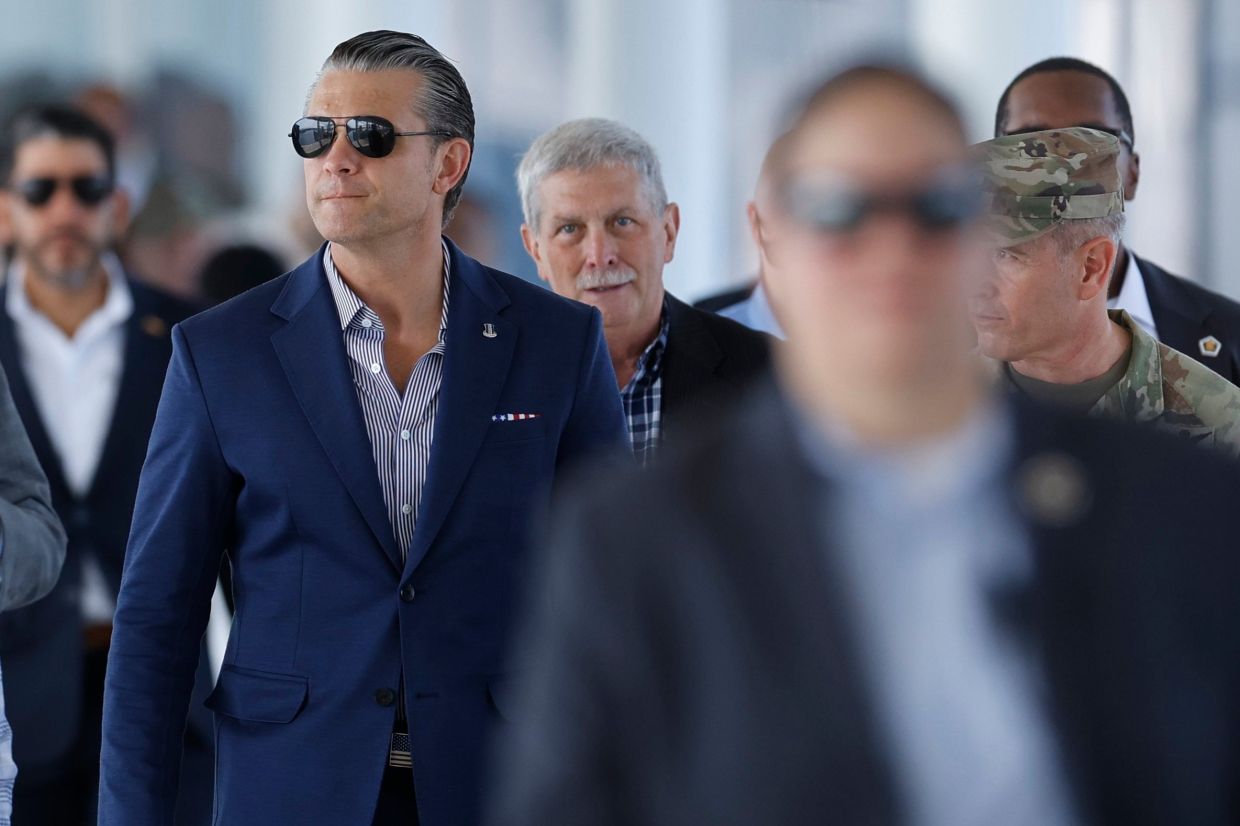
Uncertainty surrounding Pete Hegseth's tenure as US Defence Secretary has intensified at a critical moment for military relations between Washington and Beijing, according to unnamed officials familiar with Pentagon dynamics. Sources speaking anonymously suggest the Defence chief is operating under considerable pressure, citing an entrenched dispute over Iran policy and a stream of damaging media coverage as contributing factors to what they describe as an increasingly precarious position. The timing of these internal tensions presents a delicate challenge for the Trump administration's broader strategic objectives in the region, particularly given the palpable thaw in US-China defence engagement that has emerged over recent months.
Relations between the American and Chinese militaries have markedly improved since President Donald Trump and Chinese leader Xi Jinping convened in Beijing during May. Those familiar with ongoing bilateral military engagements report that contact now occurs at nearly every organisational level, representing the healthiest state of affairs in defence ties spanning more than a decade. This trajectory represents a significant departure from the adversarial posture that characterised much of the previous era, reflecting both leaders' apparent commitment to establishing a more constructive strategic foundation despite underlying geopolitical tensions.
Hegseth himself has publicly championed this rapprochement. Speaking at a defence conference weeks after the Beijing meeting, he characterised the relationship between the two powers as having reached a level of health "better than they've been in many years", emphasising that the military dimension of ties reflected Trump and Xi's broader commitment to building a workable partnership. This messaging established Hegseth as a key voice in operationalising the high-level diplomatic agreement, with Pentagon statements highlighting his personal stewardship of what officials described as a restoration of previously fractured military-to-military communication channels.
Recent high-level engagement underscores the momentum in these evolving ties. Last month, senior American defence officials, including Alvaro Smith, deputy assistant defence secretary with responsibility for China, Taiwan and Mongolia, met with Chinese vice-minister for foreign affairs Ma Zhaoxu in Washington. Smith publicly credited Hegseth's leadership in actively repairing the military relationship and achieving "steady progress" in rebuilding institutional channels that had deteriorated under previous administrations. Such statements typically signal institutional confidence and suggest the Pentagon views the current trajectory as sustainable and strategically valuable.
Yet Hegseth's potential departure creates genuine uncertainty about whether this momentum will persist. Zhao Minghao, a professor at Fudan University's Institute of International Studies, suggested that Trump might require "someone to take responsibility" for complications surrounding Iran policy, noting that cabinet reshuffles frequently precede American midterm elections as administrations seek to demonstrate decisive leadership. Should Hegseth be removed, Zhao warned, the Chinese military would face the prospect of rebuilding relationships with a successor, potentially interrupting the carefully cultivated exchanges that have characterised recent months. He referenced Hegseth's previous meetings with Chinese Defence Minister Dong Jun, including encounters during Trump's Beijing visit and in Malaysia, suggesting that a new secretary would necessarily require time to establish comparable rapport.
However, Pentagon officials suggest that continuity in the relationship need not depend entirely on Hegseth's retention. Several sources indicated that a potential successor would not automatically disrupt the developing military engagement, provided that individual did not adopt a hardline posture toward China. The existence of other key officials at the Pentagon who have impressed Chinese counterparts may provide institutional ballast. In particular, Chinese officials have expressed appreciation for officials such as Ely Ratcliffe Colby, who participated in last month's meeting with Ma and has previously articulated views suggesting Taiwan occupies a less central position in American strategic calculations than conventional wisdom would suggest. Beijing, which considers Taiwan an integral part of its territory and has refused to foreswear force as a reunification tool, may view such individuals as more aligned with its interests than typical Republican defence establishment figures.
American sources characterised current military-to-military contacts as "very good right now", with assessments suggesting that unless Hegseth's replacement emerged as a strong China hawk, the fundamental trajectory of defence engagement would likely continue. Zhao further noted that if Pentagon officials like Colby remained in position, the institutional relationships and exchange frameworks would persist, providing what he termed "continuity going forward". He emphasised that working-level military talks have resumed across multiple channels, partly because both Trump and Xi have committed to building relations predicated on "strategic stability", a formulation that inherently emphasises restoring and strengthening defence exchanges.
The strategic logic underlying this mutual commitment appears durable. Trump has invested significant political capital in repositioning the US-China relationship, viewing it as central to his broader geopolitical strategy. Xi's anticipated state visit to Washington next month—his first such trip since 2015—will provide a visible platform for reaffirming military-to-military engagement as a cornerstone of the relationship. Chinese officials and analysts view strengthening defence ties as integral to this high-level diplomatic agenda, suggesting the commitment transcends any single American official's tenure.
For Southeast Asian observers, these dynamics carry particular weight. The region has historically benefited from periods of US-China stability and suffered from escalation in bilateral tensions. Malaysia, in particular, hosts significant international defence engagements and serves as a venue for US-China military dialogue. Clearer certainty about the durability of American defence leadership would provide greater predictability for regional partners managing their own relationships with both powers. The possibility of Pentagon upheaval introduces uncertainty precisely when regional states are calibrating their strategic positions in an evolving great-power competition.
The episode ultimately reveals the distinction between personality-driven and institutionally-embedded diplomatic initiatives. While Hegseth has publicly championed the US-China military thaw, the underlying architecture of engagement—restored communication channels, resumed working-level talks, and bilateral commitment to strategic stability—appears to possess resilience beyond any single official. Nonetheless, the loss of a visible advocate for constructive engagement could subtly shift the tenor of communications and slow the pace of relationship-building, even if the fundamental trajectory persists.

