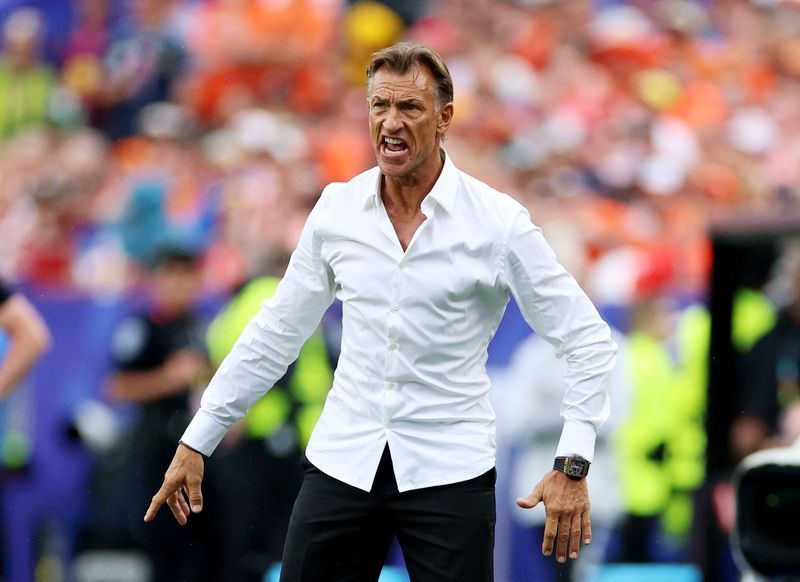
Herve Renard announced his departure from the Tunisia coaching position on Saturday following the team's elimination from the World Cup group stage, marking a brief and ultimately unsuccessful stint with the North African federation. The 57-year-old French tactician confirmed through Instagram that his engagement with Tunisia had concluded, expressing gratitude to the Tunisian Football Federation for the opportunity to lead the national team at football's premier tournament. In his statement, Renard reflected on the experience as an honour, though one tinged with disappointment given the manner in which events unfolded throughout the competition.
The timing of Renard's appointment itself underscored the crisis that engulfed the Tunisia camp during the tournament. Originally managed by Sabri Lamouchi through the qualifying campaign, Tunisia made a mid-tournament coaching change in a desperate attempt to salvage their World Cup hopes after their opening fixture exposed fundamental defensive vulnerabilities. However, the managerial switch proved unable to reverse the trajectory of decline that had already begun to consume the team's ambitions, and Renard's presence could not restore the form that had characterised their qualification efforts.
Tunisia arrived in Qatar with considerable optimism, having navigated their qualifying campaign impressively without conceding a single goal, a defensive record that suggested structural solidity and tactical discipline. This achievement had raised genuine expectations that the team could mount a competitive showing on the world stage. Yet the contrast between their qualifying performance and what unfolded during the group phase could hardly have been more stark, revealing either significant tactical inadequacies or mental fragility when facing elite opposition.
The deterioration became catastrophic when Tunisia faced Sweden in their opening match, suffering a 5-1 hammering that exposed alarming defensive deficiencies and prompted the federation's decision to replace Lamouchi with Renard. This heavy defeat served as a watershed moment, demonstrating that the problems facing the team extended deeper than tactical adjustments alone could remedy. The psychological blow of such a comprehensive defeat appeared to compound difficulties rather than clarify solutions.
Renard's arrival offered fresh perspective, but the experienced French coach inherited a situation beyond salvaging. Tunisia's second group-stage encounter against Japan concluded with a 4-0 loss, further compounding the misery and prompting Renard to express feeling ashamed of the performance. This consecutive heavy defeat illustrated the magnitude of the challenge confronting any incoming manager tasked with reversing such momentum, suggesting systemic issues within the squad itself rather than merely coaching tactics.
The campaign's nadir crystallised when Tunisia faced the Netherlands in their final group match, losing 3-1 in a result that confirmed their mathematical elimination from advancing to the knockout stages. Crucially, this final match represented Tunisia's only competitive fixture under Renard, meaning the coach managed just one game before his tenure effectively concluded. This fleeting engagement meant Renard had insufficient time to implement fundamental changes or develop team cohesion, leaving him with limited ability to influence the narrative around his brief appointment.
What compounds Tunisia's embarrassment is the sheer magnitude of the defensive breakdown across the group stage. The team conceded 12 goals throughout their three matches, establishing a new unwanted World Cup record in the tournament's expanded 48-team format. This shatters the previous record held by Costa Rica, who conceded 11 goals during their participation in the 2022 World Cup. For a nation that boasted a clean sheet throughout qualification, such a reversal represents not merely tactical failure but suggests psychological disintegration under pressure.
The implications for Tunisian football extend well beyond this single tournament, as the collapse raises fundamental questions about squad composition, coaching infrastructure, and the mental preparation required to compete at the world's highest level. The federation now confronts difficult decisions regarding the structure of the national programme, with potential consequences rippling through African football more broadly. Tunisia's status as a respected continental force faces reassessment following this comprehensive failure.
For Malaysian and Southeast Asian observers, Tunisia's experience offers sobering lessons about the unpredictability of tournament football and the risks of assuming that strong qualifying performances guarantee competitive group-stage displays. The tournament's expanded format has also created opportunities for such statistical aberrations, with more matches exposing weaknesses that might previously have remained concealed. As regional federations contemplate World Cup ambitions, the cautionary tale of Tunisia's structural collapse warrants careful consideration regarding preparation depth and psychological resilience.
Renard's departure represents the conclusion of a chapter that never truly began, given the minimal time afforded to establish any meaningful coaching impact. His exit leaves Tunisia searching for stability and direction, with the federation tasked with rebuilding confidence and restoring the defensive solidity that characterised their qualifying campaign. The challenge now facing Tunisia's next coaching appointment will involve identifying whether the group-stage collapse reflected temporary circumstance or more fundamental weaknesses within the squad structure itself.

