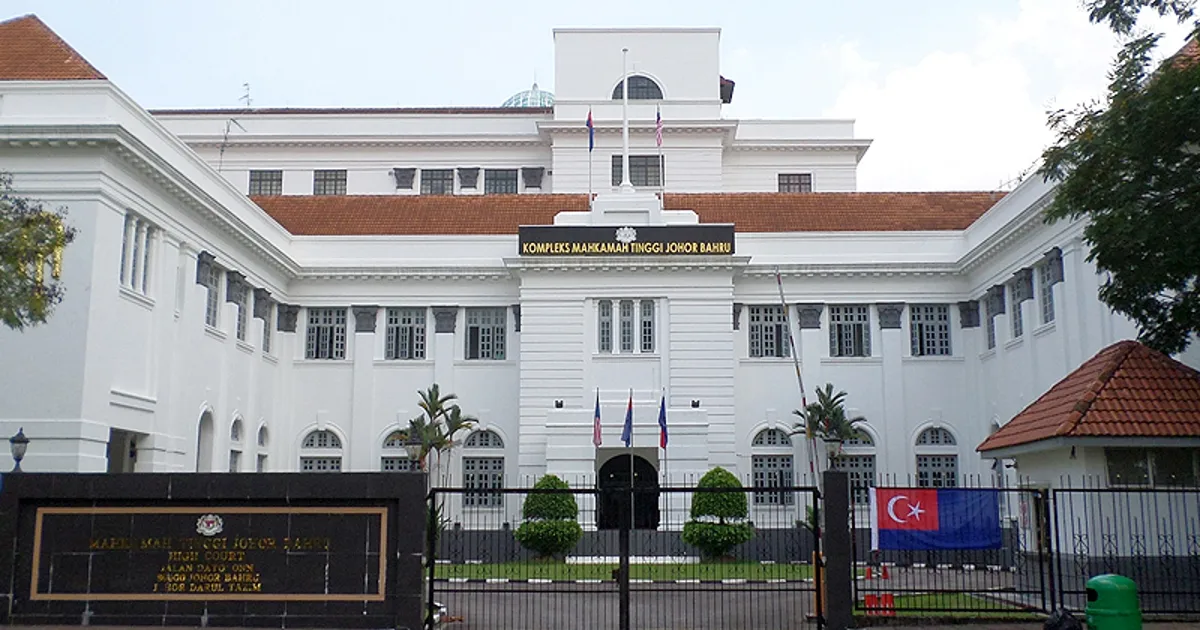
An instructor employed at a government training institute has been acquitted of sexual assault charges following a High Court judgment that cast serious doubt on the quality of the police investigation that led to his prosecution. The court's decision represents a significant ruling on investigative competence and raises uncomfortable questions about how thoroughly and professionally law enforcement agencies conduct sensitive cases involving allegations of criminal conduct.
The judgment struck a notably critical tone toward the investigating officers, with the bench pointedly observing that their handling of the case demonstrated substantial departures from established investigative protocols. Rather than simply exonerating the defendant, the court took the unusual step of explicitly addressing what it characterised as failures in police methodology, suggesting the investigation had fallen markedly short of the standards expected in cases of this gravity. Such judicial commentary carries weight beyond the immediate acquittal, as it signals to law enforcement agencies that their work will face rigorous scrutiny and that procedural shortcomings can undermine even seemingly straightforward prosecutions.
For Malaysia's public service training infrastructure, the acquittal presents a more nuanced narrative than a simple clearance. Government training institutes play a crucial role in developing the nation's civil service and professional workforce, making the workplace culture and safeguarding protocols within these institutions matters of public importance. The case underscores the tension between protecting vulnerable individuals from misconduct and ensuring that accusations are investigated with sufficient rigour to distinguish genuine grievances from unfounded claims. Both institutional integrity and individual rights demand that sexual assault allegations receive thorough, competent investigation.
The police investigation's apparent deficiencies highlight systemic challenges within Malaysia's investigative apparatus. Sexual assault cases are notoriously difficult to prosecute, requiring investigators to balance sensitivity toward complainants with rigorous evidence-gathering and the presumption of innocence. When courts identify shortcomings in investigative standards, it often reflects insufficient training, inadequate resources, or procedural carelessness rather than individual incompetence. These structural issues affect the justice system's ability to deliver reliable outcomes in sensitive criminal matters across the country.
The High Court's critical assessment may have implications for other pending cases handled by the same investigative team or unit. Defence counsel in similar matters may now reference this judgment to highlight weaknesses in police procedures, potentially prompting closer judicial scrutiny of evidence and investigative methodology in related prosecutions. Conversely, the judgment serves as an implicit demand for law enforcement to elevate investigative standards, particularly in high-profile or complex cases where procedural failures risk undermining public confidence in the criminal justice system.
For the acquitted instructor, the acquittal removes the prospect of criminal conviction and associated professional consequences, though the reputational impact of facing charges and trial proceedings can be lasting. The experience likely illustrates the anxiety and disruption that even unfounded accusations can generate for individuals working in sensitive sectors like education and public administration. This reality creates a secondary consideration for institutional governance: establishing clear, fair procedures for managing complaints that protect both complainants and accused persons from arbitrary treatment.
The judgment also touches on broader questions about due process and the evidentiary standards expected in sexual assault cases. The court's willingness to identify investigative shortcomings suggests it applied a demanding standard to the prosecution's case, ensuring that conviction would rest on evidence and procedure of sufficient quality to withstand appellate scrutiny. This approach reinforces the principle that in serious criminal matters, investigative competence is not merely a technicality but foundational to justice.
Government training institutes will likely review their internal complaint and disciplinary mechanisms in light of this case. Clear protocols, transparent investigation procedures, and access to independent oversight can help such institutions manage misconduct allegations fairly while protecting their credibility. The case demonstrates that institutions cannot rely solely on police investigations; they may need to supplement criminal procedures with robust internal accountability mechanisms that offer complainants alternative pathways to redress while maintaining procedural fairness.
The High Court's criticism also raises expectations for police reform and professional development in investigative techniques. Training institutions within the Royal Malaysian Police and state police forces may use this judgment as a teaching tool to illustrate what constitutes adequate investigation in sensitive criminal matters. Building a culture of investigative excellence requires not only identifying failures but systematising lessons learned into training curricula and operational standards.
As Malaysia continues developing its criminal justice system, cases like this one illuminate the interplay between institutional credibility, investigative competence, and individual rights. The acquittal resolves the immediate charge against the instructor but leaves broader questions about how government agencies at all levels—law enforcement, public institutions, and courts—can collaborate to investigate misconduct allegations thoroughly while maintaining fairness and due process. The High Court's judgment serves as both a vindication for the defendant and a cautionary signal to investigators that procedural rigour is not negotiable, even in difficult cases involving serious allegations.

