Rural hospitals across the United States are turning to high-fidelity simulation training to keep obstetrics programmes operational as an increasing number of facilities shutter their maternity units, unable to sustain services in low-volume settings. The challenge facing institutions like Riverwood Healthcare Center in Aitkin, Minnesota—which delivers only 40 to 80 babies annually—illustrates a growing crisis in maternal healthcare access, particularly in sparsely populated regions where expectant mothers now often must travel significant distances to reach functioning delivery services.
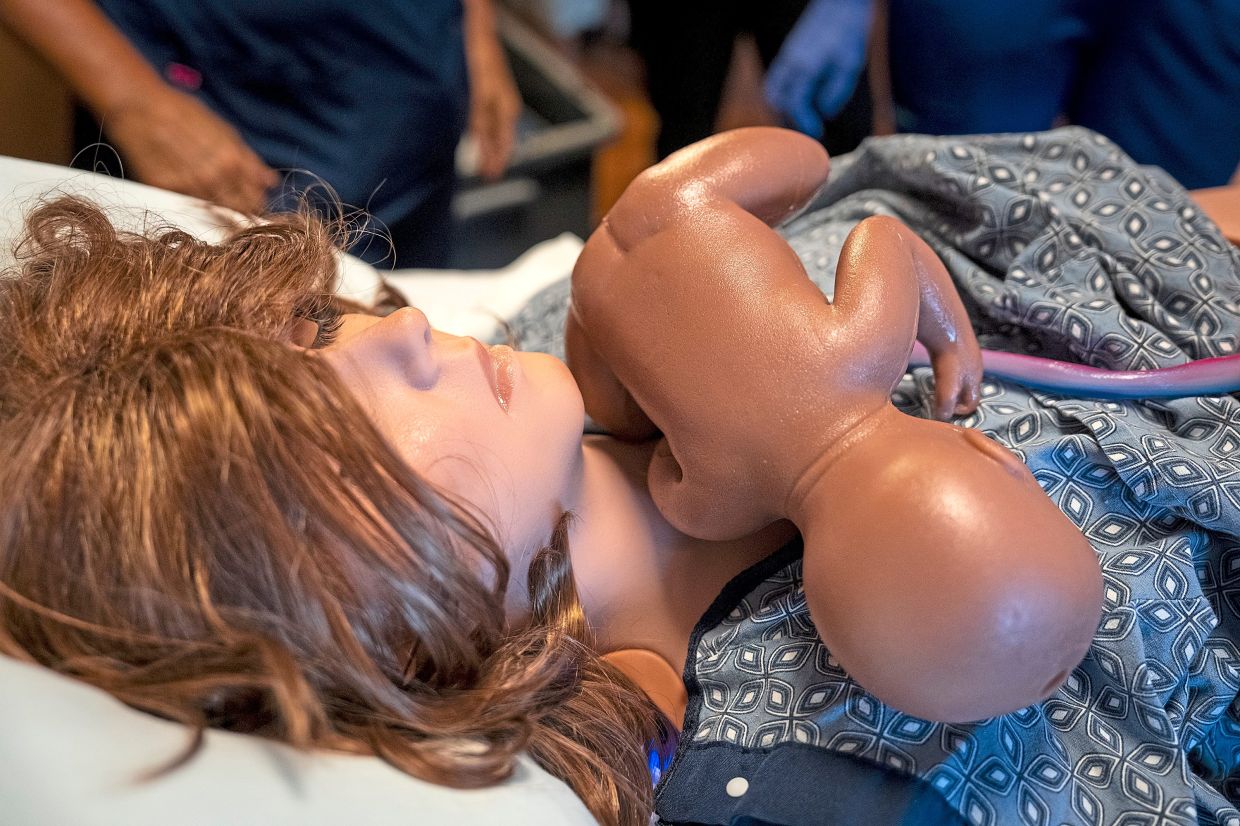
At the core of this solution is ROSE, the Rural Obstetrics Simulation and Education programme based at Community Memorial Hospital in Cloquet, Minnesota. The initiative takes its name from "Virginia," a wirelessly controlled training mannequin so anatomically realistic that television production crews have declined to film training sessions, concerned the footage might be mistaken for actual medical footage. Controlled through wireless tablets, Virginia contains sophisticated internal systems—pistons, pumps, and sensors—that can simulate virtually any obstetric emergency, from uncomplicated deliveries to life-threatening complications like shoulder dystocia or postpartum haemorrhage.
The necessity for such advanced training becomes apparent when examining the statistical reality of rare but critical emergencies. Shoulder dystocia, a condition where an infant's shoulder becomes lodged against the mother's pubic bone during delivery, occurs in only one or two births per hundred. For small regional hospitals, such scenarios may never materialise during ordinary operations, yet staff must possess the knowledge and muscle memory to manage them correctly when they do occur. Without regular exposure through simulation, clinicians risk losing competence in techniques that, when needed, can mean the difference between a healthy outcome and catastrophic harm.
Community Memorial's executive Rick Breuer championed the programme after recognising that staff at participating hospitals had limited opportunity to develop expertise in uncommon but urgent scenarios. He secured financial backing from Blue Cross and Blue Shield of Minnesota in 2021 to fund Virginia and establish ROSE, which now circulates simulation training sessions throughout rural Minnesota communities. This innovative approach represents a departure from traditional obstetrics training, which historically relied on less realistic methods—such as the outdated practice of threading dolls through hollowed cantaloupe halves—to simulate the birth experience.
The crisis underlying this initiative stems from a paradoxical trend: as specialised facilities consolidate obstetrics services, smaller hospitals experience declining birth volumes, which hospital administrators fear will erode staff competence and increase malpractice liability exposure. Since 2020, approximately a dozen Minnesota hospitals have discontinued obstetrics services entirely. Some facilities, including Community Memorial itself, temporarily suspended programmes due to staffing constraints. Dr Keri Bergeson, who directs rural programming for the University of Minnesota's family medicine department, explains that many hospital administrators concluded that declining birth numbers created an untenable risk environment, prompting them to cease offering maternity care altogether—a decision that paradoxically worsens the shortage of accessible birth services across entire regions.
Bergeson emphasises that high-fidelity simulation addresses this impasse by allowing staff to maintain and develop competencies despite infrequent real-world exposure. She deliberately structures training scenarios to generate realistic psychological pressure, recreating the anxiety and decision-making demands that clinicians experience during genuine emergencies. During a July 2026 training session at Riverwood, for instance, a single tablet command triggered Virginia to simulate postpartum haemorrhage—bleeding after delivery that remains a leading cause of maternal mortality and disability worldwide. Red fluid suddenly flowed from the mannequin as Bergeson feigned alarm, immersing participants in an authentically pressurised environment where they must think clearly and execute protocols correctly.
In this particular scenario, nurse Amber Workman successfully diagnosed and treated the simulated bleeding by recognising that the uterus had not contracted sufficiently to restrict blood flow through the hundreds of vessels previously supplying the placenta. After attempting a massage technique, she correctly requested a Bakri balloon—an inflatable device inserted into the birth canal to apply direct pressure and control bleeding. The simulation validated her clinical decision-making, demonstrating the type of rapid assessment and appropriate intervention that real patients require. Beyond the technical skill, however, Bergeson stressed a critical practical detail: she warned participants to verify expiration dates on Bakri balloons, which in small hospitals often languish unused for months and become unusable—a detail that transforms training into actionable knowledge applicable directly to small-hospital environments.
The ROSE model has expanded nationwide following endorsement by the American College of Obstetricians and Gynecologists, which recognised simulation as a mechanism for sustaining low-volume obstetrics programmes. However, ROSE distinguishes itself as one of the few American simulation programmes based at a small community hospital rather than a large academic medical centre. This positioning carries profound significance: it means that training content and methodologies reflect the actual operational constraints, equipment availability, and staffing realities of small hospitals, rather than generalised protocols developed in well-resourced academic settings.
Riverwood illustrates both the value and the resource challenges of maintaining obstetrics services in rural settings. The facility schedules two ROSE training sessions annually and has actually experienced a modest increase in births from 2020 to 2024, as expectant mothers from surrounding areas seek services elsewhere after nearby hospitals closed maternity units. Chief executive Ken Westman acknowledges that Riverwood could not independently afford the simulation equipment and training infrastructure necessary to maintain obstetrics programme competency standards. Yet without such training, the hospital faces mounting pressure to join the wave of facilities abandoning obstetrics altogether, further concentrating services and widening access gaps for pregnant women in vast rural territories.
For Malaysian and Southeast Asian healthcare observers, the ROSE experience offers instructive insights into rural maternal health provision. While the United States possesses far greater healthcare infrastructure and resources than most developing nations, the challenge of maintaining quality obstetrics services in dispersed, low-volume settings transcends geographic and economic boundaries. Many rural regions across Southeast Asia face similar pressures: insufficient birth volumes to maintain staff proficiency, geographic barriers limiting patient access to tertiary facilities, and constrained budgets preventing investment in advanced training infrastructure. Simulation-based training represents a cost-effective mechanism for maintaining competency in resource-limited settings, and the collaborative funding model employed in Minnesota—where health insurers share investment costs—offers potential templates for regional health systems considering expanded maternal safety initiatives.
The broader implication of the ROSE programme extends beyond obstetrics training. As healthcare systems worldwide confront consolidation pressures, geographic disparities in access, and the need to maintain distributed service networks, simulation-based competency development emerges as a scalable solution. Virginia represents not merely a training tool but a practical acknowledgement that quality maternal care requires sustained investment in rural health infrastructure, even when individual facilities cannot independently justify such expenditures. The programme's success in maintaining Riverwood's obstetrics operations demonstrates that centralised resources, shared investment, and regionally appropriate training models can sustain distributed healthcare delivery in ways that benefit communities far beyond immediate programme participants.

