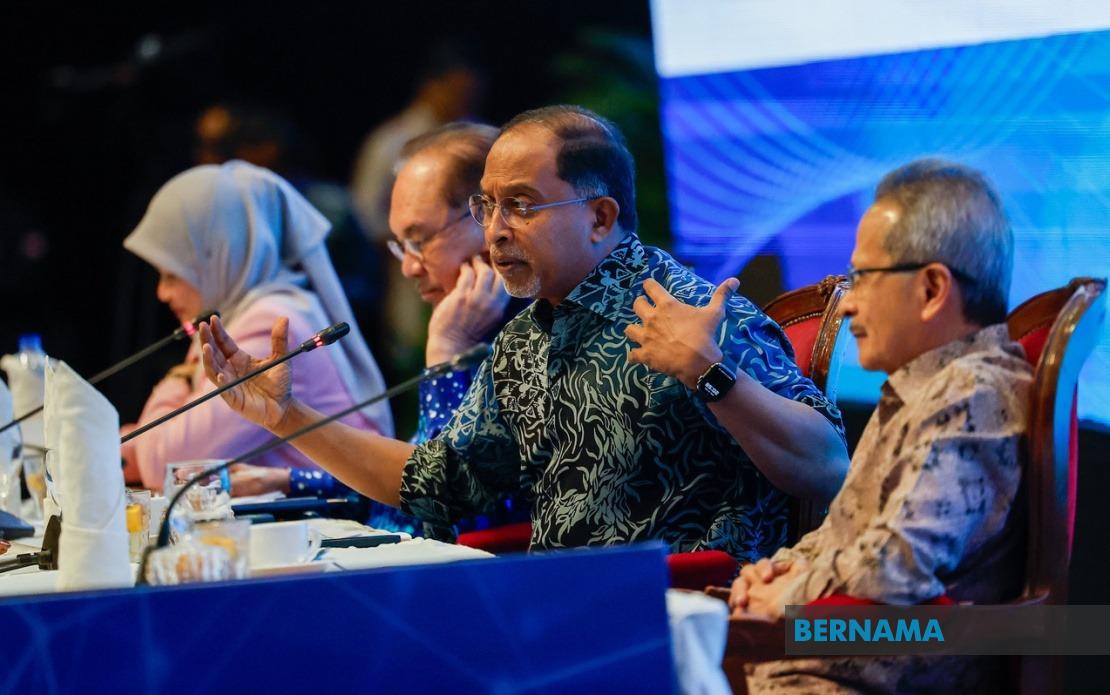
The future trajectory of Malaysia's higher education sector hinges on modernising its legal framework, according to Higher Education Minister Datuk Seri Dr Zambry Abd Kadir, who stressed that existing legislation has become increasingly restrictive and no longer serves the needs of contemporary academic institutions. Speaking at the MADANI Malaysian Scholars Forum Series 13 held at the University of Malaya, Zambry identified the Universities and University Colleges Act 1971—commonly referred to as AUKU—as a critical focus area that demands immediate legislative scrutiny and reform.
The minister outlined a comprehensive strategy to recalibrate Malaysia's regulatory landscape for tertiary education, emphasising that entrenched legal constraints stemming from decades-old statutes undermine the sector's capacity to remain globally competitive. By conducting a thorough examination of higher education legislation, Zambry argued, policymakers can unlock pathways for greater institutional flexibility whilst safeguarding educational quality and integrity. The review process represents a recognition that rigid regulatory frameworks, however well-intentioned at their inception, can inadvertently stifle innovation and restrict the intellectual ecosystem that thriving universities require.
Among the substantive improvements Zambry identified for inclusion in any reformed legal structure are enhanced guarantees of academic freedom, expanded protections for freedom of expression, and mechanisms to amplify student voice in institutional governance. These priorities reflect growing international concern over university autonomy and the recognition within Malaysian policymaking circles that overly prescriptive regulations can deter talented researchers and academics from remaining within the system. The emphasis on student empowerment additionally acknowledges a demographic shift in expectations, particularly among younger cohorts who increasingly demand participatory engagement in decisions affecting their educational experiences.
To operationalise this reform agenda, the Ministry of Higher Education has established an Independent Committee tasked with collating and evaluating submissions from academic stakeholders and student representatives. This consultative approach suggests an intention to ground legislative reforms in evidence gathered from those most directly affected by existing regulatory constraints. By inviting comprehensive input from universities, researchers, and student organisations, the government signals openness to diverse perspectives on how best to recalibrate the legal architecture governing the sector.
Crucially, Zambry disclosed that officials are exploring the possibility of drafting a unified Higher Education Act to consolidate the fragmented body of legislation currently governing tertiary institutions. The proposed consolidation would represent a substantive structural change, replacing the current patchwork of multiple acts with a single, comprehensive legal instrument designed to coordinate various aspects of higher education governance. Such an approach, successfully implemented in some comparable nations, could reduce bureaucratic complexity whilst enabling more coherent policy implementation across the sector.
The forum, which attracted Prime Minister Datuk Seri Anwar Ibrahim as moderator, underscored the political significance attached to these issues at the highest levels of government. Education Minister Datuk Seri Fadhlina Sidek complemented Zambry's remarks by articulating a parallel vision for primary and secondary education, emphasising her ministry's commitment to equitable access through what she termed a "humane education" approach. Tengku Datuk Mohd Azzman Shariffadeen, president of the Academy of Sciences Malaysia, provided additional institutional perspective on the interconnections between regulatory frameworks and research quality.
Fadhlina's contribution highlighted that access expansion remains a central imperative alongside regulatory modernisation. The Ministry of Education has prioritised removal of geographic and socioeconomic barriers to learning through initiatives including Schools in Hospital, facilities within rehabilitation centres, and specialised models serving Orang Asli communities. The universal provision of free pre-school access, she noted, operationalises the principle that educational opportunity must commence in early childhood rather than awaiting formal schooling entry.
The minister articulated a philosophical argument that educational outcomes transcend examination performance metrics or workforce preparation alone. Instead, she advocated for holistic development encompassing intellectual capacity, emotional intelligence, resilience, and ethical grounding. This framing acknowledges that contemporary societies require graduates capable of navigating complexity, ethical ambiguity, and rapid change—competencies that standardised assessment frameworks often fail to capture or cultivate.
Fadhlina's recognition that students arrive at educational institutions with diverse circumstances, including anxiety and various vulnerabilities requiring institutional attention, signals a shift toward understanding education as encompassing pastoral and psychological dimensions alongside intellectual instruction. This perspective aligns with global trends in pedagogical thinking and reflects evidence that supportive institutional environments substantially influence educational outcomes, particularly for disadvantaged learners.
The simultaneous articulation of higher education reform and foundational educational access expansion suggests Malaysian policymakers are pursuing complementary rather than competing initiatives. Modernising university governance frameworks whilst simultaneously expanding equity in early and secondary education creates potential for systemic coherence, enabling talented students from previously marginalised backgrounds to progress through increasingly internationally competitive tertiary institutions. For regional observers, Malaysia's deliberation over AUKU and the broader regulatory landscape offers instructive precedent for balancing institutional autonomy with public accountability in rapidly evolving educational environments.
The trajectory outlined by Zambry and Fadhlina indicates recognition that sustainable competitive advantage in knowledge economies depends upon creating environments where academic innovation flourishes, student potential develops comprehensively, and institutional governance keeps pace with international standards. Whether the proposed legislative reforms materialise into substantive change remains contingent upon political will and stakeholder consensus, but the forum's high-level engagement suggests serious governmental commitment to addressing longstanding critiques of Malaysia's university sector.

