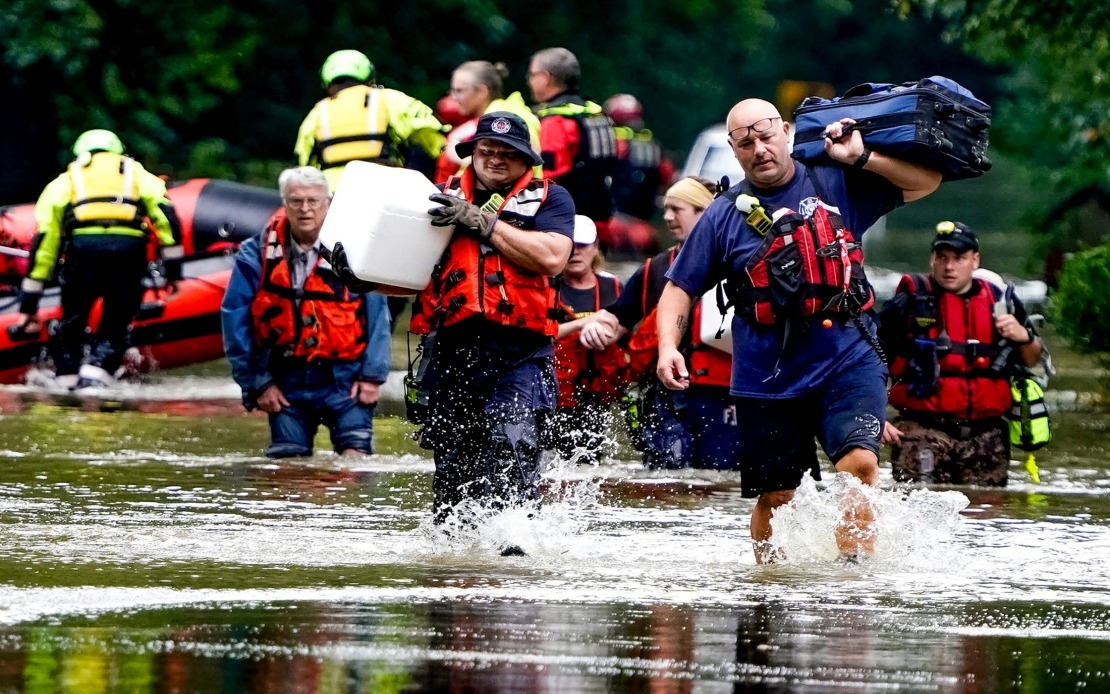
A catastrophic flooding event has struck Indiana following an intense storm system that deposited more than eleven inches of rainfall across portions of the state, resulting in at least six confirmed deaths and prompting widespread emergency rescue operations. The disaster has forced state authorities to declare local emergencies and accelerated federal disaster relief procedures as communities grapple with the scale of destruction.
The worst impacts concentrated along the White River corridor, which snakes from Hamilton County through the northern suburbs of Indianapolis. In this critical zone, emergency responders extracted more than ninety people and forty-five pets from flood-threatened areas, according to NBC News reporting. The Ravenwood neighbourhood in Indianapolis presented scenes of inundation typical of the catastrophe, with water engulfing vehicles and climbing to residential doorways. Residents improvised water-based transit using kayaks and rowboats to navigate streets transformed into temporary waterways.
The meteorological intensity of the storm underscores the magnitude of the crisis. The National Weather Service documented rainfall exceeding eleven inches across certain locations within a forty-eight-hour window. Such precipitation volumes overwhelmed drainage infrastructure and swollen the White River to dangerous levels. In Anderson and Noblesville, the river crested above twenty-four feet, obliterating water level records established over a century ago in 1913. This represents a hydrological event of extraordinary rarity, one that emergency management officials described as occurring perhaps once in a generation.
Governor Mike Braun engaged directly with the federal government to accelerate disaster response mechanisms. He confirmed discussions with President Donald Trump regarding expedited approval of a Federal Emergency Management Agency declaration, which streamlines federal resources and funding toward recovery efforts. Braun's public statements emphasised the human toll of the disaster while urging residents to treat ongoing flood warnings with appropriate gravity and to avoid contact with floodwaters that remain dangerous.
Indianapolis Mayor Joe Hogsett declared a local emergency and ordered immediate evacuation of residences situated along riverbanks where water levels continued rising dangerously. Officials across multiple counties confirmed fatalities in Jennings, White, Porter, La Porte, and Delaware counties. In Delaware County, a fifty-eight-year-old woman perished after apparently attempting to navigate her vehicle through rising floodwaters, an all-too-common cause of flood-related deaths. Jacob Spence, who directs Marion County Emergency Management operations, characterised the event as unprecedented, noting that water managers were documenting new record levels across the region's hydrological systems.
Even as initial emergency response efforts continued, meteorologists maintained flash flood warnings across central Indiana and forecast additional storm activity in the coming hours. Todd Wilson, directing Indianapolis' public works operations, emphasised that water levels had not stabilised and continued climbing, making compliance with evacuation directives and flood warnings essential for public safety. The ongoing threat meant that rescue operations would likely persist for several days as the flooding cycle completed its course.
The Indiana disaster represents merely one component of a broader severe weather system afflicting the American Midwest. Tornadoes, torrential rain, and flash flooding extended across a vast geographical expanse stretching from the Chicago metropolitan area eastward through western Pennsylvania, multiplying the overall casualty count and infrastructure damage. This regional character suggests atmospheric conditions conducive to sustained severe weather affecting multiple states simultaneously, complicating response and recovery coordination.
For Malaysian and Southeast Asian observers, the Indiana flooding illustrates the escalating frequency and intensity of extreme weather events affecting developed nations with substantial infrastructure. Climate scientists increasingly document patterns of extreme precipitation and flooding in temperate regions, mirroring concerns about intensified monsoon seasons and flooding challenges in Southeast Asia. The emergency response mechanisms deployed in Indiana—federal disaster declarations, interstate coordination, advanced warning systems—offer comparative models for regional preparedness, though the financial and logistical resources available in the United States often exceed those of developing economies.
The flooding underscores vulnerabilities that persist even in wealthy, technologically advanced societies when confronted with meteorological extremes. Indiana's experience demonstrates that historical flood records provide insufficient guidance for contemporary extreme weather planning, as new records continue materialising. For tropical and subtropical regions with growing urbanisation and climate variability, such events highlight the imperative of investing in resilient infrastructure, early warning systems, and comprehensive evacuation protocols that function reliably when populations face imminent water-related hazards.

