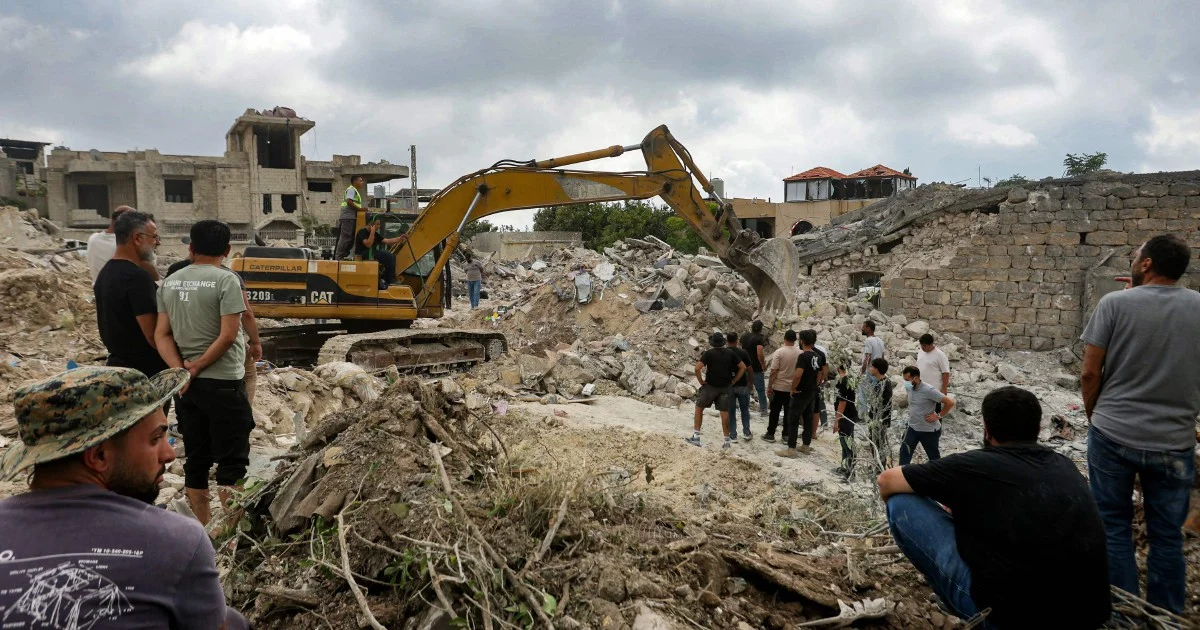
Lebanese militant group Hizbollah has categorically refused to accept any Israeli military occupation of southern Lebanese territory, with party leader Naim Qassem making the declaration in response to recent statements from Israel's Prime Minister Benjamin Netanyahu regarding prolonged troop deployment. The confrontation represents a deepening of tensions along the Lebanon-Israel border and underscores the fragility of any ceasefire arrangement between the two parties.
Netanyahu had recently asserted that Israeli forces would remain in southern Lebanon for whatever period deemed necessary to ensure security objectives, effectively indicating an open-ended military commitment to the region. This pronouncement alarmed Lebanese authorities and Hizbollah leadership, who viewed it as a violation of potential settlement terms and a continuation of Israeli territorial control that has historically characterised the disputed Shebaa Farms area and other contested zones.
Qassem's explicit rejection of a formal security zone represents a fundamental incompatibility between Israeli and Hizbollah positions on any lasting political settlement. The Hizbollah leader's refusal to accept Israeli military installations or controlled territories in Lebanese sovereign space reflects the organisation's nationalist positioning and its broader resistance ideology. For Hizbollah, acceptance of such arrangements would constitute capitulation to external military power and undermine its standing within Lebanon's complex political landscape.
The dispute over security arrangements highlights unresolved territorial and political questions that have plagued Lebanon-Israel relations for decades. Beyond the immediate military confrontation, the question of what constitutes legitimate national defence versus occupation remains deeply contentious. Israeli leadership historically justified security zones as necessary buffers against militant attacks, while Lebanese and Hizbollah representatives view such arrangements as violations of territorial integrity and sovereignty.
Regional observers note that the security zone proposal echoes Israeli military strategies employed during previous conflicts, particularly the 1982-2000 occupation of southern Lebanon and subsequent buffer zone arrangements. Historical precedent suggests that Israeli security zones, even when originally presented as temporary measures, typically evolved into extended occupations with significant humanitarian and political consequences. This history informs current Lebanese resistance to any formalised Israeli military presence.
The impasse carries implications extending beyond bilateral Lebanon-Israel dynamics. Regional powers including Iran, which maintains strong ties with Hizbollah, and regional mediators have sought to facilitate dialogue and prevent escalation. Any settlement must reconcile fundamentally opposed security concepts, creating considerable diplomatic challenges. The involvement of international stakeholders further complicates negotiations, as does Hizbollah's insistence on maintaining military capability alongside civilian Lebanese state structures.
For Malaysia and Southeast Asian observers, the Lebanon situation illustrates broader patterns of post-conflict settlements in contested regions. The difficulty in establishing mutually acceptable security arrangements reflects how deeply rooted mistrust complicates conflict resolution, even when both parties express interest in ending active hostilities. The failure to definitively resolve territorial disputes and security concerns perpetuates cycles of tension and renewed conflict.
The Palestinian territories experience comparable challenges, with security zone arrangements forming contentious issues in ongoing Israeli-Palestinian negotiations. These regional disputes demonstrate how military occupation and security zone concepts remain incompatible with accepted principles of sovereignty and self-determination, creating persistent sources of regional instability affecting broader Middle Eastern politics.
Qassem's categorical rejection of Israeli security zones suggests that any viable ceasefire framework must address security concerns through alternative mechanisms not involving permanent Israeli military presence. Such mechanisms might include international peacekeeping forces, demilitarised zones monitored by neutral parties, or comprehensive arms agreements. However, building confidence sufficient to implement such arrangements requires negotiation progress that currently appears distant.
Lebanon's government faces pressure to establish functional control over southern territories while managing its relationship with Hizbollah, a powerful military and political actor. Asserting state authority in regions where Hizbollah maintains considerable influence complicates efforts to present a unified position in negotiations with Israel. This internal Lebanese political dynamic significantly constrains negotiating flexibility and contributes to the stalled diplomatic process.
The security zone dispute also reflects differing interpretations of relevant United Nations resolutions and international law. Israeli and Lebanese representatives invoke different legal frameworks to justify their positions, making consensus on legitimacy difficult. Resolution of these interpretative disagreements requires international legal and diplomatic expertise often unavailable in bilateral negotiations alone.
Moving forward, de-escalation appears dependent on third-party mediation and creative diplomatic solutions that transcend conventional security arrangements. Whether international community efforts can bridge the fundamental divide between Hizbollah's sovereignty concerns and Israeli security requirements remains uncertain. Without meaningful progress toward acceptable compromises, the Lebanon-Israel border will likely remain a flashpoint for regional tensions.