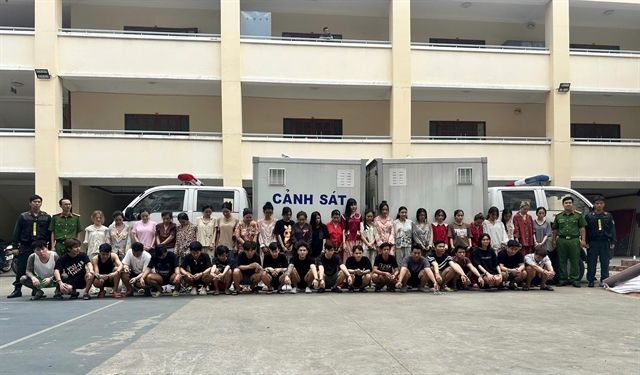
Ho Chi Minh City's drug enforcement division has dealt a significant blow to an international narcotics trafficking operation specialising in disguised controlled substances. The operation, which came to light after investigators tracked illicit trade in chemically-altered e-cigarettes, has resulted in 49 arrests spanning multiple countries and provinces. Among those detained are nationals from South Korea, China, and Cambodia, signalling the transnational scope of a smuggling network that was targeting young consumers in Vietnam's largest metropolis.
The seized materials paint a picture of a well-organised distribution operation. Officers recovered 1,670 vape pods along with hundreds of grams of ketamine and methamphetamine in auxiliary drugs seizures. The primary substance infused into the e-cigarette cartridges was etomidate, a pharmaceutical-grade anaesthetic restricted to hospital operating theatres under qualified medical supervision. Vietnam's Government added this compound to its controlled substances registry in January, making its commerce and consumption illegal offences.
The sophistication of the scheme lay partly in its marketing strategy. The etomidate-laced vapes were packaged and promoted under innocuous, even appealing names—"chill pod", "relaxation pod", "sleep-well pod", and "fly pod"—designed to obscure their true pharmacological nature from casual consumers. These products found their way into social venues frequented predominantly by younger demographics: nightlife establishments, karaoke lounges, and rented residences. The branding deliberately mimicked trendy consumer products, lowering the guard of potential users who might otherwise question the origins of unmarked devices.
The investigation originated with intelligence regarding a street-level dealer operating on An Duong Vuong Street in An Lac Ward. This individual, identified as Nguyen Huu Huan, 28, from Dong Thap province, had adopted the street nickname Ba Giá. Once apprehended alongside his wife Ngo Thi Kim Chi, 30, on June 25, interrogation revealed their role as mid-level distributors. Further forensic work exposed two distinct supply chains funnelling product to Huan's operation. One distribution network was headed by Huynh Ngoc Thuy Nhu, 26, working with associate Hua Tuong Vy, 20, both based in Ho Chi Minh City. This cell maintained local inventory and managed distribution to street retailers like Huan.
The second and arguably more critical supply chain operated across Vietnam's international boundary. Le Quoc Duy, 40, originating from An Giang province, orchestrated the cross-border component by smuggling shipments through porous land crossings with Cambodia before consolidating stocks and redirecting them northward to Ho Chi Minh City. When apprehended, Duy's premises yielded thirty-seven vape pods plus substantial quantities of complementary narcotics—200 grammes each of ketamine and methamphetamine. This discovery underscores how etomidate trafficking often operates alongside conventional drug smuggling operations, suggesting integrated criminal enterprises rather than isolated incidents.
A third supplier faction consisted primarily of foreign nationals, with Cambodian national Han Kiat at the helm alongside three additional international accomplices. This particular network focused on distributing product specifically to expatriate communities within Ho Chi Minh City, indicating market segmentation by ethnicity or nationality. The involvement of foreign nationals at multiple levels of the operation highlights Vietnam's vulnerability to international criminal syndicates exploiting its position in Southeast Asia's porous narcotics landscape.
The public health implications of etomidate abuse warrant particular attention. Unlike conventional nicotine inhalation, etomidate enters the bloodstream through the lungs within seconds when vaporised. Initial effects mimic mild intoxication—dizziness and minor perceptual distortions—but can rapidly escalate to severe neurotoxicity, profound sedation, muscular dysfunction, and unconsciousness. Most alarmingly, combining etomidate with alcohol or other central nervous system depressants creates lethal risk through respiratory arrest. A single session with contaminated devices could theoretically prove fatal, particularly for users unaware of the substance's presence.
Detection evasion constituted a deliberate component of the criminal strategy. Standard rapid-screening kits available in street contexts cannot identify etomidate because its molecular architecture differs fundamentally from recognised recreational drugs like heroin, cannabis, or methamphetamine. Only specialised laboratory analysis systems operated by law enforcement and forensic institutions can accurately identify the substance. Traffickers exploited this knowledge gap explicitly, marketing products as "undetectable" or "100 per cent negative" on drug tests to reassure customers and expand their consumer base among individuals concerned about law enforcement detection.
For Southeast Asian policymakers and enforcement agencies, this case demonstrates evolving criminal adaptation. Traditional drug interdiction targets powder and plant-based narcotics; the transformation of controlled pharmaceuticals into aerosol form represents a regulatory blind spot. The use of vaping infrastructure—itself a legitimate consumer technology—as a delivery mechanism mirrors tactics employed by organised crime networks adapting to enforcement pressures. Vietnam's January decision to designate etomidate as controlled substance represents appropriate regulatory response, yet the operation's scale suggests enforcement mechanisms still lag behind criminal innovation.
The transnational dimension carries implications beyond Ho Chi Minh City. The involvement of Cambodian suppliers and Thai adjacency suggests the network accessed a broader Southeast Asian drug production and distribution matrix. The presence of South Korean, Chinese, and Cambodian nationals indicates how globalised criminal enterprises recruit operatives from multiple nations, compartmentalising operations to complicate prosecution and attribution. For Malaysia and other regional partners, such networks present escalating challenges as illicit goods increasingly adopt deceptive packaging and technology-assisted delivery mechanisms.
Ho Chi Minh City authorities have issued formal warnings directed especially toward young consumers and their families. They caution against acquiring e-cigarettes from unverified sources, emphasise the dangers of products lacking transparent manufacturing documentation, and remind the public that possession, sale, and transport of controlled substances carry criminal penalties regardless of form or packaging. The case underscores how rapid technological adoption and globalised supply chains create new vectors for narcotics trafficking even as traditional enforcement mechanisms improve.

