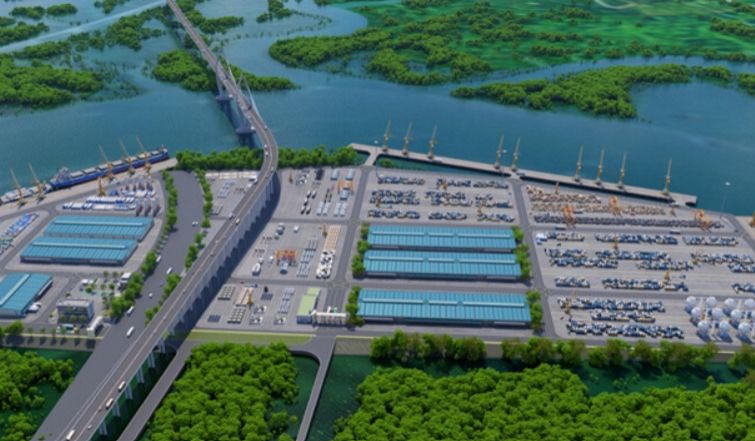
Vietnam's economic powerhouse, Ho Chi Minh City, officially commenced construction on 5 July on the QTM International Port, a major infrastructure project valued at nearly VNĐ6.9 trillion (US$261 million). The initiative represents a strategic effort to bolster the country's maritime transport capacity and address surging demand for cargo handling in the southern region, particularly following recent administrative reorganisation that has expanded the city's operational footprint and commercial requirements.
Situated within the expansive Cai Mep-Thi Vai deep-water port complex in Phu My Ward, the new facility will span more than 80 hectares upon completion. The port has been engineered with an annual throughput capacity of 16 million tonnes, positioning it as a significant addition to Vietnam's existing container infrastructure. This capacity mirrors the ambitions of authorities to handle the region's rapidly expanding trade volumes and cement Ho Chi Minh City's role as Southeast Asia's leading logistics hub.
The development schedule spans two phases, running from 2026 through 2034, allowing the city to integrate the project methodically into existing port operations. Integrated within the port's design is a comprehensive warehousing and logistics complex extending across nearly 200,000 square metres. This consolidation of cargo handling, storage, and distribution facilities under unified management promises operational efficiencies that will benefit both local enterprises and international shippers utilising Vietnamese trade corridors.
Once operational, the port infrastructure will incorporate eight berths configured to accommodate container vessels and bulk carriers up to 60,000 deadweight tonnes, with engineering parameters permitting future expansion to receive vessels reaching 100,000 DWT. Such specifications align the project with contemporary standards for mega-container ships that increasingly dominate Trans-Pacific and European shipping lanes, ensuring Ho Chi Minh City can service the largest modern fleets without constraining transport economics.
Hoang Nguyen Dinh, vice chairman of the HCM City People's Committee, framed the investment within the context of administrative consolidation. The recent merger of three localities has intensified demand for reliable goods transportation and raw material distribution across the expanded municipal area. Officials contend that developing an integrated, regionally connected logistics network is essential to sustaining economic momentum and accommodating the growth trajectory expected from the enlarged city's commercial sectors.
Statistical evidence supports the urgency of expansion. During the first half of this year, cargo volumes transported through maritime and inland waterway channels in Ho Chi Minh City expanded by 7.3 per cent, underscoring the trajectory of growth that contemporary port facilities must accommodate. This uptick reflects broader patterns of increased trade activity and supply chain reorganisation across Southeast Asia following pandemic disruptions and shifting manufacturing investment patterns favouring Vietnam.
Deputy Prime Minister Pham Gia Tuc highlighted logistics efficiency as a national competitiveness concern. Current logistics expenditure accounts for 14 to 16 per cent of Vietnam's gross domestic product—a substantially elevated proportion compared to regional competitors and developed economies. Modernised port infrastructure, Tuc contended, offers a pathway to reduce operational costs, enhance export competitiveness, and strengthen Vietnam's position within global supply chains increasingly focused on cost-efficient sourcing alternatives to China.
Tuc pressed project developers to accelerate construction phases, requesting that the initial operational stage commence within eleven months. This aggressive timeline reflects Ho Chi Minh City's development aspirations, as authorities target double-digit economic growth for the forthcoming fiscal period. The early operational launch would enable the city to capture anticipated cargo growth before alternative regional ports expand capacity, potentially securing market share in the intensely competitive Southeast Asian container shipping sector.
Ho Chi Minh City's geographic advantages position it favourably for such ambitions. The municipality commands approximately 110 kilometres of coastline and operates one of Vietnam's most sophisticated maritime transport systems. The Cai Mep-Thi Vai complex already functions among the world's premier container port hubs, offering direct shipping services connecting to Trans-Pacific and European trade routes. The QTM International Port project amplifies these existing capabilities, enabling the city to consolidate its standing as an essential transhipment node for goods flowing between Asia's manufacturing centres and consumer markets in North America and Europe.

