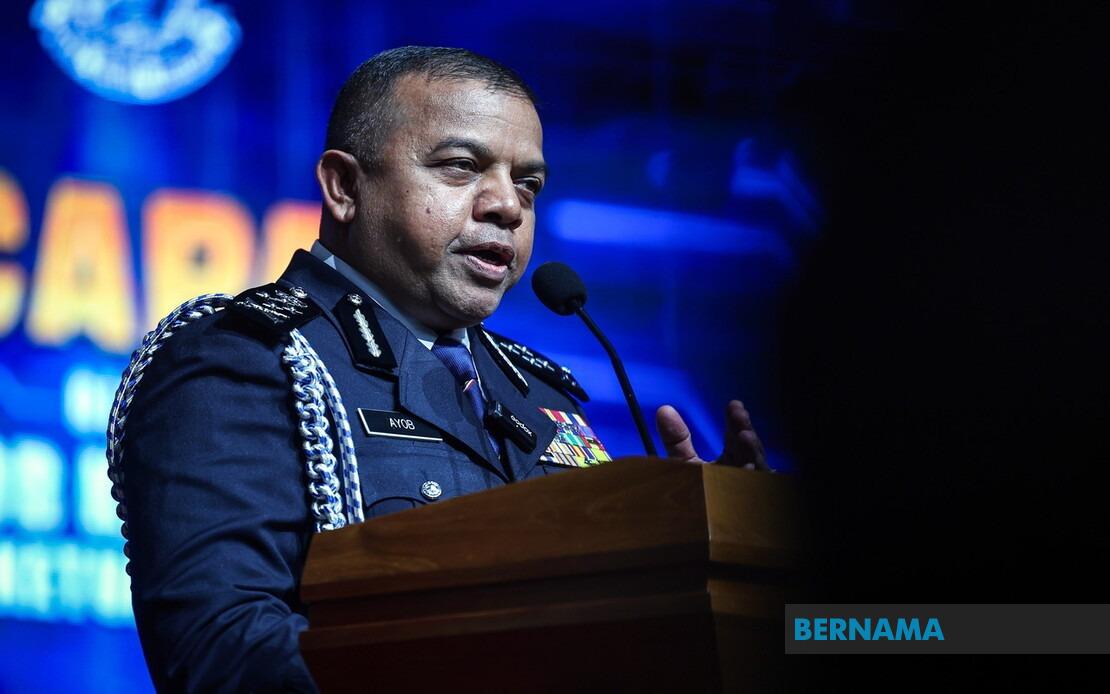
Tan Sri Ayob Khan Mydin Pitchay, who officially concluded his tenure as Deputy Inspector-General of Police after nearly 35 years of service, delivered an impassioned farewell address today calling upon all members of the Royal Malaysia Police (PDRM) to steadfastly defend the institution's reputation and moral foundations. Speaking during a handover ceremony at the Police Training Centre (PULAPOL) in Kuala Lumpur, he stressed that officers and personnel must never allow personal ambition or financial temptation to compromise the legacy built by generations of police personnel who have made profound sacrifices for the nation.
The retiring 29th deputy inspector-general of police presented a stark warning against the erosion of ethical standards within the force. He explicitly cautioned members against three particular pitfalls: abandoning institutional principles for personal gain, compromising personal integrity for monetary reward, and leveraging official authority to victimize those who cannot defend themselves. His message crystallized around a central conviction that every police officer carries responsibility not merely to law and superiors, but to ordinary citizens who depend upon the force to deliver justice fairly and impartially.
Ayob Khan's emphasis on character when unobserved reveals deeper concerns about organizational culture and the gap between public-facing conduct and private behavior. He articulated a philosophy rooted in moral accountability to a higher power, invoking religious conviction as a counterweight to institutional oversight. This distinction between behavior performed for external validation and behavior rooted in genuine principle addresses a perennial challenge in law enforcement—ensuring that ethical conduct reflects internal values rather than merely compliance with visible supervision or formal expectations.
The handover ceremony witnessed the appointment of Datuk Seri Ibrahim Darus, previously Director of the Bukit Aman Special Branch, as Acting Deputy Inspector-General of Police, effective from today. Inspector-General of Police Tan Sri Mohd Khalid Ismail presided over the ceremonial transfer of responsibilities, underscoring the formal significance of leadership transition within Malaysia's premier policing institution. This succession marks a critical juncture for institutional continuity and the transmission of values from one generation of police leadership to the next.
Ayob Khan's career trajectory illuminates the depth of experience now departing from the force's upper echelons. His professional journey encompassed substantial responsibility across multiple critical domains: counter-terrorism operations within the Special Branch, state-level policing as Johor Police Chief, narcotics investigation leadership as Director of the Narcotics Crime Investigation Department, and criminal case management as Director of the Bukit Aman Criminal Investigation Department. His appointment to the deputy inspector-general position in June 2023 capped three decades of progressive advancement through increasingly demanding portfolios.
The retiring officer acknowledged the profound personal toll inherent in police service, recognizing the separations from family necessitated by operational demands and the psychological burden of working under sustained pressure. His reflection on unrewarded sincere effort speaks to potential frustrations within the service—the gap between sacrifice and recognition that can undermine morale or tempt officers toward corruption as compensation for perceived inadequate appreciation. By reframing such disappointments through religious conviction, he offered a philosophical framework for persisting in ethical conduct despite insufficient external acknowledgment.
Ayob Khan's characterization of his career as transcending mere occupational employment reveals how institutional identity shapes individual purpose. He described PDRM as a transformative institution that instilled within him foundational virtues: courage, loyalty, and sacrifice. This conception of policing as calling rather than job carries implications for recruitment, training, and retention strategies, suggesting that effective institutional performance depends upon attracting and developing personnel who internalize professional values as personal identity rather than treating them as external requirements.
The timing and context of this farewell address gains significance against Malaysia's broader institutional landscape. Public discourse regarding police conduct, corruption, and abuse of power has intensified in recent years, placing heightened scrutiny upon the force's internal culture and accountability mechanisms. A departing senior leader's public emphasis on integrity and ethical conduct serves multiple constituencies: it affirms to the public that institutional leadership recognizes and prioritizes integrity, it communicates clear expectations to subordinate officers regarding non-negotiable standards, and it establishes a moral baseline against which the incoming leadership's actions will inevitably be measured.
The selection of Ibrahim Darus as acting successor represents a transition to leadership with specialized expertise in intelligence and counterintelligence operations. The Special Branch background differs meaningfully from conventional criminal investigation or public order policing, potentially signaling strategic priorities within the Inspector-General's thinking regarding institutional direction. How this new leadership consolidates and advances the integrity commitments articulated by Ayob Khan will substantially influence public confidence in the force's commitment to ethical governance during a period of institutional attention and scrutiny.
Ayob Khan's insistence that sincere service ultimately receives divine recognition rather than necessarily human appreciation presents a cultural perspective distinct from Western institutional frameworks. This religious framing of professional duty creates alternative motivational structures and accountability mechanisms, one where temporal reward and punishment exist alongside transcendent moral evaluation. For Malaysian police personnel navigating complex operational environments with limited resources and significant public skepticism, such philosophical grounding may sustain commitment to principle even when institutional recognition remains elusive or when peers compromise standards for personal advantage.
The farewell ceremony itself functions as institutional ritual, formally marking the conclusion of one leadership chapter and the commencement of another. These ceremonial transitions serve important communicative functions, signaling stability within hierarchies and demonstrating orderly succession processes. For a police institution facing periodic criticism regarding leadership quality and ethical standards, visible succession ceremonies affirm that institutional mechanisms for leadership transition function properly and that departing leaders can articulate moral expectations clearly to their successors.
As Malaysia's police force navigates contemporary challenges encompassing cybercrime, evolving terrorism threats, and persistent public accountability demands, the ethical foundation emphasized by Ayob Khan becomes increasingly foundational to institutional legitimacy. A police force perceived as broadly corrupt or self-serving cannot effectively command public cooperation or gather reliable intelligence from communities. The departing deputy inspector-general's emphasis upon integrity as essential to the force's fundamental purpose rather than as peripheral ethical embellishment directly addresses this institutional reality.
Moving forward, the PDRM faces the challenge of translating such leadership affirmations regarding integrity into systemic practices and accountability mechanisms that prevent the ethical drift that Ayob Khan warned against. Whether his farewell message catalyzes genuine institutional reinforcement of ethical conduct or remains a ceremonial affirmation without substantive consequence will substantially influence public confidence in the force's commitment to reform and accountability.

