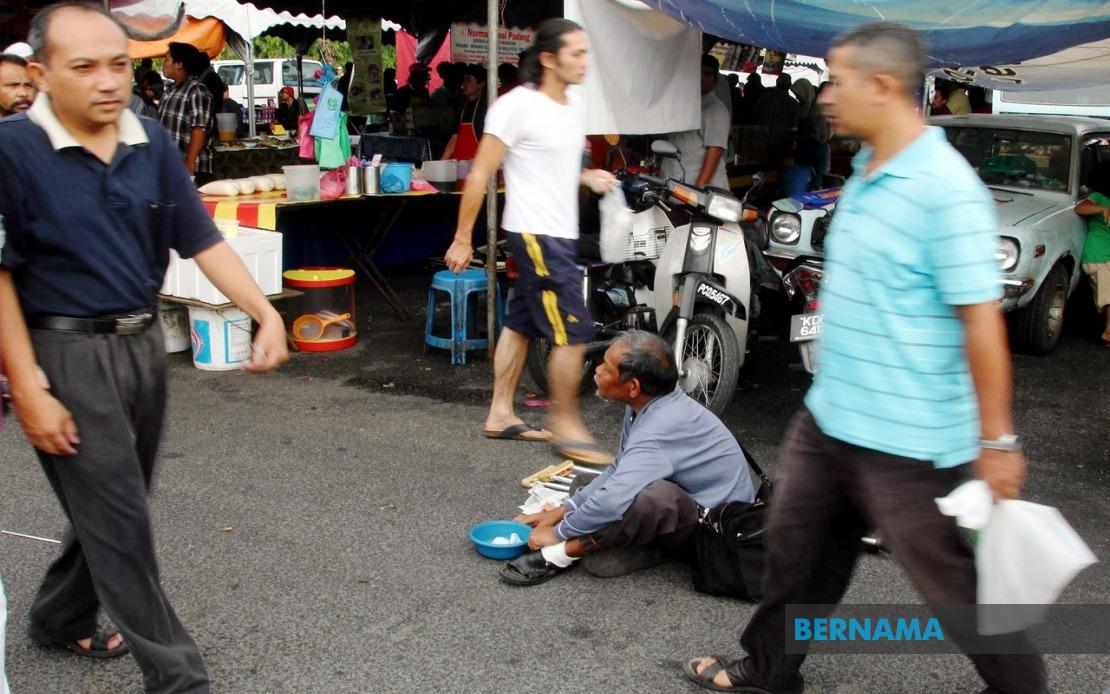
The Malaysian Home Ministry has flagged growing concerns that begging operations involving foreign nationals—particularly children—may be orchestrated by organised crime groups seeking to profit from exploitation. In a parliamentary response, the ministry acknowledged that such activities represent a serious law enforcement challenge and potential threat to the country's international reputation.
Data released by the Immigration Department underscores the scale of the problem. Between the start of 2025 and the end of May, officers conducted 836 separate enforcement sweeps across Kuala Lumpur and its surrounding districts. These operations resulted in the inspection of more than 10,600 individuals, with nearly 5,500 foreign nationals detained on immigration-related charges. Among those apprehended, 42 were specifically involved in begging activities, suggesting a systematic presence rather than isolated incidents.
The Home Ministry's disclosure came in response to a parliamentary query from Fong Kui Lun, the Bukit Bintang member of parliament, who expressed concern about the prevalence of foreign beggars—including minors—in high-visibility tourist districts such as Bukit Bintang, Jalan Alor, and Changkat Bukit Bintang. These areas attract significant domestic and international foot traffic, making them attractive locations for syndicates seeking to maximise earnings through visible street-level operations. The lawmaker's question specifically sought clarity on enforcement effectiveness and strategies to dismantle the networks facilitating such exploitation.
An important dimension of the ministry's investigation involves identifying local collaborators. Beyond detaining foreign nationals engaged in begging, authorities are pursuing inquiries against Malaysian residents suspected of functioning as protectors, coordinators, or financial recipients within these syndicates. This two-pronged approach recognises that such operations cannot function without domestic support structures—individuals who provide safe houses, manage finances, coordinate movements, and shield operations from detection. The existence of such networks suggests sophistication beyond ad-hoc street-level activity.
To strengthen its response, the Immigration Department has fundamentally restructured its enforcement methodology around inter-agency coordination. The ministry emphasised that operations now integrate efforts across the Royal Malaysia Police, Kuala Lumpur City Hall, and other relevant authorities rather than functioning in isolation. Intelligence sharing has been expanded and systematised, enabling agencies to map syndicate networks, identify operational patterns, and pinpoint geographic hotspots where begging is concentrated. This intelligence-led approach represents a shift from reactive enforcement to proactive threat identification.
The KL Strike Force team exemplifies this integrated framework. Comprising representatives from immigration, police, city hall, the Department of Social Welfare, and other enforcement agencies, the team operates through the Federal Territory Security Working Committee structure. Its mandate spans identifying and monitoring begging locations, conducting both routine and surprise integrated operations, expediting the processing of intelligence reports and public complaints, and maintaining sustained surveillance to prevent recurrence following initial enforcement actions. The team's establishment reflects recognition that fragmented agency responses prove insufficient against organised networks.
The ministry has made explicit that it will not tolerate activities that undermine public safety or damage Malaysia's international standing. This language signals political commitment at the highest levels to address what is perceived as a reputational concern alongside a law and order issue. Tourist destinations in particular function as showcases of national governance and social conditions; the presence of child beggars creates negative impressions that extend beyond the immediate humanitarian concern.
Beyond the begging enforcement question, the Home Ministry also addressed foreign worker quota matters in the same parliamentary session. The ministry reported that 314 employers received recommendations for foreign worker quotas from a total of 1,919 applications submitted during a special application window that ran from January 19 through March 31 this year. This special period was specifically created to accommodate employers who had missed the December 31, 2025 deadline for obtaining quotas under the annual ceiling. The recommended employers now await formal approval from the Department of Labour Peninsular Malaysia before they can proceed with hiring foreign workers under the Employment Act 1955.
The foreign worker quota mechanism represents a controlled pathway for legitimate labour immigration, standing in sharp contrast to the irregular and exploitative conditions surrounding foreign beggars. The existence of both processes—one structured and regulated, the other criminal and coercive—highlights the divergence between Malaysia's managed immigration approach for employment and the uncontrolled exploitation networks the Home Ministry is attempting to dismantle. Policymakers appear increasingly conscious that unregulated foreign populations create governance challenges and security vulnerabilities.
For Malaysian readers and regional observers, the Home Ministry's emphasis on syndicate involvement carries significance beyond immediate law enforcement. It suggests authorities recognise that addressing the symptoms of begging through street-level apprehensions, while necessary, proves insufficient without disrupting the underlying criminal infrastructure. The reference to investigating local facilitators indicates that the problem extends beyond cross-border criminal groups to encompass domestic complicity—a reality that complicates solutions and raises questions about how extensive such networks have become within Malaysian society.
The emphasis on reputation and national image in the ministry's statement also reflects Malaysia's positioning as a major Southeast Asian tourism and financial hub. Countries competing for international investment and visitor spending cannot afford persistent visible poverty or exploitation in commercial districts. This pragmatic concern—alongside humanitarian and law enforcement imperatives—likely drives the heightened political attention to the issue and the expanded resources allocated to enforcement operations.

