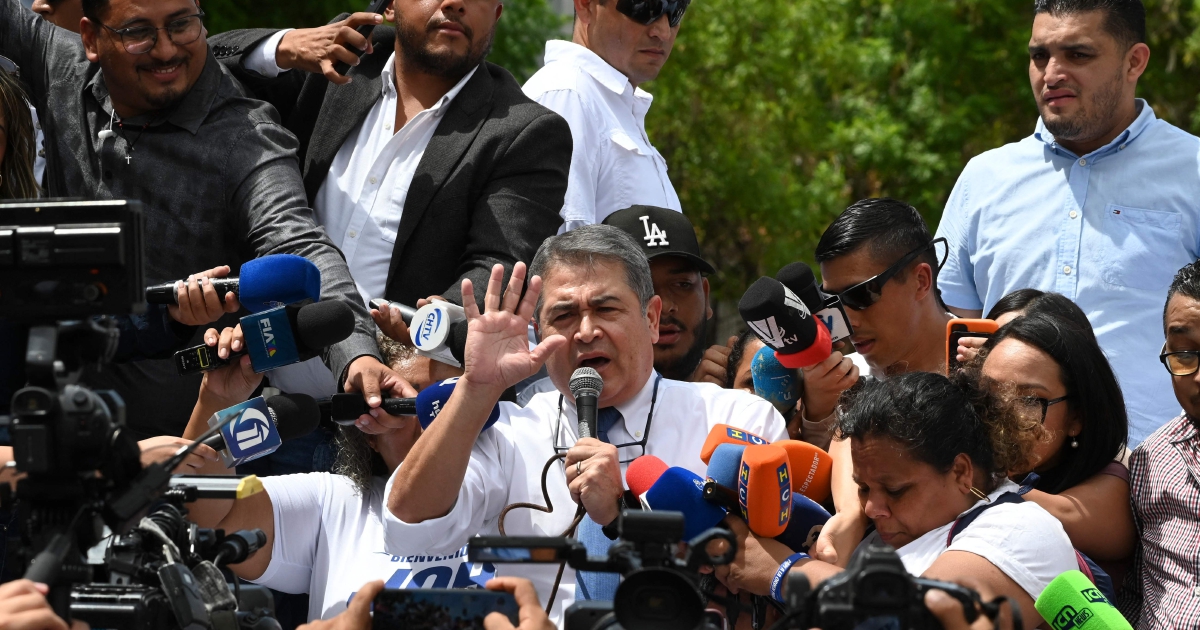
A Honduran court ruled Monday that former president Juan Orlando Hernández, whose conviction for US narcotics trafficking was wiped clean by President Donald Trump's pardon last year, will be permitted to remain free while his domestic corruption proceedings continue. The judicial decision clears a significant legal hurdle for Hernández, who has faced mounting domestic allegations of malfeasance since stepping down from office.
The Trump administration's move to pardon Hernández in February 2025 represented a dramatic intervention in Honduran justice. The ex-leader had been convicted in the United States on charges related to drug trafficking operations, a conviction many observers viewed as establishing his culpability in the larger ecosystem of corruption that plagued Honduras during his decade in power. Yet Trump's clemency effectively erased that legal jeopardy, signalling a strategic recalibration of American engagement with the Central American nation.
Within Honduras itself, however, prosecutors have pursued a parallel track of accountability. The corruption allegations that now consume Hernández's attention stem from his tenure as president, when critics contended that his administration became entangled with organised crime networks and diverted state resources for personal enrichment. These domestic charges operate independently of the US legal system, making the Trump pardon largely irrelevant to their adjudication.
The judge's decision to permit Hernández's release represents a setback for those seeking his immediate incarceration during trial. Such rulings typically hinge on factors including the strength of evidence, the severity of allegations, and the defendant's flight risk. That the court determined Hernández did not pose an unacceptable danger to flee or obstruct justice suggests either confidence in the strength of prosecutorial evidence or perhaps the legal complexity surrounding his status as a pardoned former head of state.
Honduras has long struggled with institutional weaknesses that impede effective anticorruption enforcement. International observers and civil society organisations have repeatedly flagged concerns about judicial independence, prosecutorial resources, and the political pressure exerted by powerful figures with remaining influence networks. Hernández's case thus carries significance beyond the individual defendant—it tests whether Honduras's justice system can deliver meaningful accountability for high-level corruption despite systemic constraints.
The regional implications are considerable. Central America has witnessed rising international pressure regarding governance standards, particularly as drug trafficking remains intertwined with state corruption. Neighbouring Guatemala and El Salvador have both launched aggressive anticorruption investigations targeting former officials, creating a competitive dynamic of sorts across the isthmus. Honduras's handling of the Hernández matter will signal whether it can match the commitment shown by its neighbours.
Trump's pardon decision had provoked sharp criticism from anticorruption advocates, who argued it undermined US efforts to combat hemispheric drug trafficking and corruption. The reasoning behind the clemency remained opaque, though some analysts noted Trump's historical willingness to grant pardons to controversial figures and his administration's potential recalibration of Central American policy priorities away from human rights concerns.
For ordinary Hondurans, Hernández's case resonates deeply. His presidency was marked by allegations that security forces operated with impunity, environmental crimes went unpunished, and public resources disappeared into private hands. Popular frustration with corruption helped propel his successor, leftist president Xiomara Castro, to office in 2022 on a reform agenda. The trajectory of Hernández's corruption trial will demonstrate whether that reformist momentum can translate into institutional change.
The domestic trial itself addresses allegations distinct from US drug trafficking convictions. Prosecutors accuse Hernández of illicitly enriching himself, accepting bribes, and abusing presidential authority—crimes that could carry substantial prison sentences under Honduran law. The judge's decision to permit his release does not prejudge the trial's outcome but does represent a procedural victory for the defence.
International organisations monitoring Honduras's judicial performance will likely scrutinise the trial's progression closely. Transparency International, human rights groups, and OAS observers have emphasised that meaningful reform requires prosecuting high-level officials without regard to political connection. A conviction would demonstrate that such accountability is possible; an acquittal would reinforce perceptions of impunity.
What remains unclear is whether Hernández's release reflects judicial confidence or judicial compromise. Honduras's courts have historically faced pressure from powerful interests invested in minimising high-profile prosecutions. Observers will watch whether the trial proceeds with rigour or whether delay and procedural complications accumulate, as has occurred in other corruption cases throughout the region.
The coming months will test both Honduras's institutional capacity and the interplay between national and international justice mechanisms. While Trump's pardon insulated Hernández from US prosecution, it cannot shield him from domestic accountability—assuming Honduras's system functions as intended. The case encapsulates broader Central American struggles to balance institutional weakness, powerful interests, and legitimate demands for accountability.

