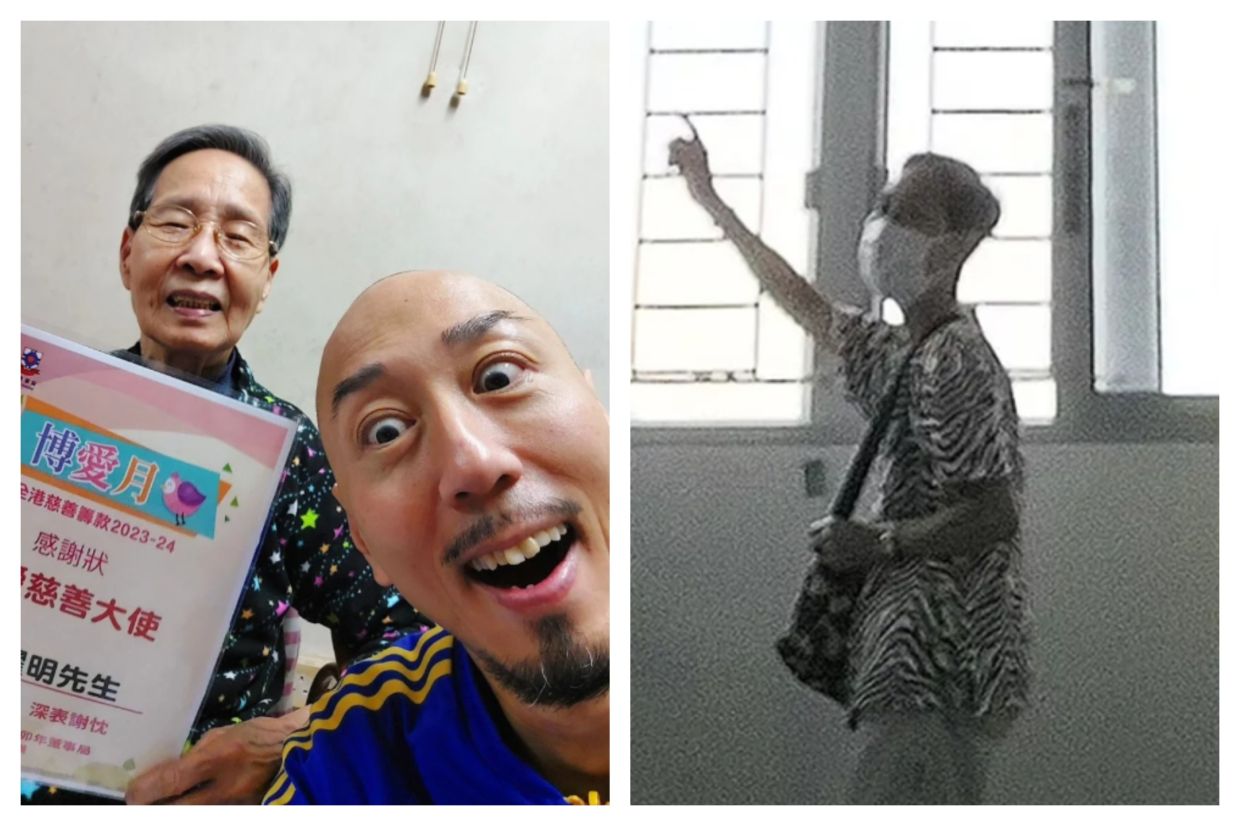
Hong Kong actor and TVB mainstay Dai Yiu Ming has finally achieved a goal that has driven him for years: acquiring a property for his ageing mother. The 54-year-old performer recently announced the purchase on Instagram, sharing images of the residence and its views, marking a pivotal moment in both their lives. His decision to make this investment, despite describing the cost as substantial, underscores a commitment rooted in filial duty that extends far deeper than the financial transaction itself.
The emotional resonance of Dai's announcement lies not merely in the accomplishment of homeownership, but in the journey that preceded it. His mother, now in her 80s, has endured a lifetime of housing insecurity and modest circumstances. The bulk of her years were spent in temporary shacks and aging public housing blocks, environments that spoke to the economic struggles of post-war Hong Kong. Dai's reflection on her past illuminates the hardship she faced, including harrowing memories of sheltering in air-raid bunkers during wartime, where she managed survival by foraging for sweet potato leaves. Against this backdrop of deprivation, his ability to provide her with stable, dignified accommodation takes on profound symbolic weight.
In his Instagram caption, Dai articulated a philosophy that challenges contemporary values centred on material accumulation and individual advancement. He emphasised the irreplaceable nature of shared time with loved ones, suggesting that the astronomical cost of the property was justified by the finite opportunity to ensure his mother's comfort in her remaining years. His admission that he lacks the capacity to amass wealth quickly reveals a grounded humility about his earnings as a character actor, yet he frames this limitation not as failure but as motivation for the discipline required to save incrementally over extended periods. This perspective resonates particularly in societies like Malaysia and across Southeast Asia, where multi-generational family obligations and respect for elders remain deeply embedded in cultural values.
Dai's career trajectory itself provides context for understanding the significance of this achievement. He commenced his entertainment industry journey in 1991 through ATV's training programme, making his debut two years later. However, his initial experience proved unfulfilling; after merely one year with the broadcaster, he departed owing to a sense that his contributions went unrecognised and undervalued. This setback led him to pivot toward technical work, securing employment as a computer repair technician for half a year before TVB offered him a contract in 1994. That decision marked the genuine beginning of his professional stability, establishing the foundation from which he could eventually accumulate the savings necessary for homeownership.
Over three decades with TVB, Dai has cultivated a solid reputation as a reliable supporting player, appearing in numerous dramas and becoming a familiar face to Hong Kong television audiences. Rather than pursuing stardom or lead roles, he has occupied the space occupied by skilled character actors whose consistent presence lends credibility and texture to productions. This steady, unglamorous career path—precisely the kind that generates reliable income rather than explosive wealth—made his long-term savings goal feasible, though it required patience and financial discipline that younger generations increasingly struggle to maintain.
The personal circumstances surrounding Dai's relationship with his mother add another layer to his decision to prioritise her welfare. His father died more than a decade ago, leaving the two of them emotionally and financially interdependent. This loss would have intensified Dai's awareness of mortality and the urgency of securing his mother's stability during her final decades. In 2017, Dai attempted to broaden his career prospects by relocating to mainland China, where entertainment industry opportunities had expanded considerably. Yet the separation from his mother proved intolerable, and he returned to Hong Kong within a relatively short timeframe, unable to reconcile the pursuit of greater financial success with the emotional cost of distance from his aging parent. This decision reflects a clear hierarchy of values in which filial responsibility supersedes careerism.
The public response to Dai's announcement reveals how his story aligns with widely held ideals regarding family obligation and respect for the elderly. Social media commentators praised him extensively, with users explicitly recognising his demonstration of filial piety—a cornerstone concept in Confucian ethics that remains influential across East and Southeast Asian societies. One commenter described his sense of responsibility as unmatched, while another encouraged him to prioritise spending quality time with his mother alongside managing his new property. These responses suggest that Dai's actions strike a chord precisely because they represent a counterweight to narratives of individual ambition and self-interested wealth accumulation that dominate contemporary discourse.
For Malaysian readers in particular, Dai's story offers resonance on multiple levels. The experience of parents enduring housing instability and poverty, whether during colonial periods or subsequent decades of modest economic circumstances, mirrors the lived history of many Malaysian families. The cultural emphasis on adult children assuming responsibility for aging parents' welfare aligns with values prevalent across Malaysia's diverse communities. Additionally, his decision to remain in his home territory rather than chase greater financial opportunities elsewhere reflects choices many Southeast Asians face when confronted with tensions between familial duty and professional advancement.
The significance of Dai's achievement extends beyond personal satisfaction. His public acknowledgment of the struggle, the expense, and the profound gratitude underlying his gift to his mother normalises conversations about aging parents' housing security in societies where such matters often remain unspoken. By articulating his mother's experiences of wartime deprivation and post-war housing scarcity, he contextualises contemporary real estate challenges within historical memory, reminding viewers that stability and dignity for the elderly represent hard-won accomplishments rather than entitlements.
Ultimately, Dai Yiu Ming's purchase of a home for his mother stands as testimony to sustained commitment spanning decades. It embodies the possibility of achieving long-deferred goals through disciplined saving and unwavering prioritisation of family welfare over individual ambition. In an era characterised by housing affordability crises across Asia and demographic shifts toward aging populations requiring care, his story carries implications that extend well beyond one Hong Kong actor and his elderly mother. It serves as a gentle reminder of what becomes possible when financial decisions are guided by love rather than greed, and when cultural values emphasising intergenerational responsibility continue to inform life choices.

