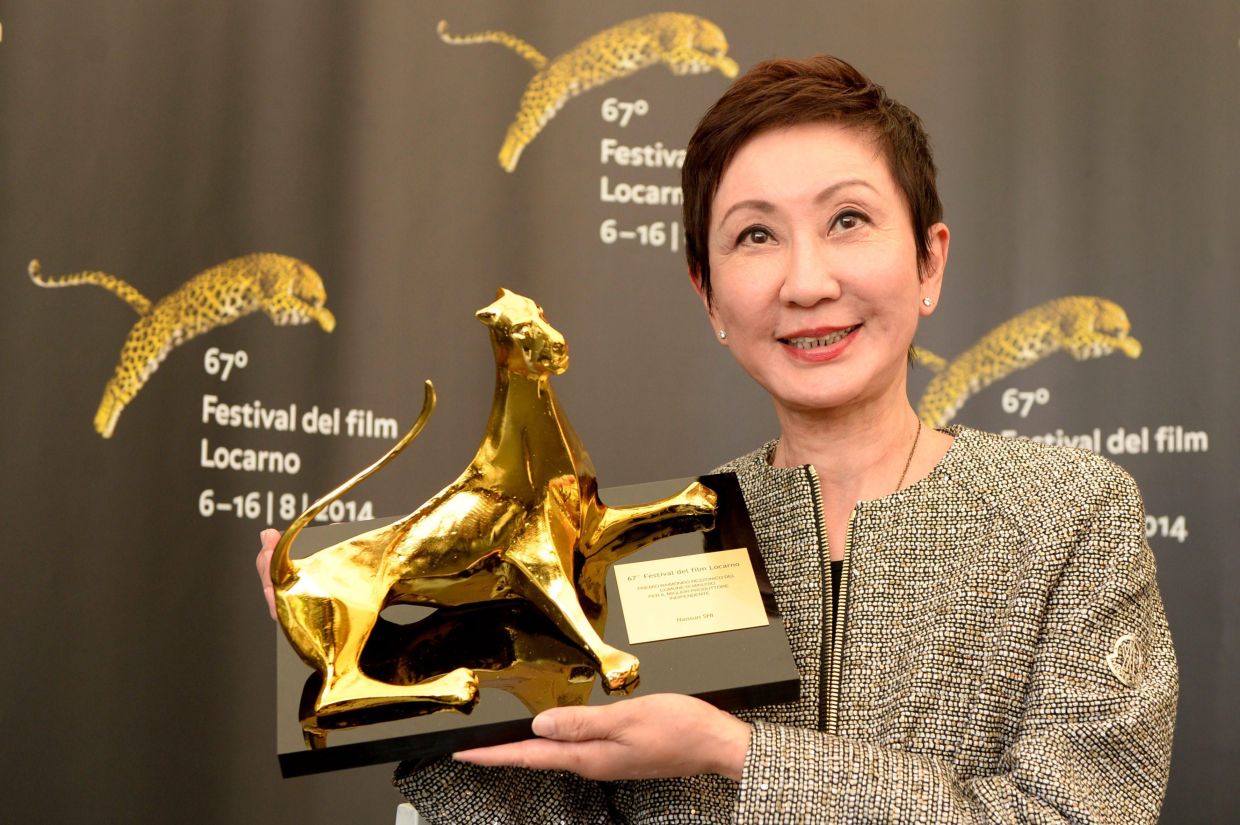
Hong Kong's film industry has lost one of its most transformative figures with the death of Shi Nan-sun, the pioneering producer who shaped the trajectory of the territory's cinema for four decades. The 75-year-old passed away on Monday evening at Hong Kong Sanatorium & Hospital after suffering multiple organ failure triggered by a bacterial infection, according to Film Workshop, the company she established with her former husband, acclaimed director Tsui Hark. She was surrounded by family and loved ones at the time of her death, passing peacefully at 8:51pm.
Shi's health had been steadily declining since 2022, when complications affecting her immune system began to manifest. Over recent months, the situation deteriorated further as recurrent infections compounded her condition, ultimately leading to the multiple organ dysfunction that proved fatal. Film Workshop released a brief statement confirming her death and noting that details of memorial and funeral arrangements would be disclosed at a later date. The announcement triggered an outpouring of tributes from across the entertainment world, with major figures queuing to acknowledge her towering influence on both regional and international cinema.
Jackie Chan, one of Asia's biggest international film stars, was among the first to express his grief, posting a tribute on Weibo that captured the sentiment felt throughout the film community. Chan emphasised that the cinematic world had "lost another legendary figure" and reflected on how audiences worldwide would continue to cherish the memory of her character and the strength she embodied through the classic films she shepherded into existence. Fellow actress Carina Lau Ka-ling, who has worked extensively in productions influenced by Shi's vision, shared a nostalgic black-and-white photograph alongside her own message of gratitude, crediting Shi with imparting invaluable wisdom about personal conduct and professional integrity. Lau highlighted that both she and her husband, actor Tony Leung Chiu-wai, held Shi in profound esteem as a representative of female excellence and cinematic experience.
The tributes extended far beyond individual messages. Brigitte Lin Ching-hsia, Donnie Yen Chi-tan, and Shu Qi were among numerous acclaimed performers who publicly acknowledged Shi's contributions to their careers and to Hong Kong cinema more broadly. The breadth of these testimonials underscored the remarkable extent to which Shi had influenced successive generations of filmmakers and performers across the industry. Rosanna Law Shuk-pui, Hong Kong's Secretary for Culture, Sports and Tourism, released an official statement recognising Shi as a distinguished producer whose legacy had been woven into the fabric of the territory's film development. Law characterised Shi's life as having been dedicated entirely to the film and television sectors, noting that she had bequeathed to Hong Kong's citizens a collection of enduring cinematic memories that would continue to resonate through time.
Tsui Hark, Shi's ex-husband and creative partner of nearly two decades, offered a poignant reflection on her final struggle. He described how she had fought her illness with extraordinary courage and determination, maintaining her composure and grace even as her immune system weakened irreversibly in recent weeks. Tsui revealed that Shi remained conscious until the very end, surrounded by those closest to her, and expressed deep gratitude for the care and support she had received from friends, family, and colleagues throughout her ordeal. The director's words painted a portrait of a woman whose resilience extended to her final moments, a characteristic that had defined her entire professional and personal life.
Public appearances became increasingly rare in Shi's final months. Her last documented public outing occurred in May, when she attended the funeral of fellow veteran film producer Linda Kuk Mei-lai. Observers noted at that time that she was using a walking stick, a visible indicator that her health had begun to fail more noticeably. This sighting would prove to be the last glimpse the public would have of a woman who had worked tirelessly behind the scenes for decades, preferring to let her creations speak rather than seeking the spotlight herself.
Shi's journey into the film world represented a remarkable career transition. Born and educated in Hong Kong, she pursued formal studies in statistics and computing at the Polytechnic of North London in Britain, equipping herself with technical and analytical skills that would prove invaluable in navigating the business dimensions of cinema. Upon returning to Hong Kong, she began her professional journey in television before pivoting to feature films in 1981, when she joined Cinema City as an executive director. In this role, she quickly earned recognition for her meticulous oversight of administration, contract negotiations, and international distribution—the unsexy but absolutely critical infrastructure that keeps film industries functioning at a professional level.
In 1984, Shi took a momentous step by co-founding Film Workshop alongside Tsui Hark, establishing what would become one of Hong Kong's most respected independent production houses. The company became instrumental in shepherding Hong Kong cinema to international audiences at a time when the territory's films were beginning to attract global attention. Subsequently, she founded Distribution Workshop, further consolidating her role as a crucial intermediary between Hong Kong's creative talent and worldwide markets. Through these ventures, Shi essentially professionalised the business side of Hong Kong filmmaking, implementing practices and standards that aligned the local industry with international norms while preserving its distinctive creative character.
Shi and Tsui's professional partnership eventually evolved into a personal relationship when they married in 1996. For eighteen years, the couple remained together, building upon their shared passion for cinema before ultimately divorcing in 2014. Remarkably, their separation did not diminish their mutual respect or professional collaboration. The two maintained a close friendship and continued to support each other's creative endeavours, a testament to the depth of their connection beyond romance. Brigitte Lin, who had maintained a friendship with Shi spanning more than half a century, once reflected on the producer's devotion to Tsui in terms that drew upon the wisdom of legendary novelist Louis Cha, known professionally as Jin Yong. Lin characterised Shi as "the only wife who is completely infatuated with her husband," emphasising how Shi had devoted herself entirely to supporting Tsui as an artist, admiring his vision and protecting his interests.
Beyond her institutional contributions to Hong Kong cinema, Shi became a towering figure in advocating for Hong Kong films on the world stage. Her efforts at international promotion and distribution opened doors for countless productions and creators who might otherwise have remained confined to the regional market. These endeavours earned her substantial recognition, including appointment as an officer of France's Ordre des Arts et des Lettres, one of that nation's most prestigious cultural honours. She also received the best independent producer award at the Locarno International Film Festival, cementing her reputation as a figure whose influence extended far beyond Asia. Throughout her career, major international film festivals repeatedly invited her to serve as a jury member or president, testament to the respect she commanded from peers worldwide.
The full scope of Shi's achievement was acknowledged just this year when she and Tsui jointly received a lifetime achievement award at the Hong Kong Film Awards, honouring their collective contributions to the industry they had helped transform. This recognition came only months before her death, offering a final validation of a career that had fundamentally altered the landscape of Hong Kong cinema. For Malaysian and Southeast Asian audiences, Shi's legacy carries particular significance, as her work in international distribution and festival advocacy helped ensure that Asian films—including those from across the region—could reach truly global markets. Her passing represents not merely a loss for Hong Kong, but a diminishment of an advocate whose vision had encompassed the entire landscape of Asian cinema's place in world culture.

