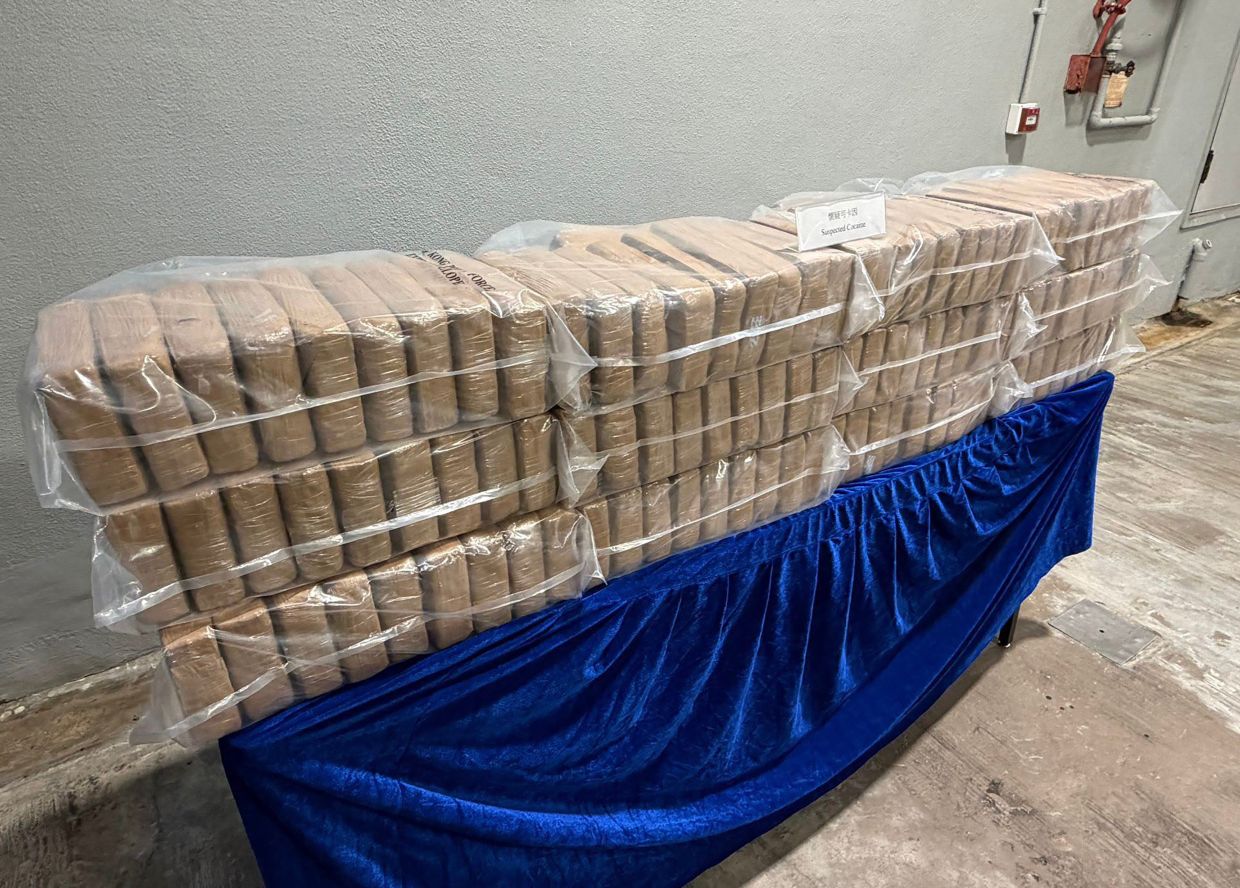
Hong Kong's narcotics enforcement agencies have dealt a substantial blow to drug trafficking networks operating through the territory's waters, uncovering what authorities describe as their largest cocaine seizure in twelve months. The discovery unfolded across two coordinated operations targeting vessels moored in Aberdeen Typhoon Shelter, with officers finding a combined 361 kilograms of cocaine with an estimated street value of HK$270 million—a figure that underscores both the scale and profitability of the illicit operation.
The investigation gained momentum when narcotics bureau personnel conducted a raid on a six-metre yacht on Sunday, the second vessel targeted within days. That operation yielded approximately 120 kilograms of cocaine packaged in brick form, supplementing the initial discovery made the previous Friday when another yacht anchored nearby yielded 241 kilograms. The proximity of the two vessels and the consistency of the drug's presentation and weight suggested to investigators that both seizures represented portions of a single large shipment destined for distribution throughout the region.
The methodology employed by the trafficking syndicate reveals a deliberate strategy to compartmentalise contraband across multiple vessels, likely as a risk-mitigation approach. By storing narcotics on separate boats rather than concentrating the entire load in a single location, the smuggling operation sought to minimise exposure should law enforcement intercept any individual vessel. This distributed storage model reflects an increasingly sophisticated approach to drug trafficking in Asian waters, where syndicates routinely employ multiple craft and staggered movements to evade detection.
The arrests stemming from these operations tell a pattern familiar to regional law enforcement: individuals operating with minimal apparent economic means yet somehow managing maritime assets and expensive contraband. A suspected kingpin and two associates detained following the initial Friday raid all claimed either unemployment or subsistence-level fishing activity, explanations that authorities naturally view with considerable scepticism given the scale of the seized narcotics. On Monday, a 45-year-old local woman listed as the registered owner of the Sunday-raided yacht was apprehended, similarly claiming unemployment status to explain her connection to a vessel now understood to be integral to a major trafficking operation.
These arrests highlight a common feature of large drug-trafficking networks: the insulation of principals through layers of intermediaries and nominees. The registered owners and operators of the vessels often bear minimal relationship to the actual criminal enterprise directing the operation. By recruiting individuals willing to lend their names to vessel ownership or provide physical presence on the boats, trafficking organisations create deniable distance between operational control and legal liability, complicating prosecution and allowing senior figures to avoid direct exposure.
For Hong Kong's law enforcement community, this seizure represents a significant operational success during a period of intensified scrutiny on transnational organised crime. The territory functions as a critical nexus in regional drug trafficking routes, with its deep-water harbours, bustling maritime traffic, and proximity to manufacturing facilities across Southeast Asia combining to make it an attractive operating base for smuggling organisations. The Aberdeen Typhoon Shelter, where both vessels were discovered, represents a natural convergence point given its substantial anchoring capacity and relative accessibility from open waters.
The implications of this bust extend beyond Hong Kong's borders. Cocaine trafficking through Southeast Asian waters typically involves syndicates sourcing product from South American suppliers and routing shipments northward through port facilities in Myanmar, Thailand, and Cambodia before consolidating loads for final distribution into Hong Kong, mainland China, and Taiwan. The scale of cocaine discovered in this operation suggests a wholesale trafficking enterprise rather than retail distribution, indicating that larger suppliers were attempting to establish or maintain supply chains reaching end markets across the broader region.
The 361-kilogram total also contextualises Hong Kong's persistent vulnerabilities to maritime drug trafficking despite decades of enforcement efforts. While seizures of this magnitude generate headlines and represent tactical victories, they remain snapshots of broader systematic challenges. Each successful interception represents only a portion of actual drug flows passing through regional waters, and the consistency with which authorities uncover sophisticated smuggling operations suggests that enforcement remains perpetually reactive rather than preventive.
Looking ahead, this case will likely generate sustained prosecutorial activity as authorities build cases against the detained suspects and pursue investigation into the broader syndicate structure. The matching characteristics of the two cocaine seizures provide prosecutors with compelling evidence of coordinated criminal enterprise, strengthening potential charges of trafficking conspiracy. Whether the arrested individuals cooperate with authorities in identifying higher-level organisational players remains uncertain, though experiences across the region suggest that lower-tier operatives often possess limited knowledge of command structures deliberately kept compartmentalised.
For Malaysia and other regional jurisdictions, this Hong Kong operation carries instructive lessons about transnational drug trafficking patterns and the necessity of sustained maritime interdiction capability. As networks continuously adapt their methodologies and routes in response to enforcement pressures, regional cooperation through intelligence sharing and coordinated operations becomes increasingly essential. The scale and sophistication demonstrated by the syndicate operating through Aberdeen Typhoon Shelter underscore why Southeast Asian nations must maintain vigilant customs and naval capabilities targeting maritime drug trafficking, given that precursor chemicals, finished products, and financial flows routinely transit through waters under regional sovereignty.

