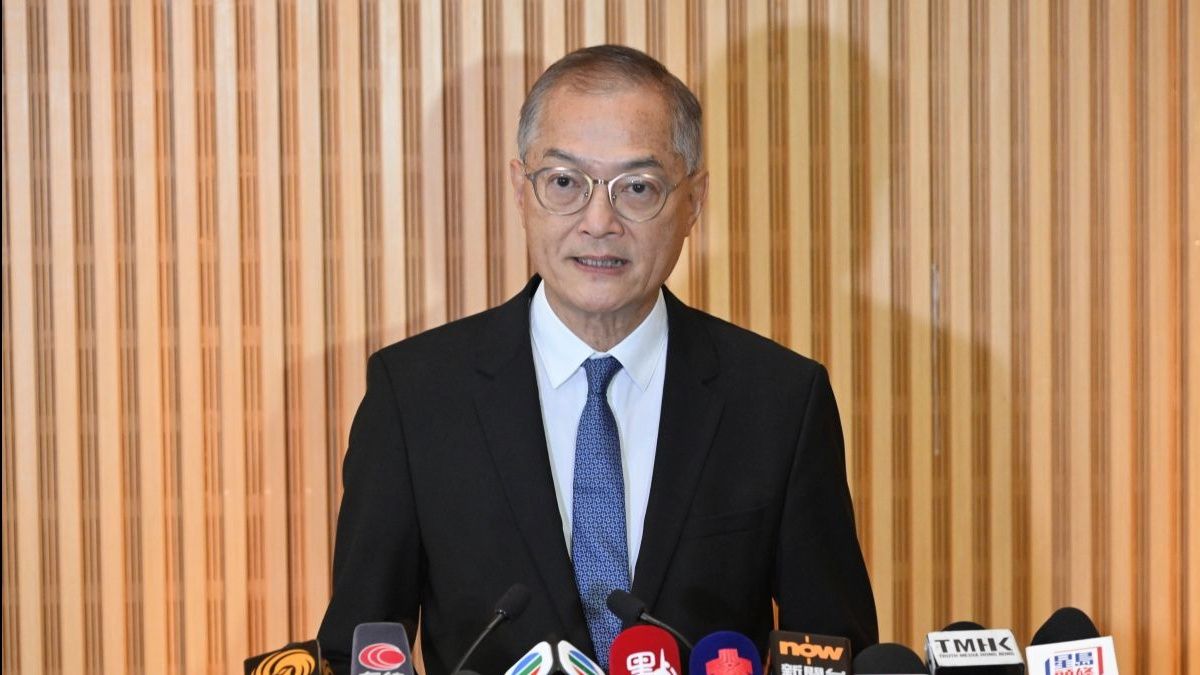
Hong Kong's Health Secretary Lo Chung-mau has signalled plans to review and potentially enhance the regulatory framework governing how reproductive technology incidents must be reported to authorities, following revelations that a major local fertility clinic sat on critical safety information for weeks before disclosure. The announcement comes in the aftermath of HEAL Fertility's mishandling of embryo biopsy specimens from two patients, an incident that has exposed significant gaps in Hong Kong's oversight mechanisms for in vitro fertilisation services and raised uncomfortable questions about accountability within the private healthcare sector.
The Council on Human Reproductive Technology, the statutory body responsible for regulating IVF services in Hong Kong, discovered the problem after laboratory staff at the Chinese University of Hong Kong based at Prince of Wales Hospital in Sha Tin conducted routine verification procedures on embryo samples submitted by HEAL Fertility. The verification process revealed that genetic profiles of the embryo biopsy specimens failed to match either of the two intended parents, triggering immediate alarm bells within the regulatory apparatus. In the first case, six of the seven embryo samples proved incompatible with the parents' genetic profiles, whilst the second case involved two samples, both entirely unrelated to the patients concerned.
What transforms this from a clinical mishap into a regulatory scandal is the timeline of disclosure. HEAL Fertility became aware of both incidents on May 26 and June 4 respectively, yet neither was communicated to the Department of Health during this critical window. The clinic maintained silence until June 17, when it finally notified the Council on Human Reproductive Technology—a delay of roughly three weeks from the first discovery. During an official preliminary investigation, authorities confirmed that HEAL Fertility had never informed the Department of Health at any point, despite the severity and potential ramifications of mixing up patient embryo samples.
Lo Chung-mau publicly acknowledged that this notification lag was "not very ideal," a diplomatic understatement of what amounts to a serious breach of patient safety protocols. The Department of Health's Office for Regulation of Private Healthcare Facilities classified the incident as a "serious untoward event" under the Code of Practice for Day Medical Centres, a designation that legally mandates reporting to authorities within 24 hours. HEAL Fertility's failure to meet this requirement has been formally recorded as a contravention of regulatory standards. The office has issued a regulatory notice requiring the clinic to submit a comprehensive investigation report within four weeks, detailing both the root causes of the mix-ups and the remedial measures it intends to implement.
The incident underscores broader vulnerabilities in Hong Kong's approach to policing private fertility services. The CHRT has conducted multiple investigation rounds since receiving notification on June 17, whilst the Department of Health escalated the matter to police on Monday, though no arrests have yet been made. Lo has indicated that final decisions regarding procedural reforms will await separate findings from the police investigation, the CHRT's regulatory review, and HEAL Fertility's own internal report. This sequential approach, whilst methodical, also highlights the absence of an integrated, rapid-response protocol that might have prevented the weeks-long information blackout.
For Malaysian observers, this episode carries particular resonance given the growing cross-border medical tourism traffic between Malaysia and Hong Kong in fertility treatments. Many Malaysian couples travel to Hong Kong clinics seeking advanced IVF services, making the integrity and transparency of Hong Kong's regulatory oversight a matter of legitimate concern. The incident demonstrates that even developed regulatory jurisdictions can fail to enforce timely incident reporting when mechanisms rely on clinic self-disclosure without robust automated verification or third-party auditing requirements.
HEAL Fertility issued an apology to affected clients on Tuesday evening and established an internal taskforce to review and overhaul its procedures. The clinic offered genetic testing to any patients concerned about the identity of their stored specimens, a tacit acknowledgment that the mix-ups have shattered patient confidence. The scope of the problem is evidenced by the suspension of fourteen of the clinic's seventeen services, with only three storage-related functions remaining operational—a de facto shutdown that signals both the seriousness of the breaches and the difficulty of rebuilding trust in such circumstances.
The regulatory response raises important questions about whether self-policing within the private fertility sector adequately protects patients. The three-week delay in reporting demonstrates that financial and reputational incentives can override commitment to transparency, particularly when clinics face potential liability from disclosure. Going forward, Hong Kong authorities appear inclined towards mandatory reporting requirements with defined timelines, potentially including independent verification mechanisms that bypass clinic discretion. Such measures could include automatic alerts to regulators when laboratory verification systems flag anomalies, preventing information gatekeeping.
Beyond Hong Kong, this case will likely prompt neighbouring jurisdictions including Malaysia to audit their own reproductive technology oversight frameworks. The incident exposes the limitations of relying on post-incident reporting rather than real-time monitoring, a distinction that could inform future regional standards. As fertility treatments become increasingly accessible and sought across Southeast Asia, establishing robust, transparent incident reporting protocols represents not merely a regulatory best practice but an essential patient protection mechanism that transcends individual jurisdictions.

