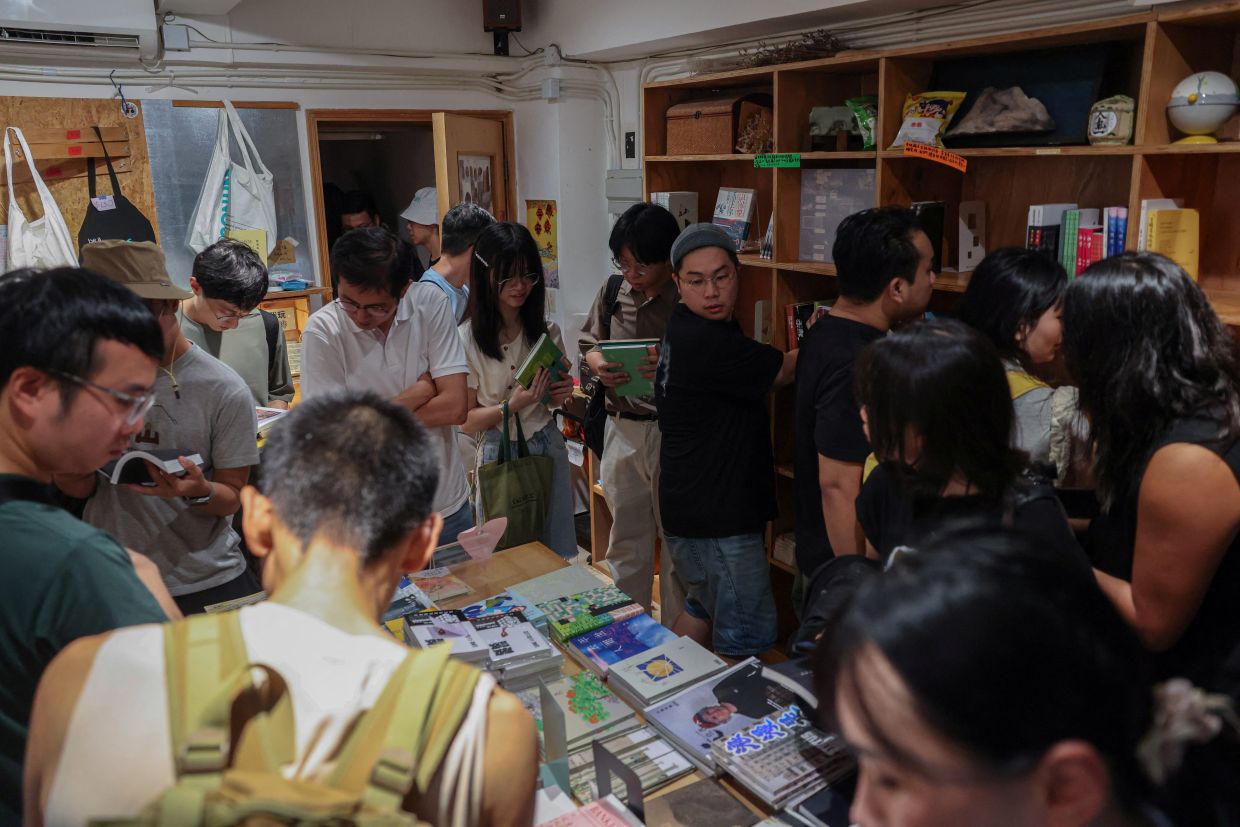
The disappearance of Hong Kong's independent bookstores represents far more than the closure of retail spaces—it signals the systematic elimination of intellectual havens that have provided mainland Chinese readers with access to politically sensitive literature unavailable in the People's Republic. Fleming Cheng, a university student from the mainland, discovered titles offering critical perspectives on Chinese politics at Greenfield Book Store, works he could only glimpse through virtual screens back home after circumventing Beijing's internet censorship with a VPN. This experience encapsulates what these shops have meant to countless readers: tangible connections to ideas the mainland government seeks to suppress, physical manifestations of freedom that online access cannot fully replicate.
Hong Kong's independent bookstores have functioned as intellectual refuges for decades, particularly for mainland Chinese seeking narratives diverging from official state accounts. These establishments, many intentionally positioned away from main thoroughfares within buildings, have curated collections encompassing works on China's political history, the Tiananmen Square demonstrations of 1989, and biographies of reformist leaders who challenged the Communist Party's orthodoxy. For readers accustomed to heavily controlled information environments, these spaces represented windows into perspectives their governments actively prevented them from encountering. The bookstores embodied a fundamental distinction: Hong Kong's tradition of publishing freedom, inherited from its colonial past and maintained through the handover to Chinese sovereignty in 1997, created a permissive space that mainland publishers and readers could not access.
Recent law enforcement actions have triggered a cascading crisis threatening the sector's survival. Between March and July, authorities targeted four independent bookstores—Book Punch, Hunter Bookstore, Greenfield Book Store, and Have A Nice Stay—with police arrests on sedition charges related to provisions within Hong Kong's 2024 national security law. Greenfield, operating for fifty years, announced closure following its July arrest despite bail being granted to staff members. Have A Nice Stay, established by former journalists, shut its doors on August 30, citing both "elusive red lines" in regulations and mounting financial pressures that predated but were exacerbated by the arrest of its booksellers the same day as Greenfield's staff. These enforcement actions follow the 2020 national security law that fundamentally altered Hong Kong's political environment, prompting the arrest of pro-democracy activists and the disbanding of civil society organizations.
The bookstore crackdown represents an extension of broader constraints on intellectual freedom that intensified after Beijing's 2020 legislative intervention. In 2015, the abduction of bookseller Lam Wing-kee and four colleagues from Causeway Bay Books—a shop specializing in politically sensitive publications—signaled the beginning of intensified pressure on the sector. Lam's subsequent revelation that he had been detained by Chinese authorities, contradicting official narratives, exposed the transnational nature of political surveillance extending across Hong Kong's borders. Following these events, politically contentious titles about Chinese leadership and the 1989 Tiananmen demonstrations gradually disappeared from Hong Kong's bookstore shelves. Public libraries removed works by pro-democracy politicians, while independent book fairs faced exclusion from the city's annual book fair, with pro-Beijing media labeling these events as "soft resistance."
Authorities defend the security legislation as necessary for stability, though their enforcement creates profound ambiguity for booksellers navigating undefined boundaries. Secretary for Security Chris Tang stated that the national security law clearly delineates what constitutes seditious intent—specifically, statements intended to incite hatred against or overthrow the governments of either China or Hong Kong. Yet authorities have declined to publish a formal banned books list, instead leaving booksellers to infer which titles fall within prohibited categories by examining anonymous sourcing in news reports. Tang employed an analogy suggesting booksellers should exercise the same diligence as food sellers ensuring products pose no health risks, implying that certain publications inherently threaten national security in ways comparable to contaminated food endangering consumers. This framework offers little practical guidance for risk-averse businesses facing potential criminal liability.
Booksellers confronting this regulatory uncertainty have begun self-censoring in ways that fundamentally alter inventory decisions and public access to information. One anonymously quoted bookseller acknowledged struggling to determine whether specific titles on Chinese modern politics constitute seditious material, leading to increased caution about procurement. Beyond internal business judgments, external pressure compounds these constraints—landlords, themselves vulnerable to government harassment, have begun reviewing lease renewals with bookstore tenants, effectively weaponizing property relationships to enforce compliance. These cascading pressures create a chilling effect extending beyond formal legal penalties, where financial viability and physical security become contingent on avoiding politically sensitive content. The result resembles censorship through economic mechanism rather than explicit prohibition, arguably more effective than overt bans because it operates through market mechanisms and property rights rather than transparent policy.
The transformation of Hong Kong's publishing environment stands in stark contrast to Taiwan's emergence as the principal Mandarin-language publishing center for politically sensitive works. According to Tunghai University sociology professor Cheng Tsu-Bang, Taiwanese publishers released six times more books about Hong Kong between 2020 and 2024 compared to the preceding five-year period, reflecting both Taiwan's commitment to freedom of expression and its recognition of Hong Kong's publishing constraints. This shift carries profound implications for Chinese-language intellectual discourse, as Taiwan increasingly functions as an alternative source for works addressing Hong Kong's pro-democracy movement, contemporary Chinese politics, and historical events the mainland government restricts. However, this refuge proves fragile—logistics firms have begun refusing orders for book shipments from Taiwan to Hong Kong bookstores under investigation, while demanding complete inventory lists before delivering to other Hong Kong premises, suggesting that Beijing's influence may eventually constrain Taiwan's capacity to serve as an alternative publishing hub.
Mainland and international readers have articulated the deeper significance of these closures beyond commercial concerns. Iris Wang, a university student from neighboring Guangdong, valued Hunter Bookstore not as a retail outlet but as an intellectual institution encouraging critical thinking rather than passive consumption. She purchased items not for their political content but for the bookstore's intangible cultivation of intellectual independence—a manga and a postcard about courage reflecting the psychological space these venues provided. Brian Leung, a Hong Kong resident, described each independent bookstore as possessing distinct character reflecting the personalities and commitments of their proprietors, representing irreplaceable cultural institutions rather than interchangeable commercial franchises. When arrests occurred at shops he frequented, Leung experienced loss not as a consumer but as someone witnessing the destruction of communal spaces he believed Hong Kong deserved to maintain.
The broader implications for Hong Kong's identity and Southeast Asia's information environment merit careful consideration. Fleming Cheng articulated the stakes for mainland readers: if Hong Kong government policies systematically align the city with mainland governance models until the two become indistinguishable, the loss extends beyond Hong Kong residents to millions of Chinese readers who regarded the city as a window into alternative intellectual possibilities. This erosion contributes to a regional consolidation of information control, where market mechanisms and legal frameworks combine to restrict access to political literature across East Asia. For Malaysian readers and policymakers, Hong Kong's trajectory offers cautionary perspective on how cumulative restrictions—each justified individually as reasonable security measures—can progressively eliminate institutional spaces for intellectual pluralism.
Writers themselves have recognized the symbolic and practical significance of independent bookstores' potential disappearance. One Hong Kong author who relocated to Taiwan, speaking anonymously from fear of government retaliation, characterized bookstores as essential bridges connecting diaspora writers to their home city and introducing works about Hong Kong's pro-democracy movement to local audiences. The writer compared the collapse of civil society to a boulder accumulating mass as it rolls downhill, crushing small institutions and cultural spaces in its path. From this perspective, independent bookstores represent "a small flower field where people could breathe," fragile ecosystems attempting to preserve intellectual autonomy within an increasingly constrained political environment. The simultaneous closure of multiple establishments suggests not isolated business failures but coordinated pressure eroding foundational institutions that sustained Hong Kong's distinction as a free publishing center.
The cumulative effect of these closures and enforcement actions raises significant questions about Hong Kong's future role in Chinese-language publishing and intellectual exchange. As independent bookstores shutter and remaining proprietors embrace cautious self-censorship, the city transitions from a regional publishing hub to another market where commercial viability depends on avoiding political controversy. For readers across Southeast Asia and the diaspora, this transformation restricts access to Mandarin-language works addressing contemporary Chinese history and politics, effectively extending Beijing's information control beyond mainland borders. The bookstore crisis ultimately represents a loss not merely of commercial establishments but of institutional embodiments of freedom—spaces that made tangible the differences between open and controlled societies, differences that appear increasingly illusory as Hong Kong's distinctive freedoms systematically erode.

