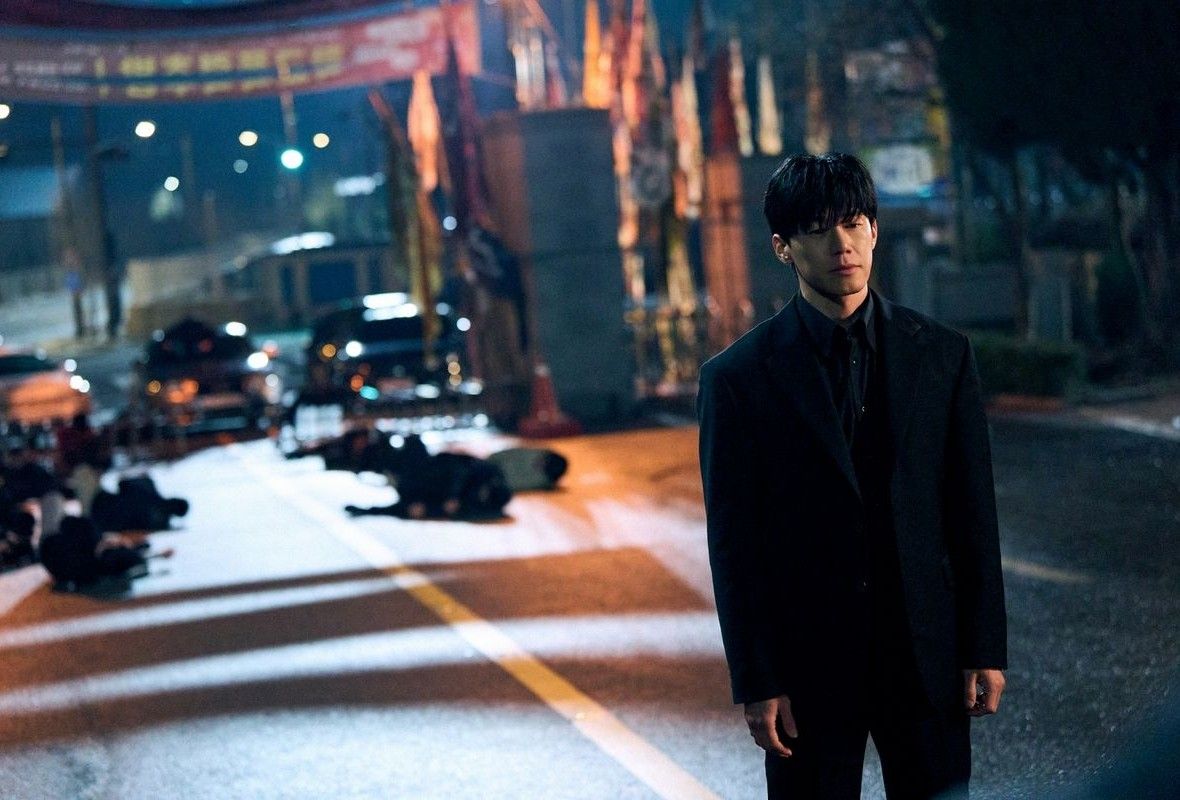
A South Korean television series examining the darker aspects of institutional violence within school systems has resonated far beyond its home audience, prompting educators and policymakers across Southeast Asia to reassess their own approaches to student welfare and school governance. 'Teach You A Lesson,' directed by Hong Jong-chan, presents a portrait of educational dysfunction that, while fictional, carries enough weight to compel viewers to question whether such scenarios remain purely fantasy or reflect uncomfortable truths lurking within contemporary schooling structures.
The 10-episode programme centres on the work of an elite Education and Rehabilitation Policy Bureau, a specialised unit tasked with investigating and remediating the systematic problems plaguing schools in its jurisdiction. Leading this charge is Na Hwa-jin, portrayed by accomplished actor Kim Mu-yeol, a former Special Forces officer whose background in military discipline brings both rigour and an unconventional perspective to educational policy implementation. Alongside him operates Minister Choi, brought to life by Lee Sang-hee with palpable ministerial authority, who provides institutional backing for the team's interventions whilst navigating the treacherous waters of political opposition and bureaucratic resistance.
The drama methodically unpacks a disturbing constellation of abuses endemic to the fictional school system it depicts: systematic bullying among students, predatory behaviour by parents toward teaching staff, organised criminal elements targeting young people for recruitment into illicit networks, and the illegal distribution of performance-enhancing pharmaceuticals throughout school corridors. The weight of these interlocking crises falls upon the shoulders of the ERPB's skeletal staff, who must simultaneously contend with institutional sabotage orchestrated by Choi's political adversaries. This multi-front challenge reflects the pressures real educators face when attempting systemic reform in politically contested environments.
Central to the narrative is a profound historical bond between Choi and Na, revealed gradually through carefully constructed flashbacks featuring young versions of the characters. This emotional architecture anchors the series beyond mere procedural investigation, grounding abstract policy discussions within deeply personal motivations and moral frameworks. The relationship between these two men becomes a lens through which viewers examine not just what institutional reform requires, but why individuals commit themselves to such demanding and often thankless work.
What distinguishes the series from typical crime or discipline-focused dramas is its deliberate refusal to sensationalise violence or reduce complex human situations to binary moral categories. Instead, the programme strategically employs instances of violence and transgression to demonstrate a crucial principle: that certain lines, once crossed, cannot be uncrossed. The emphasis shifts from punishment toward accountability and the arduous path toward redemption and forgiveness. This philosophical stance resonates particularly with audiences fatigued by narratives that treat institutional reform as a matter of simple enforcement or retribution.
Kim Mu-yeol's performance anchors the series through his capacity to deliver observations that cut through defensive posturing by both perpetrators and victims, somehow drawing forth unexpected compassion even from the most seemingly dehumanising encounters. His ability to inhabit moral complexity—neither excusing wrongdoing nor denying perpetrators' potential for change—provides a counterweight to the potentially didactic nature of the material. Lee Sang-hee's ministerial pronouncements carry a conviction and gravitas that viewers find simultaneously aspirational and, by implication, accusatory toward real-world political leadership that lacks such clarity and commitment.
The supporting ensemble occasionally indulges in excess, yet the core performances elevate the material beyond its potential weaknesses. Junior inspectors and allied staff contribute to a sense of institutional effort and collective responsibility, avoiding the trap of reducing systemic problems to the actions of heroic individuals. This emphasis on structural response rather than individual salvation proves crucial to the series' broader message about educational reform.
Drawn from a controversial webtoon source, the adaptation deliberately charts a middle course between entertainment and advocacy. Rather than aggressively preaching solutions or constructing a dystopian extrapolation so removed from reality that viewers can dismiss it as impossible, the series operates within a register of plausibility that unsettles precisely because the depicted problems feel just barely exaggerated rather than fantastical. The show prioritises generating serious public conversation about institutional failings over providing comprehensive policy blueprints.
The resonance has proven genuinely international. Parallels between the series' portrayal of school dysfunction and existing anti-bullying measures within Malaysian and broader Southeast Asian institutions have become the subject of earnest discussion across educational communities. Notably, actor Kim has received direct messages from Malaysian educators describing how the drama's treatment of these issues reflects concerns in their own teaching contexts, separated by thousands of kilometres yet addressing fundamentally similar institutional pressures and moral dilemmas.
This cross-regional recognition points toward uncomfortable universalities within contemporary East and Southeast Asian educational systems: rigid hierarchies that facilitate abuse, insufficient resources devoted to pastoral care, political interference in educational policy, and organisational structures that prioritise measurable outcomes over student welfare. The series articulates these problems without claiming they are uniquely Korean, instead inviting viewers to recognise their own institutional contexts within its narrative.
The programme's ultimate assertion—that redemption and forgiveness remain possible even after serious transgressions—offers neither easy optimism nor cynical despair. Rather, it suggests that meaningful institutional change requires acknowledging past harms while maintaining faith in human capacity for growth and reform. This balance proves increasingly necessary in societies wrestling with educational systems that have perpetuated harm, often unknowingly, for generations.
For Malaysian educators and policymakers, the series functions as a cultural artifact that validates concerns about systemic reform whilst providing a vocabulary for discussing institutional violence and accountability. Its international reach suggests that conversations about educational ethics and student protection transcend national boundaries, requiring sustained attention and cross-cultural learning about what effective reform actually demands.

