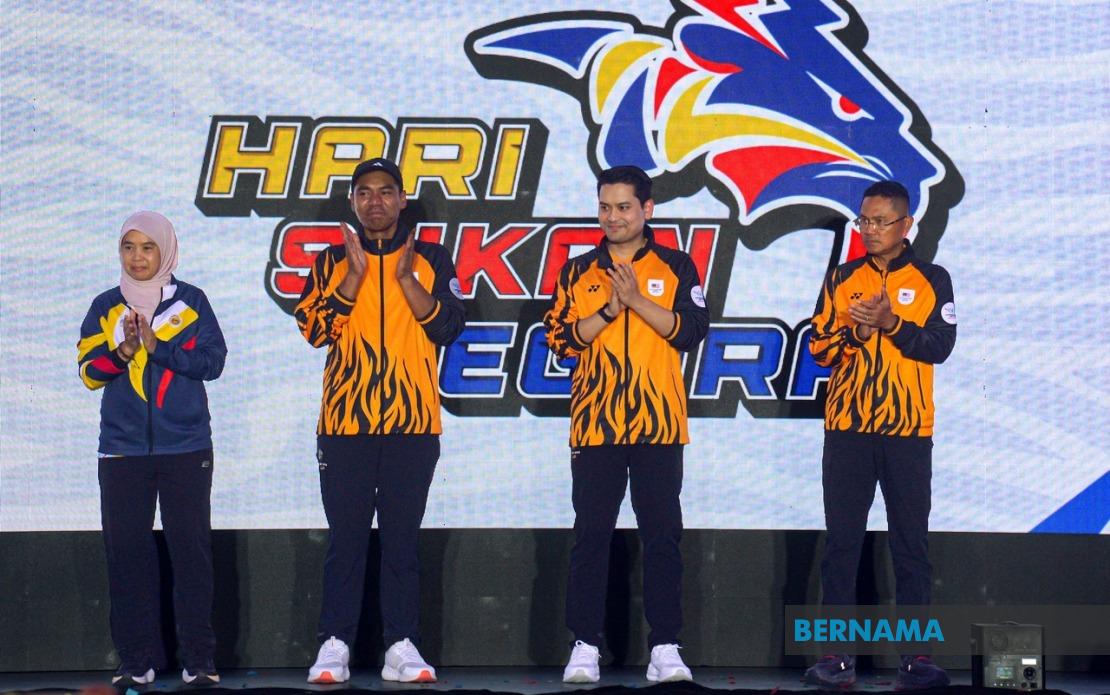
Malaysia's upcoming National Sports Day celebration in 2026 is positioning itself as a watershed moment for the nation's sporting culture, with ambitions to draw participation from over 5.3 million citizens across a spectrum of physical activities and recreational pursuits. The three-day festivities, scheduled for October 9 to 11, will unfold at multiple administrative tiers—district, state, and national—to ensure comprehensive grassroots engagement and decentralised participation across the country.
Youth and Sports Minister Dr Mohammed Taufiq Johari unveiled the freshly redesigned initiative at the pre-launch ceremony in Putrajaya, introducing a rebranded visual identity alongside the thematic focus on "Digital Technology and Artificial Intelligence". This strategic pivot signals a deliberate shift in how Malaysia's sports sector intends to engage citizens, moving beyond traditional recreational frameworks to encompass the technological transformation reshaping leisure and competitive activities globally.
The ministry's approach reflects a nuanced understanding of contemporary sports engagement. Rather than treating digital and AI elements as peripheral to physical activity, the framework positions technology as a central integrating force in sports development strategy. Officials envision a comprehensive ecosystem where technological advancement and physical wellbeing reinforce one another, acknowledging that younger demographics in particular interact with sports through digital intermediaries and that this trend is likely to intensify.
The pre-launch itself demonstrated this commitment through innovative implementation. Organisers deployed virtual reality technology extensively throughout the ceremony, signalling that the digital transformation extends beyond messaging into the practical mechanics of how Malaysians will experience the event. This hands-on approach to VR integration distinguishes HSN 2026 from previous iterations and positions Malaysia within global best practices for sports promotion in the digital age.
A particularly intriguing dimension of the ministry's vision addresses the apparent contradiction between sedentary digital engagement and physical health. Officials acknowledged that e-sports and video gaming, typically associated with inactive pursuits, can be reframed within a holistic wellness paradigm. The strategy involves demonstrating pathways through which gaming enthusiasts might transition toward or integrate physical activity, challenging stereotypical divisions between "tech" participants and "traditional" athletes. This inclusive approach potentially opens sports participation to demographics previously marginalised from conventional athletic frameworks.
The national showcase of HSN 2026 will occur at the National Stadium in Bukit Jalil on October 10, when Prime Minister Datuk Seri Anwar Ibrahim is scheduled to formally launch the nationwide celebration. This high-level political endorsement underscores the government's commitment to positioning sports development as a priority within national policy and reflects broader governmental emphasis on healthy citizenry as a cornerstone of socioeconomic development.
Strategically, HSN 2026 functions as a crucial preparatory platform for Malaysia's forthcoming hosting of the 2027 SEA Games. By cultivating public enthusiasm and establishing sports participation as a normalised cultural practice, the National Sports Day serves as both a grassroots mobilisation effort and a confidence-building exercise for a major international sporting spectacle. The Ministry is coordinating closely with the Malaysia SEA Games Organising Committee to integrate SEA Games messaging and promotional activities into the HSN 2026 calendar, creating a continuous narrative arc that builds toward the regional competition.
The SEA Games Roadshow, to be presented alongside HSN 2026 celebrations, will amplify this connection, allowing Malaysians across all states and districts to engage with the upcoming Games in tangible ways. This geographical distribution of SEA Games-related activities ensures that anticipation and involvement extends beyond urban centres and reaches communities that might otherwise maintain limited connection to elite sporting competitions.
The programming framework incorporates multiple activity categories designed to accommodate diverse participation preferences and fitness levels. The MADANI Fun Run and MADANI Fun Walk initiatives offer low-barrier entry points for citizens of varying athletic capacities, reducing intimidation factors that might otherwise discourage participation from sedentary or elderly populations. By embedding these activities within the HSN 2026 calendar, organisers signal that sports engagement encompasses a spectrum from competitive pursuit to gentle recreational movement.
Additional programming segments addressing the Active Malaysia initiative and Sports Industry components reflect a holistic approach to national sports development. Rather than concentrating solely on competitive excellence or mass participation, the framework acknowledges that a vibrant sports ecosystem requires attention to industry development, professional opportunities, and lifestyle integration. The inclusion of Rakan Muda Lifestyle elements specifically targets younger demographics, recognising that habits established during youth tend to persist into adulthood and that early engagement with sports culture has multiplicative benefits across the lifespan.
For Malaysian stakeholders, the HSN 2026 framework offers several implications. First, it signals government commitment to sports as integral to national identity and public health strategy. Second, the emphasis on digital and AI integration suggests that future sports administration and engagement will increasingly leverage technological platforms, creating both opportunities and challenges for traditional sports organisations. Third, the deliberate connection to SEA Games preparation indicates that Malaysia is viewing the 2027 hosting opportunity as a catalyst for broader sports culture transformation rather than as a discrete sporting event.
Regionally, Malaysia's approach to integrating technology and sports development may establish a template for other Southeast Asian nations grappling with similar questions about how to maintain sports relevance and participation in an increasingly digitalised society. The experiment of repositioning e-sports and video gaming as potential gateways to physical activity—rather than competitors to it—could influence how the region conceptualises sports more broadly.

