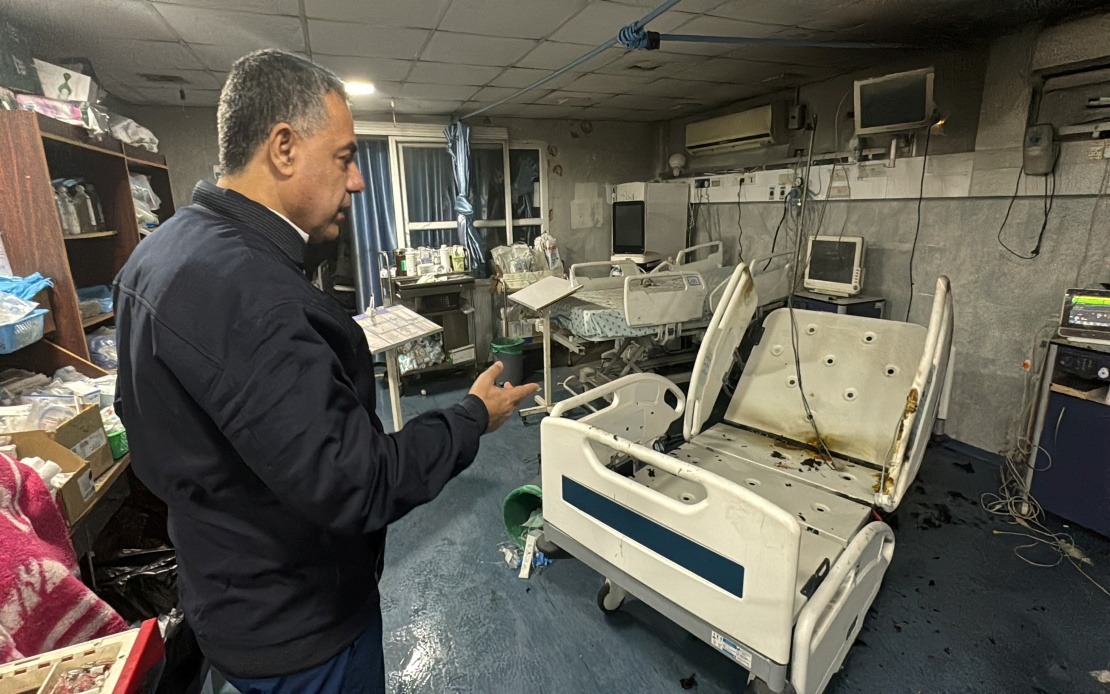
Medical and human rights advocates have raised urgent alarms about the physical condition and safety of Dr Hussam Abu Safiya, the director of Kamal Adwan Hospital in northern Gaza, following his transfer to Israel's Nitzan Prison. According to Physicians for Human Rights, the distinguished hospital administrator's health has declined markedly since his detention, with documented evidence of injuries consistent with physical assault and serious respiratory complications.
The deterioration came to light through a visit conducted by Nasser Odeh, a lawyer representing the human rights organisation, on July 2. During this meeting, Odeh documented a catalogue of concerning physical findings. Dr Abu Safiya bore fresh and severe injuries across his head, face, and neck regions, with visible bruising and swelling around his eyes and ears so pronounced that he was difficult to identify. Beyond visible trauma, he experienced breathing difficulties and repeated episodes of consciousness loss during the encounter, painting a troubling picture of his overall medical status.
The circumstances surrounding his detention appeared equally disturbing. Prison authorities brought Dr Abu Safiya to meet with his lawyer in full restraints, with his hands and feet shackled throughout the visit. Masked guards maintained a constant presence around him, creating an intimidating environment that further underscores concerns about his treatment and vulnerability whilst in custody. This arrangement, typical of high-security protocols, raised additional questions about the severity with which authorities are treating the hospital administrator.
Physicians for Human Rights Israel has launched a renewed campaign for Dr Abu Safiya's release, alongside demands for the freedom of other medical professionals detained without formal charges or trial. The organisation argues that detaining doctors and healthcare workers runs counter to international humanitarian law and professional medical ethics. Naji Abbas, director of the Prisoners and Detainees Department at the organisation, characterised the documented evidence as extraordinarily alarming—among the most disturbing accounts the group has documented since the beginning of the broader conflict.
Most significantly, Dr Abu Safiya reportedly expressed his fear that he would not survive his time in custody. This statement, made to his legal representative during their restrained interaction, suggests he has genuine concerns about his physical safety and the trajectory of his health whilst imprisoned. Such expressions from a detained medical professional carry particular weight, as healthcare workers typically maintain clinical perspectives and would not voice such fears lightly or without factual basis.
The timeline of Dr Abu Safiya's deterioration appears to correlate with his attempts to challenge his detention through the legal system. Abbas noted that the hospital director's condition worsened following his court challenge to the continuation of his imprisonment, suggesting a possible connection between his legal resistance and subsequent mistreatment. This pattern, if substantiated, would raise serious questions about potential retaliation against detainees who exercise their right to challenge their detention.
Abbas has called explicitly for an immediate and independent investigation into the circumstances of Dr Abu Safiya's detention and the injuries sustained. He emphasised that such an investigation should be conducted by parties without vested interests in the outcome, ensuring impartial scrutiny of the allegations. The human rights organisation further stressed that Israeli authorities bear complete responsibility under international law for the health, safety, and welfare of all persons held in their custody, regardless of their legal status.
The case of Dr Abu Safiya carries broader implications for healthcare systems and the protection of medical professionals during armed conflicts. International humanitarian law contains specific provisions protecting hospitals and healthcare workers, recognising that their safety directly impacts civilian populations' access to essential medical services. The detention of a hospital director on such serious grounds, combined with documented injuries and health complications, raises questions about the balance between security considerations and humanitarian obligations.
For Southeast Asian observers, including Malaysian audiences, this case resonates within the context of international humanitarian principles and the universal protection standards applied to medical professionals. Malaysia, as a nation with established diplomatic channels and humanitarian concerns, has historically engaged with issues affecting healthcare workers in conflict zones. The treatment of Dr Abu Safiya provides a test case for how the international community, including regional voices, responds to allegations of mistreatment against detained medical personnel.
The broader concern extends beyond Dr Abu Safiya's individual case to encompass the functioning of healthcare infrastructure in Gaza more generally. Hospital directors hold critical administrative and advocacy roles within health systems, particularly in conflict settings where maintaining essential services becomes exponentially more challenging. Removing such leadership figures from the healthcare system potentially compromises the ability of remaining staff to provide adequate care to civilian populations already suffering from the direct and indirect effects of conflict.
Physicians for Human Rights has called for urgent international intervention to address the situation. The organisation's position reflects a widespread principle within the medical and human rights communities that detainees must be treated humanely and provided with adequate healthcare, regardless of the circumstances of their detention. The documented evidence of injuries and health deterioration suggests that these fundamental standards may not be met in Dr Abu Safiya's case.

