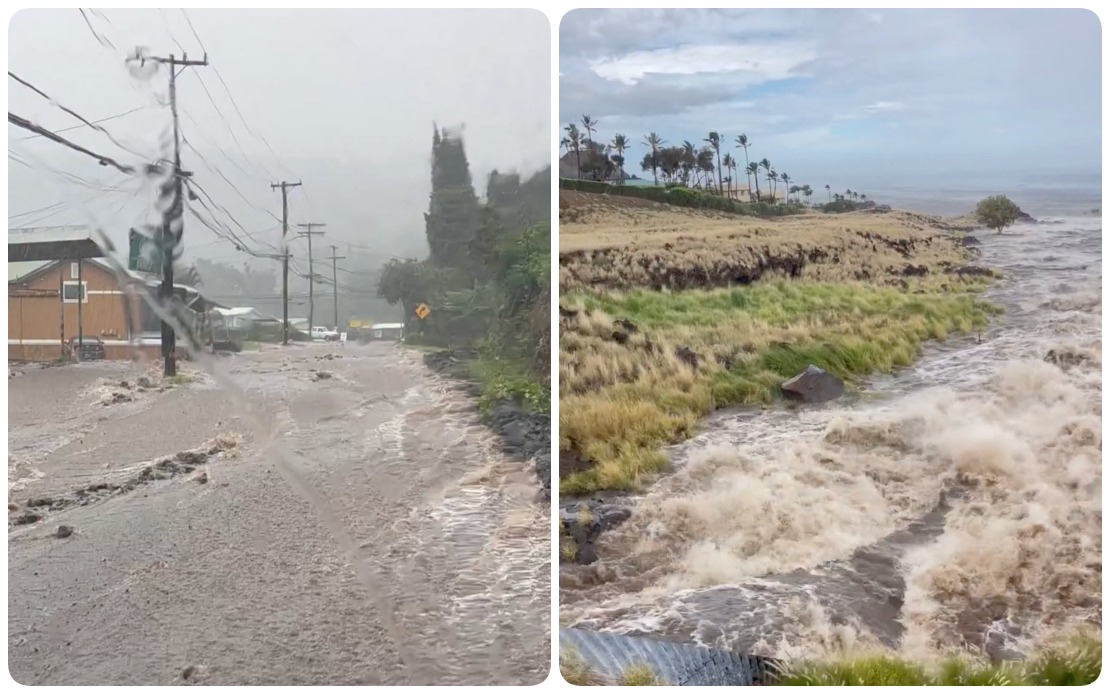
Hurricane Lala delivered a severe blow to Hawaii's population on Saturday, August 15, as the storm system moved just south of Hawaii Island with destructive force, leaving tens of thousands without electricity and prompting emergency responses across multiple islands. Governor Josh Green reported that conditions deteriorated sharply across the archipelago, with wind speeds peaking on Hawaii Island while rainfall accumulation exceeded dangerous thresholds in numerous locations. The scale of the disruption underscored the vulnerability of island communities to tropical cyclones and the cascading effects such weather events trigger across essential services and infrastructure networks.
According to Hawaiian Electric, the utility company serving the region, more than 88,000 customers experienced power loss as of 7 p.m. Hawaii Standard Time. The distribution reflected the storm's uneven path: Hawaii Island absorbed the brunt of the outages with 63,270 customers offline, followed by Maui County with approximately 15,260 affected customers and Oahu with around 9,500. This concentration of power disruptions on Hawaii Island reflected the proximity of the hurricane's track to that specific landmass, though neighbouring islands suffered significant secondary effects from the broader storm system.
Rainfall measurements provided perhaps the most striking evidence of the hurricane's intensity. Governor Green indicated that some areas on Hawaii Island had already accumulated more than 13 inches of precipitation, a volume that easily saturated drainage systems and created dangerous flood conditions. Such concentrated rainfall in tropical island environments, where terrain can be steep and vegetation cover variable, generates rapid runoff and flash flooding in vulnerable valleys and low-lying areas. The governor simultaneously warned that conditions were continuing to deteriorate across Maui County, Oahu, and Kauai, suggesting that the worst impacts might still have been unfolding at the time of his statement.
The Hawaii Emergency Management Agency documented a range of hazards accompanying the hurricane's passage. Flooding emerged as an immediate threat to both residential and commercial areas, while the combination of saturated soil and intense winds toppled numerous trees throughout the affected regions. These downed trees created secondary dangers by blocking roads, crushing vehicles, and damaging structures in their path. The cascading nature of such damage—where one problem triggers multiple others—meant that emergency response teams faced compounding challenges as they attempted to clear routes and restore utilities simultaneously.
Footage released by Hawaii's Department of Transportation illustrated the severity of flooding conditions, showing streams that had overflowed their banks and roads completely submerged under flowing water. The agency reported multiple route closures spanning Hawaii Island, Maui, and Oahu, and issued public guidance urging residents to shelter in place or relocate to designated emergency facilities. Such warnings reflect the dual hazard situation residents faced: remaining in potentially vulnerable locations while travel itself became extremely dangerous due to flooded roadways and debris fields.
On Hawaii Island specifically, law enforcement documented widespread disruptions. Kahikopele Street in Mountain View suffered closure due to flooding, while Pauahi Street experienced water accumulation that threatened accessibility. Mamalahoa Highway generated particular concern due to fallen trees and substantial debris scattered across the roadway, creating hazards for any vehicles attempting passage. Plumeria Street required closure after downed power lines created electrocution risks. This pattern of localized closures, multiplied across dozens of locations throughout the islands, effectively fragmented transportation networks and isolated certain communities from emergency services and supply routes.
Wind velocity measurements recorded in the most exposed areas approached 90 miles per hour, a threshold that causes structural damage to buildings and renders outdoor activity extremely hazardous. On Hawaii Island's Hamakua coast, Hawaiian Electric reported that fallen trees brought down multiple utility poles and damaged transmission line structures across a 42-mile stretch. Such widespread damage to transmission infrastructure poses particular challenges for rapid restoration, as utility crews must identify and repair each damaged segment before restoring service to customers downstream of the damaged infrastructure. The geographic scope of the damage—spanning more than 40 miles—suggests that restoration efforts would require substantial time and resources.
Hawaiian Electric cautioned that customers already experiencing outages on Hawaii Island and Maui would likely remain without power throughout the night, as the dangerous conditions created by high winds and debris prevented restoration crews from safely accessing damaged lines and equipment. Power restoration work requires workers to operate at height on poles and towers, climbing among energized equipment—tasks that become impossible and unconscionably risky when winds remain strong and falling debris continues to pose threats. This safety reality means that even after the hurricane's centre moved away, residents would endure extended periods without electricity for lighting, refrigeration, water pumping, and medical equipment operation.
For Malaysian and Southeast Asian observers, Hurricane Lala's impact on Hawaii demonstrates the enduring vulnerability of island communities to tropical cyclone systems, a concern directly relevant to the region. Malaysia's island territories in Sabah and Sarawak, along with nations such as the Philippines, Indonesia, and Timor-Leste, face similar threats from typhoons and hurricanes that can develop with little warning and cause comparable damage to infrastructure and utilities. The Hawaiian experience illustrates how even wealthy developed societies with advanced forecasting capabilities and substantial emergency response resources can suffer significant disruptions when powerful tropical cyclones strike populated areas.
The economic and social costs extend beyond the immediate period of power outages and road closures. Businesses reliant on electricity face revenue losses and spoilage of perishable inventory. Hospitals and medical facilities must activate backup power systems to maintain critical functions. Communication networks degrade as cell towers lose power, complicating emergency coordination and citizen awareness of hazards. Agricultural operations suffer damage to crops and irrigation systems. Schools and government offices suspend operations, disrupting services and employment. The full economic accounting of such events typically emerges only weeks after the immediate crisis passes, often revealing costs that dwarf initial estimates.
The incident also highlights the importance of investment in hurricane-resistant infrastructure and redundant utility systems. While Hawaii possesses substantial resources for such improvements, many developing nations in the tropical Pacific and Southeast Asian regions face budget constraints that limit their capacity to harden infrastructure against cyclone impacts. Pre-positioning emergency supplies, maintaining clear communication protocols, and ensuring that emergency shelters remain accessible and stocked represent relatively modest interventions that can substantially reduce casualties and suffering when major storms strike. Hawaiian authorities' response, while managing significant challenges, demonstrates practices that regional governments might study and adapt to their own circumstances.

