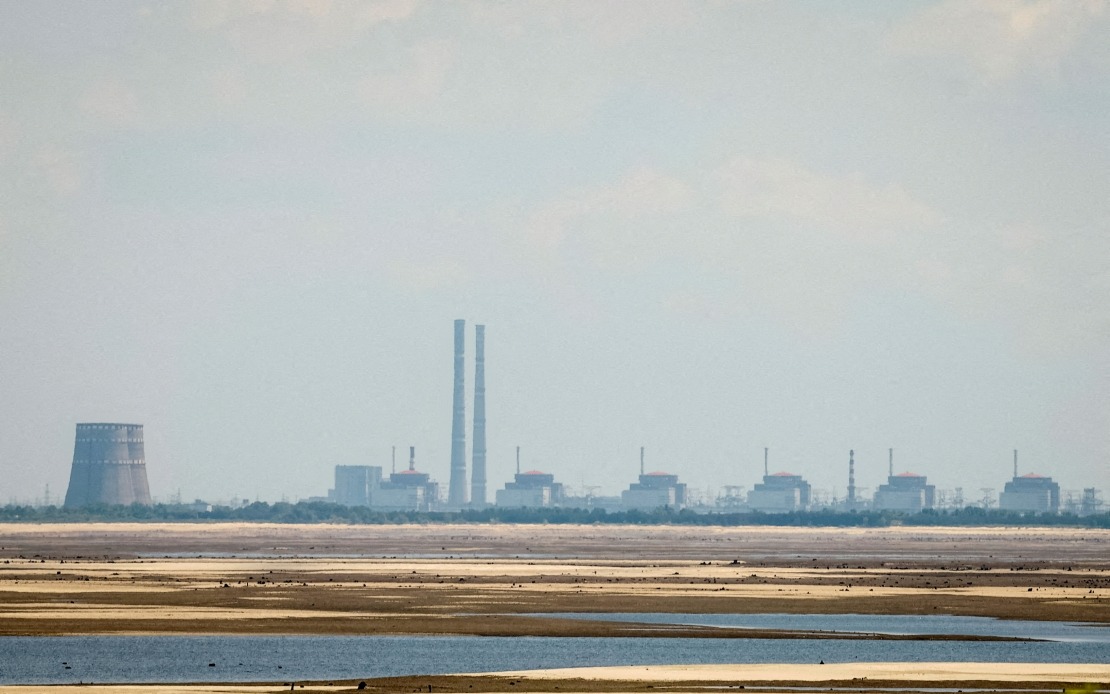
Europe's largest nuclear facility faced another critical moment when the Zaporizhzhia Nuclear Power Plant lost its external power supply on Friday, marking the 21st such occurrence since Russia's invasion of Ukraine triggered the broader crisis at the site. The incident underscores an alarming pattern of vulnerability that has caught the attention of international nuclear safety regulators and raised concerns about the plant's ability to maintain essential cooling functions during prolonged periods of instability.
The outage stemmed from a severed connection to the 330 kV Ferosplavna-1 transmission line, which serves as a critical lifeline delivering electricity from the national grid to the sprawling nuclear complex in southeastern Ukraine. The International Atomic Energy Agency, which maintains a permanent monitoring presence at the facility, attributed the disconnection to military activity in the region that triggered automatic protective systems on the transmission infrastructure. These safety mechanisms, designed to prevent electrical equipment damage, inadvertently cut off power to the entire nuclear station—a response that highlights how the conflict's military dimensions directly intersect with nuclear safety procedures.
What distinguishes this latest incident from dozens of power disruptions experienced by other industrial facilities across Ukraine is the existential stakes involved. When the Zaporizhzhia plant's connection to the external grid severed, the facility's emergency diesel generators automatically engaged to supply electricity for reactor cooling systems and other indispensable safety mechanisms. This automatic response functioned as designed, preventing an immediate catastrophe. However, the reliance on backup power systems as a routine necessity rather than a genuine emergency contingency reveals the precarious equilibrium maintaining safety at the installation.
For regional observers, including policymakers across Southeast Asia, the Zaporizhzhia situation demonstrates how geopolitical conflict can compromise critical infrastructure with consequences extending far beyond the immediate conflict zone. The plant sits in an area where military operations have been concentrated, and its location near active fighting means that electrical infrastructure supporting the facility remains perpetually vulnerable to damage. Each power loss event—now occurring with troubling regularity—requires activation of diesel generators that were engineered for occasional use during planned maintenance, not continuous emergency deployment.
IAEA Director General Rafael Grossi has been direct in characterizing the situation as increasingly untenable. His latest statement emphasized that the recurring power losses demonstrate "extreme fragility of nuclear safety at the plant" and underscore the necessity for military restraint. This language reflects growing frustration within the international nuclear community that the repeated incidents stem not from equipment failure or maintenance shortcomings but from the ongoing military conflict surrounding the facility. The IAEA's repeated warnings suggest that the organization views the current trajectory as unsustainable without significant de-escalation.
The diesel generator system, while sophisticated and reliable, represents a finite resource. These machines require regular maintenance, fuel supply, and technical oversight to function reliably. With the plant losing external power approximately once every few weeks, the backup systems face unprecedented operational stress. Any mechanical failure, maintenance delay, or fuel supply disruption could theoretically create a scenario where the plant loses both grid power and generator capacity simultaneously—a situation that nuclear engineers regard as genuinely catastrophic.
For Malaysia and other Southeast Asian nations that have invested in or are considering nuclear energy programs, the Zaporizhzhia situation offers sobering lessons about dual dependencies. The plant's vulnerability is compounded not merely by military activity but by its reliance on interconnected transmission infrastructure that has itself become a military target. This suggests that nuclear facilities in technologically developed regions with sophisticated grids may face unique risks during conflict compared to plants in more isolated locations or countries with decentralized power generation.
The broader context includes persistent tensions about who controls the Zaporizhzhia facility and under what framework it might be protected. The plant remains under Russian military administration despite being located in Ukrainian territory, and this ambiguous status complicates efforts to implement comprehensive safety protocols. Neither the occupying force nor Ukrainian authorities can operate the facility with complete independence, creating coordination challenges that exacerbate technical vulnerabilities during emergencies.
International nuclear safety standards presume a baseline of political stability and assume that electrical infrastructure supporting reactors will remain largely insulated from active conflict. The Zaporizhzhia experience challenges these foundational assumptions. With 21 power losses now documented, the pattern has moved beyond anomaly into institutional concern. Each incident creates opportunities for human error, procedural breakdowns, or cascading failures that might overwhelm backup systems.
The IAEA's continued monitoring presence at Zaporizhzhia represents an important confidence-building measure, but the agency's ability to prevent a serious incident depends ultimately on surrounding military activity remaining within narrowly defined parameters. The international community's leverage to enforce such restraint has proven limited, and no diplomatic framework has successfully guaranteed the plant's security since the conflict intensified.
Regional nuclear operators and energy planners monitoring this situation recognize that Zaporizhzhia demonstrates how quickly nuclear safety can deteriorate when external political circumstances deteriorate. For nations developing nuclear capacity or relying on nuclear power for substantial electricity generation, the lesson extends beyond engineering to encompass political risk assessment and infrastructure resilience planning. Southeast Asia's geopolitically complex environment makes these lessons particularly relevant as the region contemplates expanded nuclear energy deployment.
Moving forward, the IAEA continues appealing for maximum military restraint while simultaneously acknowledging that technical measures alone cannot ensure safety if the surrounding conflict persists at current intensity. This admission—that engineering cannot fully compensate for geopolitical instability—represents perhaps the most significant message from Zaporizhzhia to other nations considering or expanding nuclear programs in strategically contested regions.

