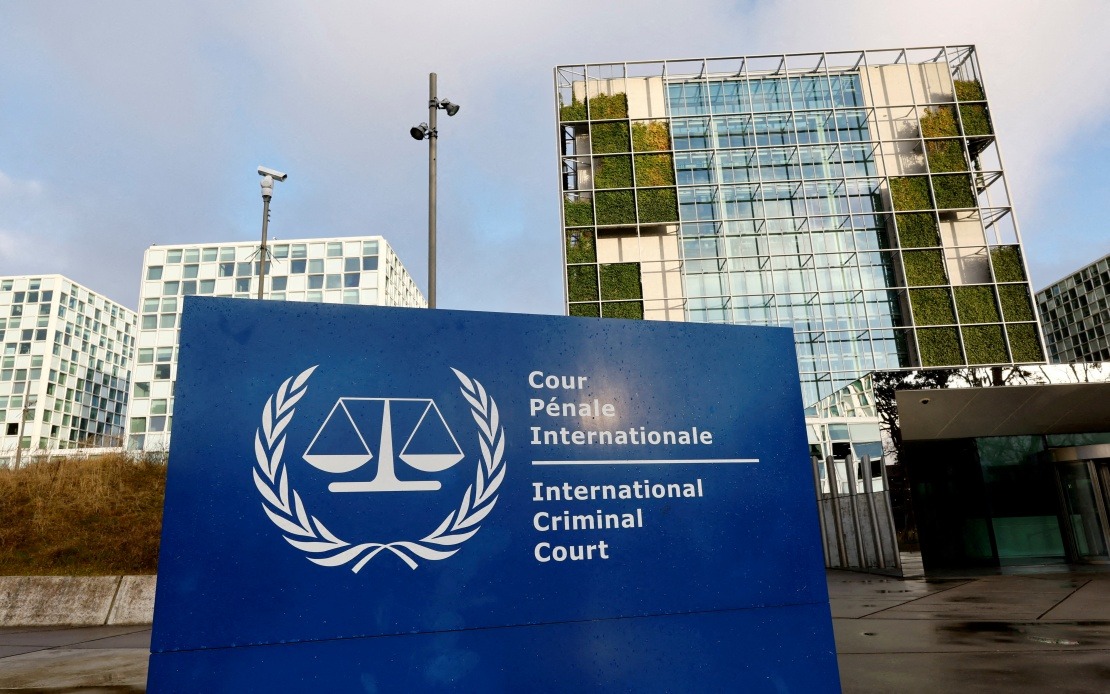
The International Criminal Court issued a forceful rebuke on Wednesday after the United States imposed fresh sanctions against two senior court officials, marking an escalation in Washington's ongoing campaign against the tribunal. The newly targeted individuals are ICC President Tomoko Akane, a Japanese national, and Abdoulaye Seye from Senegal, who serves as a senior trial lawyer within the Office of the Prosecutor. This latest round of designations expands the reach of American sanctions within the institution to encompass nine of the court's 18 judges, both deputy prosecutors, a former prosecutor, and one additional staff member.
The timing and scope of these sanctions reflect mounting tensions between the United States and the ICC, an institution established through the Rome Statute to pursue accountability for international crimes including genocide, crimes against humanity, and war crimes. The Hague-based court's leadership responded with unusually sharp language, characterizing the sanctions not merely as disagreeable policy but as a direct undermining of the foundations of international justice. In its official statement, the ICC emphasized that these measures represented a fundamental threat to an institution designed to operate with complete independence from political pressures and national interests.
What distinguishes this conflict from typical diplomatic disagreements is the ICC's core assertion that targeting judges and prosecutors for performing their lawful duties strikes at the very heart of the rule of law. The court articulated that when powerful nations impose economic penalties on international judicial officers for exercising their mandate, the message sent to the global community extends far beyond any single institution. Such actions, the ICC contends, jeopardize the entire architecture of international legal accountability that states have collectively constructed over decades.
For Malaysian readers and the Southeast Asian region more broadly, this dispute carries particular significance. Several ASEAN nations maintain complex relationships with the ICC, with some as full signatories to the Rome Statute and others maintaining cautious distance from the institution. The question of whether powerful states can effectively override or intimidate international courts through economic coercion has direct implications for how smaller nations might protect their own citizens or hold major powers accountable for alleged violations of international law. If the principle that judicial independence can be compromised through sanctions becomes normalized, the recourse available to developing nations seeking justice on the international stage becomes substantially constrained.
The ICC emphasized that threats and coercive actions directed at court personnel create downstream consequences affecting those most vulnerable to international crimes. Victims of atrocities who have exhausted domestic remedies and turned to the court as their last resort face uncertainty when the institution itself comes under external pressure. The court noted that its capacity to serve as a venue of last resort—particularly for populations in conflict zones or under repressive regimes—depends fundamentally on the perception and reality of its independence from great power manipulation.
The court's statement also highlighted the significance of continued support from member states, civil society organizations, and international legal advocates. This framing suggests that the ICC views the current confrontation not as a bilateral dispute with the United States but as a broader challenge to the post-World War II international legal order. The implicit argument is that upholding the court's independence represents a collective responsibility of the international community, not merely the preference of particular states.
The accumulated weight of sanctions now affecting nearly half the court's judicial complement and multiple prosecutors raises practical questions about the institution's operational capacity. When significant portions of a court's personnel operate under sanctions restrictions, including asset freezes and travel bans, the logistical and morale challenges multiply considerably. Whether the ICC can maintain effective operations and institutional credibility while its officials endure such pressure remains an open question with profound implications for international criminal accountability.
Historically, the United States has maintained a complex relationship with the ICC, never ratifying the Rome Statute while simultaneously engaging with the court's work when aligned with American interests. The escalation to sanctions against sitting judges and prosecutors, however, represents a notably more confrontational approach than previous disputes. This shift suggests deeper underlying disagreements about the court's direction, possibly related to investigations or prosecutorial decisions that Washington views as contrary to its strategic interests.
For the Southeast Asian context specifically, where many nations grapple with transitional justice mechanisms following internal conflicts and where regional institutions remain relatively underdeveloped compared to their international counterparts, the weakening of international justice institutions creates a void that domestic systems—often fragile themselves—must fill. The principle that international courts should remain insulated from political pressure becomes more than an abstract legal doctrine; it becomes a practical question about where victims might eventually seek redress when local institutions prove inadequate.
The ICC's assertion that it will continue discharging its mandate with full independence and impartiality reflects institutional defiance, yet the long-term sustainability of such a position depends on whether sufficient political backing materializes from major powers and influential blocs. The court's future relevance may ultimately turn not on its rhetorical commitments but on whether states, particularly powerful ones, ultimately accept the principle that independent international justice sometimes operates beyond their control.

