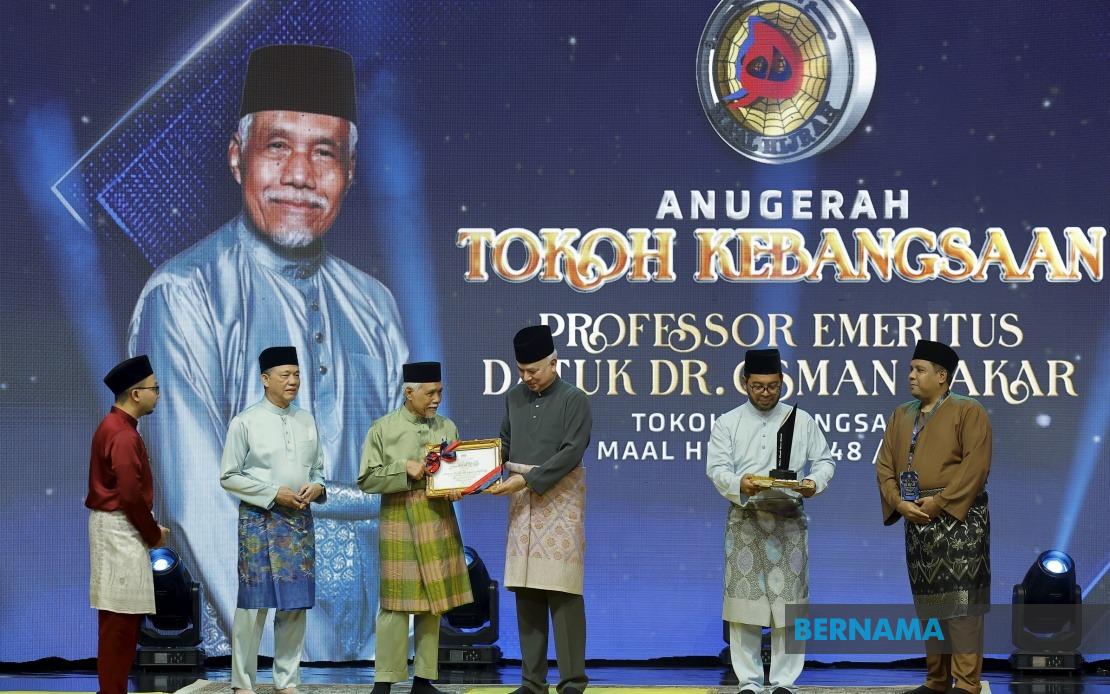
Prof Emeritus Datuk Dr Osman Bakar, the rector of International Islamic University Malaysia, has been named the National Tokoh Maal Hijrah at the national-level Maal Hijrah 1448H/2026 celebration held at Putra Mosque in Putrajaya. The distinction, conferred during a formal ceremony on June 17, recognizes his lifetime of scholarly work and leadership in advancing Islamic education and interfaith dialogue at both national and international levels. The recognition places him among Malaysia's most respected Islamic intellectuals and comes at a significant moment when the nation is emphasizing renewed commitment to MADANI values.
Accompanying Osman Bakar's national honour was the selection of Dr Ahmad Al-Raysuni, a distinguished Islamic scholar from Morocco, as the International Tokoh Maal Hijrah. The dual recognition reflects Malaysia's positioning as a regional centre for Islamic thought and scholarship, while simultaneously acknowledging the global dimensions of contemporary Islamic discourse. The pairing underscores the importance of cross-cultural and cross-border collaboration in strengthening Islamic civilizational values amid an increasingly interconnected world.
Sultan Nazrin Shah, the Sultan of Perak, presented the awards to both honourees during the ceremony. Each recipient received a cash prize, trophy, and certificate of appreciation—tangible recognition of their contributions to Islamic knowledge and practice. The presence of royalty at the awards ceremony elevated the occasion, signalling the constitutional importance placed on recognizing exemplary service to Islam and the nation. Such ceremonial elements carry deeper significance in the Malaysian context, where the Sultan's role encompasses custodianship of Islamic affairs in their respective states.
The broader Maal Hijrah 1448H celebration carried the thematic focus of "MADANI Dihayati, Ummah Diberkati," translating to "MADANI Experienced, Community Blessed." This messaging framework demonstrates the government's integration of the MADANI development framework—centred on values of compassion, unity, and community welfare—into religious observances. The theme moves beyond commemoration of the Islamic calendar's new year to position it as an opportunity for deliberate cultivation of social cohesion and shared purpose across Malaysia's diverse population.
The ceremony's attendees included Deputy Prime Minister Datuk Seri Fadillah Yusof and his wife Datin Ruziah Mohd Tahir, as well as Dr Zulkifli Hasan, who serves as Minister in the Prime Minister's Department overseeing Religious Affairs. Their participation reflects the high-level government engagement with this occasion, indicating that Maal Hijrah celebrations hold significance beyond religious circles and extend into national policy frameworks and development priorities. The presence of these officials also suggests that recognition of Islamic scholarship and leadership is increasingly integrated into Malaysia's broader governance and nation-building agenda.
Osman Bakar's selection as National Tokoh Maal Hijrah carries particular resonance given IIUM's role as Malaysia's premier international Islamic university. Throughout his tenure as rector, the institution has expanded its research output, strengthened programmes in Islamic and secular disciplines, and positioned itself as a site of intellectual engagement where Muslim and non-Muslim scholars collaborate on matters of mutual concern. His recognition validates institutional priorities that balance Islamic principles with contemporary knowledge systems and global academic standards.
The Tokoh Maal Hijrah award system itself reflects Malaysia's deliberate cultivation of Islamic intellectual leadership as a strategic national asset. In an era when Islamic thought often becomes polarized between traditionalist and modernist poles, or when Islam becomes entangled with narrow political agendas, honouring individuals like Osman Bakar reinforces alternative narratives emphasizing scholarship, dialogue, and ethical governance. His work spanning Islamic philosophy, interfaith relations, and the relationship between Islamic civilization and modernity positions him as someone who embodies broader intellectual currents within contemporary Islam.
For Malaysian readers, this recognition of a prominent academic figure during Maal Hijrah celebrations serves multiple functions. It elevates Islamic scholarship in public consciousness, signals government support for intellectual rather than purely ritualistic approaches to religion, and provides a platform for examining how Islamic values might inform solutions to contemporary social challenges. The emphasis on MADANI values in tandem with honouring scholars suggests a policy direction prioritizing compassionate, inclusive governance rooted in Islamic principles rather than sectarian or exclusionary approaches.
The international dimension through Al-Raysuni's recognition also positions Malaysia within broader Islamic intellectual networks spanning Africa, the Middle East, and Asia. Morocco, as an Islamic civilization with deep historical engagement across multiple knowledge traditions, offers a complementary perspective to Malaysian Islam's own cosmopolitan heritage. Recognizing Moroccan scholarship at a national Malaysian ceremony strengthens intellectual ties across the Muslim world and signals Malaysia's openness to diverse Islamic intellectual traditions beyond any single regional or school-based perspective.
Looking forward, the Maal Hijrah 1448H celebration and these particular honours suggest ongoing governmental commitment to framing Islamic practice and scholarship as compatible with—and indeed necessary for—achieving development goals centred on community welfare, social harmony, and ethical governance. In a regional context where questions about Islam's role in modern states remain contested, Malaysia's approach of integrating Islamic values into development frameworks and honouring intellectual leadership offers a distinct model deserving attention and analysis.