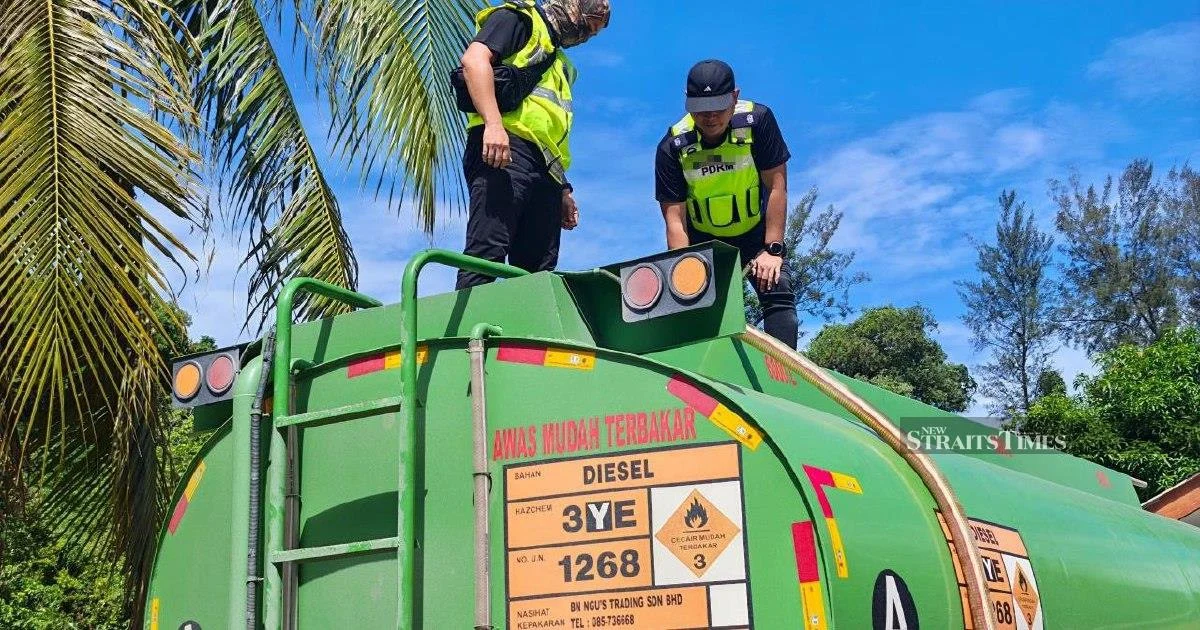
Enforcement agencies in Miri have successfully dismantled an operation designed to illegally distribute subsidised diesel fuel, uncovering a sophisticated diversion scheme based in the Tanjung Lobang area. The bust culminated in the seizure of 15,000 litres of fuel and the arrest of four individuals suspected of running the operation, marking a significant enforcement victory against fuel subsidy abuse in Sarawak.
The concealment of the depot within a residential bungalow underscores the increasingly covert methods employed by fuel diversion syndicates operating across Malaysia. Rather than operating through obvious commercial channels, these networks exploit legitimate subsidy mechanisms by purchasing fuel at government-controlled prices and then redirecting it to the black market where it commands significantly higher prices. The Tanjung Lobang discovery reveals how perpetrators have adapted their tactics to evade detection by situating operations in domestic settings that would escape routine scrutiny.
Fuel subsidy diversion represents a persistent drain on Malaysia's public finances, with the government allocating billions of ringgit annually to maintain fuel price controls for essential transport and industrial users. When subsidised diesel intended for legitimate commercial and household purposes is siphoned into illegal distribution networks, the actual fiscal burden multiplies considerably. Authorities must pursue investigations not only against the immediate operators but also up the supply chain to identify which fuel stations or distributors may have participated in the initial diversion.
The scale of this particular operation—15,000 litres—provides insight into the capacity of even modest, concealed depots. Converted residential spaces can serve as temporary storage and distribution hubs, with buyers collecting fuel in small-to-medium quantities that remain beneath the immediate attention threshold of routine patrols. This operational model allows syndicates to service numerous downstream retailers, transport operators, and agricultural businesses willing to purchase subsidised fuel at discount rates, thereby undermining legitimate market competition.
Miri has witnessed recurring incidents of fuel-related criminal activity, reflecting its position as a major trade hub in Sarawak with significant industrial and maritime sectors. The region's proximity to Brunei and the presence of numerous small-scale commercial operations create conditions conducive to black-market fuel trading. Previous busts in the area have similarly targeted illicit fuel stockpiles, suggesting that enforcement operations must remain persistent to disrupt emerging operations.
The arrest of four suspects provides authorities with investigative leads into broader criminal networks. Interrogation of those detained will likely reveal supply sources, customer bases, and financial flows associated with the syndicate. Determining whether these individuals operated independently or formed part of a larger organisation with connections to other regions remains a priority for investigators, as fuel diversion rings frequently coordinate across state boundaries.
Malaysia's fuel subsidy system, while intended to support affordability for vulnerable populations and essential industries, creates inherent vulnerabilities to exploitation. The differential between subsidised and global market prices generates powerful incentives for diversion, particularly when enforcement capacity struggles to match the proliferation of illicit operations. The government has periodically introduced stricter regulations, including monitoring mechanisms at fuel retailers and penalties for diversion, yet determined operators continue finding workarounds.
For Sarawak's legitimate business community, black-market fuel availability distorts fair competition and undercuts proper tax collection. Businesses purchasing illegal fuel simultaneously avoid legitimate documentation and contribute less to government revenue, creating an uneven playing field for compliant operators. The Tanjung Lobang bust thus serves notice that authorities remain committed to protecting market integrity, though comprehensive solutions require sustained investment in surveillance and detection infrastructure.
The broader implications extend beyond immediate law enforcement success. Successful busts generate deterrent effect when publicised, signalling to potential diverters that operations carry genuine risk of detection. However, without corresponding action against demand-side actors—including businesses and consumers knowingly purchasing contraband fuel—the incentive structures driving diversion remain largely intact. Comprehensive anti-diversion strategy demands addressing both supply disruption and demand suppression through targeted investigations and public awareness campaigns.