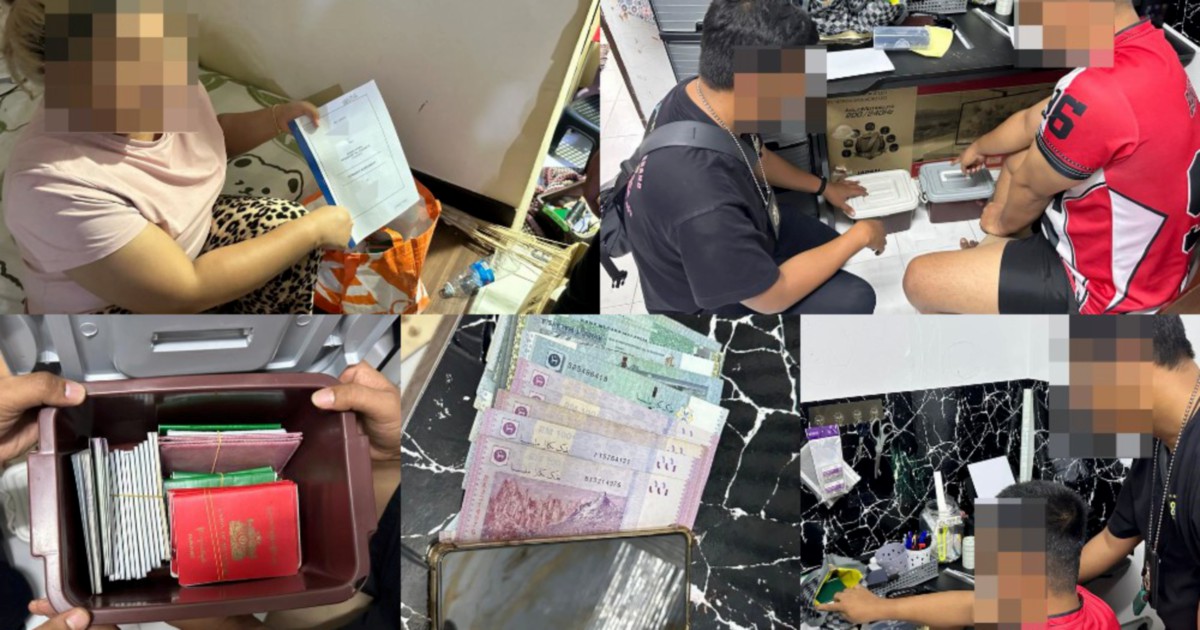
The Immigration Department has taken decisive action against organised document fraud by arresting the suspected orchestrator of a passport-forging syndicate operating in Kuala Lumpur, according to Datuk Zakaria Shaaban, the department's director-general. The operation represents a meaningful victory for authorities combating one of the most damaging forms of identity crime affecting national security and international border integrity across Southeast Asia.
The three-person network dismantled in the operation had apparently developed mechanisms to produce counterfeit travel documents of sufficient quality to evade initial detection at ports of entry. Document fraud of this magnitude typically represents an escalation beyond amateur forgery attempts, suggesting the group possessed access to sophisticated materials, equipment, and technical knowledge. Such operations often employ stolen security features, replicated holograms, and falsified biometric data integrated into forged passport booklets.
The arrest of the alleged syndicate head marks a critical breakthrough in dismantling the operational infrastructure that sustains such criminal networks. Senior figures within these organisations typically maintain distance from the actual production process, instead coordinating supply chains, managing client relationships, and distributing proceeds. The identification and apprehension of this individual signals that investigators successfully traced the operation backwards from lower-level operatives or discovered sufficient documentary evidence to establish the leadership hierarchy.
Passport forgery represents a particularly acute security concern for Malaysia given the nation's position as a regional transport hub and its role as a transit point for international travellers. Fraudulent documents facilitate human trafficking, international crime, terrorism financing, and irregular migration flows that destabilise communities across Southeast Asia. The ability to move individuals across borders with false identities undermines the entire architecture of border security that modern nation-states depend upon for maintaining sovereignty and protecting citizens from transnational threats.
The syndicate's operations likely extended beyond simply forging documents for personal gain. These networks typically function as service providers for larger criminal enterprises requiring multiple individuals to move across borders without detection. Trafficking rings, narcotics smugglers, and organised crime groups frequently depend upon networks like this to establish logistics chains spanning multiple countries. The removal of such a capability temporarily disrupts these broader criminal ecosystems, though established demand suggests replacement suppliers often emerge within months.
Importing the necessary materials to sustain a viable forgery operation requires its own supply chain of corrupt officials, smugglers, and materials handlers. The investigation likely revealed connections to individuals both within and outside government who facilitate access to blank passport stocks or security feature components. These secondary networks often prove as valuable as the primary ring itself, as they represent structural vulnerabilities within the government apparatus that enable corruption at scale.
The Immigration Department's willingness to publicise this operation signals a broader enforcement commitment to document fraud cases. Building public awareness of interdiction efforts serves a deterrent function, raising the perceived risk for individuals considering engagement with such networks. Over time, sustained enforcement creates reputational damage within criminal communities, making recruitment of replacement participants more difficult and raising service costs for criminal customers.
For Malaysian travellers and legitimate passport holders, these enforcement actions reinforce the security value of Malaysia's document security systems and the department's capacity to identify and prosecute those attempting to undermine them. International confidence in Malaysian travel documents depends partly upon visible enforcement against forgery networks. Foreign authorities evaluating the legitimacy of Malaysian passports presented at their borders factor in evidence of a functioning domestic mechanism to prevent document fraud.
The detention of two additional operatives alongside the alleged mastermind provides investigators leverage to potentially uncover the full extent of the syndicate's activities. Lower-level participants often agree to cooperate with authorities in exchange for reduced charges or lighter sentences, providing information about customer bases, source locations for materials, and connections to other criminal networks. This intelligence-gathering dimension of enforcement frequently yields dividends extending well beyond the immediate arrests.
The broader regional context remains concerning despite this success. Passport forgery networks operate across Southeast Asia with varying degrees of sophistication and state capacity to address them. Some neighbouring jurisdictions struggle to maintain consistent enforcement pressure, creating incentives for criminals to relocate operations. International cooperation frameworks through Interpol, bilateral agreements, and regional intelligence sharing mechanisms help Malaysian authorities pursue leads that extend beyond its borders, though such cooperation remains inconsistent across the region.
As Malaysia continues modernising its border security infrastructure and implementing advanced biometric systems at key entry points, the cat-and-mouse dynamic between forgers and authorities will evolve. Increasingly sophisticated document security features in newer passport generations create new technical challenges for counterfeiters, though history demonstrates that motivated criminals eventually develop countermeasures. The ongoing interdiction of networks like this one remains essential to maintaining the integrity of Malaysia's immigration control systems and protecting national security interests.

