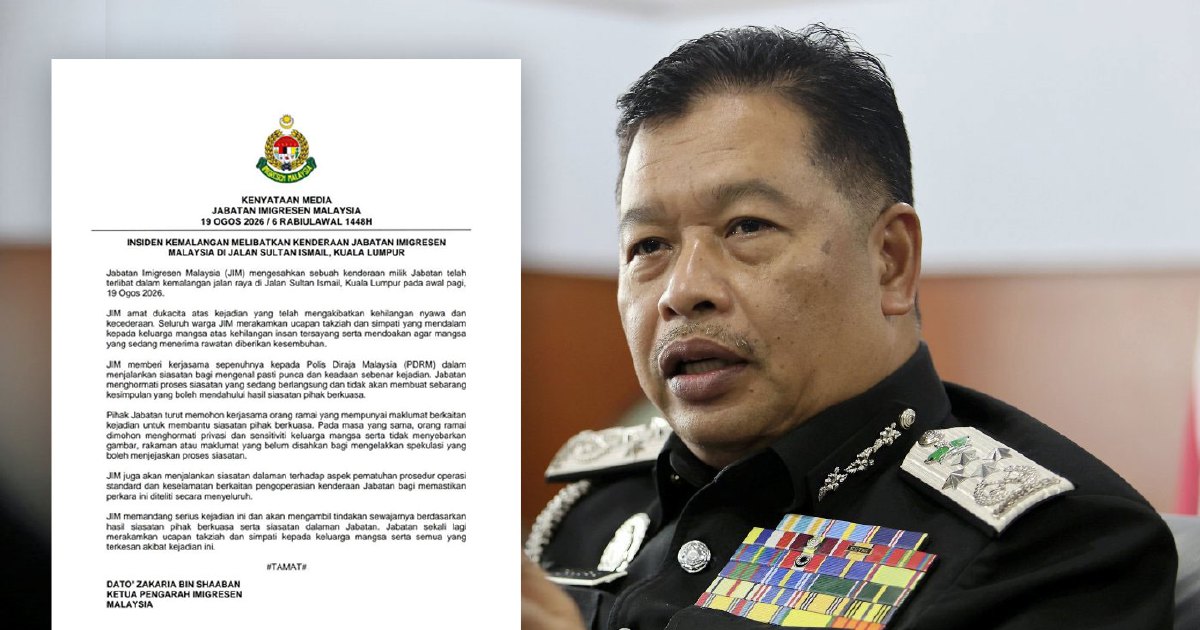
The Immigration Department has initiated an internal investigation into whether its personnel properly adhered to established safety protocols and standard operating procedures in connection with a fatal vehicular accident that occurred on Jalan Sultan Ismail in Kuala Lumpur during the early hours of today. The inquiry will examine compliance across multiple operational domains, signalling the department's commitment to accountability following the incident.
The scope of the investigation encompasses a comprehensive review of how departmental safety measures were implemented at the time of the accident. This includes whether drivers followed prescribed protocols, whether vehicles were maintained according to standards, and whether any lapses in procedure may have contributed to the fatal outcome. Such internal audits are typically conducted to identify systemic weaknesses and prevent future occurrences within large government organisations.
Jalan Sultan Ismail, a major arterial route in central Kuala Lumpur, has long been a congested corridor with regular traffic incidents. The location's history of accidents makes it particularly significant when government vehicles are involved, as it draws public scrutiny on departmental operations and raises broader questions about road safety practices within federal agencies. The Immigration Department's decision to probe internally reflects a recognition that even government operations must meet rigorous safety standards.
Fatal accidents involving official vehicles carry particular weight in Malaysia's public discourse, as they raise questions about whether civil servants receive adequate safety training and whether their employers enforce consistent safety culture. The Immigration Department oversees thousands of personnel and operates numerous vehicles nationwide, making its safety record a matter of operational concern and public interest. A comprehensive internal review can yield valuable insights for improving practices across the entire agency.
The investigation will likely examine driver qualifications, vehicle maintenance records, weather and road conditions at the time, and whether any other contributing factors existed. Additionally, the probe may assess whether the department's training protocols adequately prepare drivers for navigating challenging traffic situations on busy urban roads like Jalan Sultan Ismail. Such examinations often lead to recommendations for enhanced training or equipment upgrades.
For Malaysia's broader government sector, incidents such as this underscore the importance of rigorous safety management in public organisations. Many federal agencies operate substantial vehicle fleets without always maintaining transparent safety protocols. The Immigration Department's willingness to conduct a public internal investigation could set a precedent for other departments to similarly scrutinise their operations when accidents occur.
The timing of this announcement reflects modern accountability expectations. Government agencies now face greater pressure to demonstrate that they investigate incidents thoroughly rather than allowing matters to be handled quietly. The Immigration Department's transparent approach contrasts with older practices where such incidents might receive minimal public acknowledgment, though the full findings will ultimately determine whether the review is as rigorous as the initial commitment suggests.
Stakeholders including civil service unions, road safety advocacy groups, and the public will likely await the investigation's conclusions with interest. Such probes can influence how government departments across Southeast Asia approach safety management, particularly in Malaysia where federal agencies are increasingly expected to maintain standards comparable to private sector employers. The investigation may also inform recommendations to the Ministry responsible for overseeing Immigration Department operations.
Beyond the immediate investigation, this incident raises questions about traffic management on high-risk routes like Jalan Sultan Ismail. While departmental safety is important, the broader context of road conditions, traffic enforcement, and infrastructure design cannot be entirely separated from individual incidents. How the Immigration Department contextualises these factors in its findings could influence whether other agencies similarly examine their operational environments.
The department's commitment to investigating represents a necessary step toward accountability, though genuine improvement will depend on whether findings are acted upon. Past internal investigations in Malaysian government have sometimes concluded without substantial operational changes, limiting their practical impact. For this probe to meaningfully enhance safety, its recommendations must translate into concrete modifications to training, vehicle maintenance, or procedural requirements.
As the investigation proceeds, the Immigration Department faces a delicate balance between thorough accountability and protecting its personnel from unjust liability. The investigation must distinguish between individual negligence and systemic failures while maintaining the integrity of the process. How this balance is struck will signal to other government agencies whether internal investigations are serious accountability measures or performative exercises designed primarily for public relations purposes.

