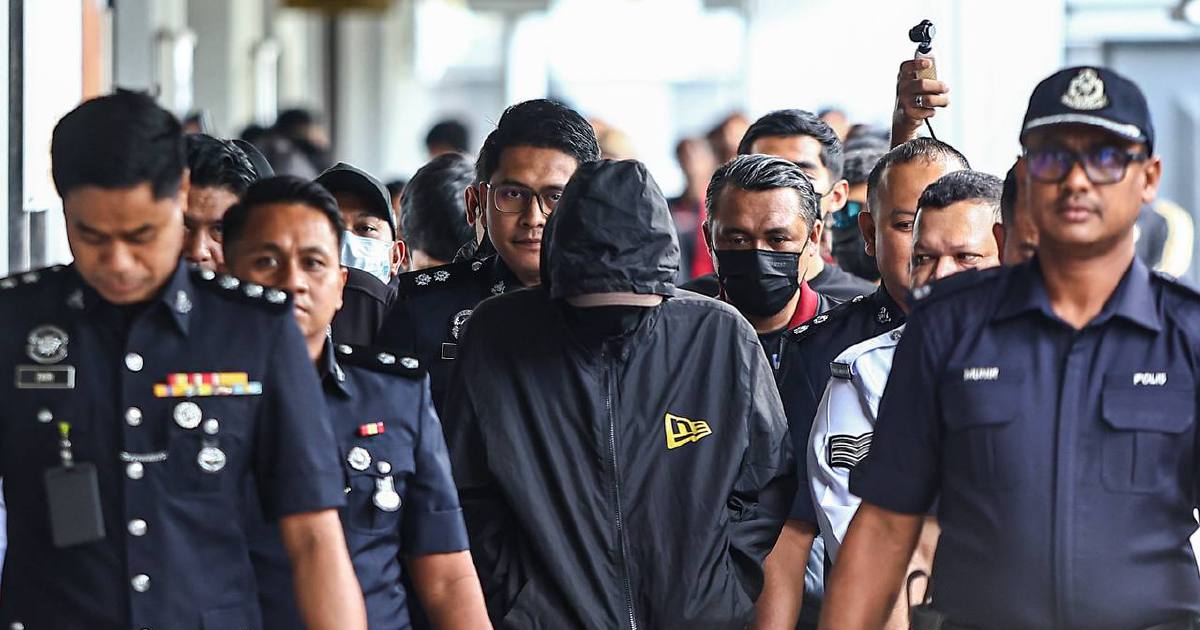
A driver employed by Malaysia's Immigration Department appeared before the magistrates' court in Kuala Lumpur to face a total of five charges stemming from a catastrophic road collision. The incident, which unfolded at the Maju Junction intersection, resulted in the deaths of three family members and has sent shockwaves through the nation's driving safety discourse. The driver's appearance in court marks the beginning of legal proceedings that will scrutinise the circumstances surrounding the collision and determine whether culpability can be established under traffic laws governing vehicle operation.
Among the charges laid against the driver are three separate counts alleging that his actions constituted causing death by reckless or dangerous driving. These allegations represent the most serious category of traffic-related offences in Malaysia's criminal code, carrying potential prison sentences and substantial fines. The presence of multiple death-by-reckless-driving charges indicates that prosecutors believe the driver's conduct deviated significantly from the standard of care expected of a professional vehicle operator. Each count corresponds to one of the three fatalities in the family, a procedural approach that underscores the gravity with which the legal system treats preventable road deaths.
The circumstances of the Maju Junction collision exemplify broader concerns about road safety in the Klang Valley, a region characterised by heavy traffic congestion and frequent accidents at major intersections. Maju Junction itself is a complex interchange serving multiple arterial routes, and collisions at such locations often result in cascading impacts involving multiple vehicles. The involvement of a large lorry—a heavy vehicle with substantial stopping distances and blind spots—compounds the risk profile inherent in intersection collisions. Commercial vehicles operating within urban areas present unique safety challenges, as their size and weight create disproportionate consequences for other road users.
The trial process now underway will examine crucial forensic and witness evidence to establish the factual basis for each charge. Investigators will likely present data regarding vehicle speeds, brake marks, visibility conditions, and the driver's conduct in the moments preceding impact. Electronic data recorders fitted to modern lorries can provide objective records of acceleration, braking, and steering inputs, information that may prove determinative in establishing whether the driving constituted a reckless departure from proper standards. Witness testimony from other road users and emergency personnel will contribute additional perspectives on the incident's sequence and causation.
The involvement of an Immigration Department vehicle in this fatal incident raises questions about driver training, vetting, and fleet management protocols within government agencies. The Immigration Department operates a substantial vehicle fleet, and standards governing the selection, training, and ongoing evaluation of drivers employed in this capacity warrant examination. Enquiries may extend to whether adequate training was provided, whether fatigue protocols were observed, whether the vehicle was properly maintained, and whether the driver possessed an appropriate licence classification for the vehicle being operated. Government fleet operations serve as a yardstick against which public expectations regarding professional standards are measured.
From a Malaysian legal perspective, the distinction between careless driving and reckless or dangerous driving is critical to the prosecution's case. Recklessness implies a conscious disregard for consequences or a deliberate indifference to the safety of others, a higher threshold than mere carelessness or negligence. Prosecutors must demonstrate that the driver's conduct transcended ordinary lapses in judgment and instead reflected a manifest departure from the standard of care expected of a reasonable driver. This distinction has significant implications for sentencing, should conviction eventuate, as courts typically impose harsher penalties for reckless conduct than for negligent actions.
The tragedy at Maju Junction aligns with troubling traffic statistics that have characterised Malaysian roads in recent years. Although comprehensive national accident data varies by source, road fatalities remain a persistent public health challenge, with intersections and urban areas accounting for disproportionate shares of fatal incidents. The loss of an entire family in a single collision underscores the human cost of road safety failures and highlights the need for multifaceted interventions spanning infrastructure improvement, enforcement enhancement, and driver behaviour modification.
Beyond the immediate legal proceedings, this case will likely influence broader policy discussions surrounding heavy vehicle operation in urban areas, intersection design standards, and the role of technology in enhancing vehicle safety. Cities across Southeast Asia grapple with similar challenges as commercial vehicles navigate congested urban networks designed for lower traffic volumes and slower speeds. The Maju Junction collision may prompt authorities to re-examine traffic flow patterns, signal timing, and enforcement strategies at similar intersections throughout the Klang Valley and other urban regions.
The road ahead for the defendant involves complex legal proceedings, evidence presentation, and ultimately adjudication by the magistrate. Should the prosecution establish guilt beyond reasonable doubt on all charges, the defendant faces potential imprisonment on each count, though courts typically order sentences to run concurrently rather than consecutively. The outcomes of this case will resonate beyond the courtroom, affecting public conversation about accountability for road safety failures and reinforcing—or challenging—public confidence in the legal system's capacity to ensure justice for victims of preventable accidents.
As the case progresses through the judicial system, families affected by the collision will be watching closely. The three individuals who perished deserve thorough, impartial examination of the circumstances that claimed their lives, and the legal process now underway offers the means by which such examination can occur. Beyond verdict and sentence, however, lies the broader imperative for Malaysia to address root causes of road fatalities through coordinated action involving enforcement agencies, infrastructure planners, vehicle manufacturers, and road users themselves.

