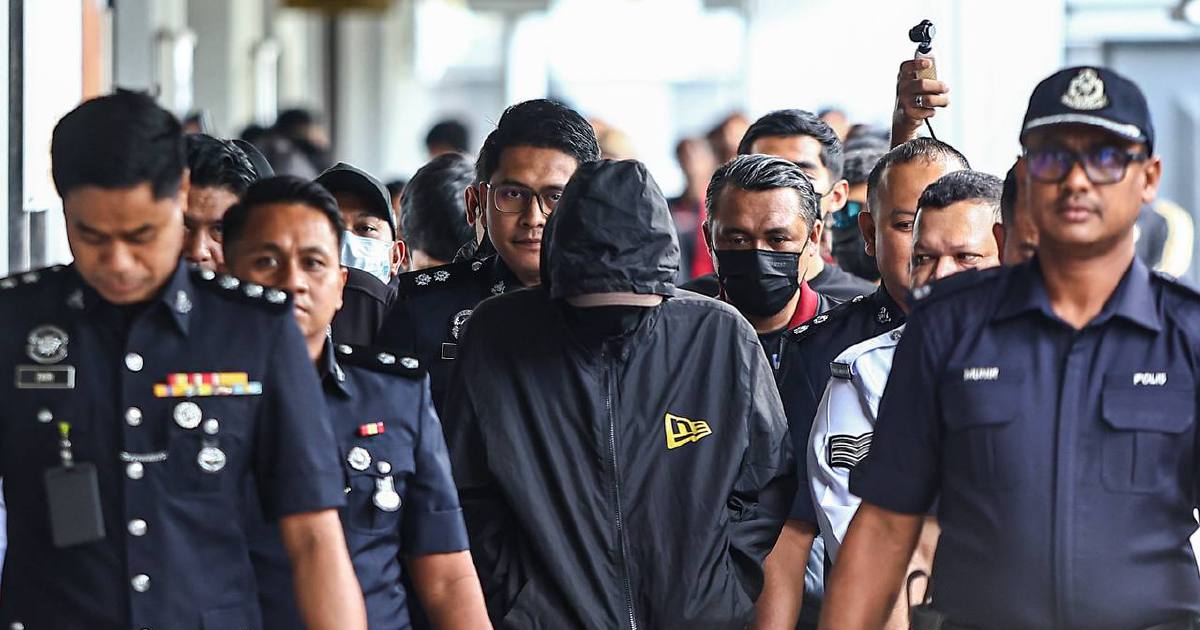
A driver employed by Malaysia's Immigration Department appeared in magistrates' court on Monday to face five separate charges stemming from a fatal road collision that claimed the lives of three family members at the busy Maju Junction intersection on Jalan Sultan Ismail. The incident marks a tragic reminder of the dangers that congested urban thoroughfares pose to commuters and demonstrates the serious legal consequences that drivers face when their actions result in preventable fatalities.
The three counts of causing death by reckless or dangerous driving form the centrepiece of the prosecution's case against the driver, each carrying the potential for substantial prison sentences and driving bans. Beyond the homicide charges, prosecutors have filed two additional charges that detail the circumstances of the collision and the manner in which the vehicle was operated immediately before impact. The presence of multiple charges indicates that investigators uncovered evidence suggesting the driver's conduct fell well below the standard expected of a professional vehicle operator.
Immigration Department employees occupy a position of public trust, and incidents involving their vehicles carry heightened significance for institutional accountability and public confidence. As a civil servant operating a government vehicle, the driver's actions reflect not only on individual culpability but also on departmental safety protocols and vehicle maintenance standards. The case raises questions about whether adequate training, supervision, and mechanical inspection procedures were in place before the vehicle departed on its fateful journey.
The Maju Junction intersection, situated along Jalan Sultan Ismail in Kuala Lumpur's commercial heart, is notorious among commuters for congestion and complex traffic flows. This particular location witnesses heavy daily traffic volumes from commuters navigating between different parts of the city. The concentration of vehicles and pedestrians at such intersections amplifies the consequences of driver error, as split-second lapses in attention or judgment can transform routine commutes into tragedies affecting multiple households.
The loss of three family members in a single incident represents a catastrophic outcome that will reverberate through extended family networks and their community. Such concentrated tragedies often prompt broader societal reflection on road safety culture and whether existing enforcement mechanisms and infrastructure adequately protect vulnerable road users. In Malaysia, where annual traffic fatality figures remain a persistent public health concern, high-profile cases of this nature frequently spark renewed calls for stricter penalties and enhanced driver education programmes.
The magistrates' court proceedings represent the initial stage of Malaysia's criminal justice process, where charges are formally read and defendants enter their pleas. The driver's decision to claim trial rather than enter a guilty plea signals that the defence intends to contest the prosecution's allegations, potentially presenting alternative explanations for the collision or challenging the evidence presented by investigators. The trial process will require detailed examination of accident reconstruction reports, witness testimonies, and potentially expert analysis of vehicle mechanics and driver behaviour.
Accidents involving commercial or government vehicles often trigger parallel administrative inquiries within the relevant organisations. The Immigration Department will likely conduct its own internal investigation to determine whether systemic failures contributed to the incident and what remedial measures should be implemented. Such investigations may examine driver training records, vehicle maintenance logs, shift patterns, and fatigue management protocols to identify institutional gaps that require addressing.
The broader context of road safety in Malaysia reveals persistent challenges across multiple dimensions. Driver competence varies significantly, enforcement remains inconsistent across jurisdictions, and infrastructure improvements lag behind vehicle population growth. Professional drivers operating heavy vehicles carry enhanced responsibilities given their vehicles' mass and kinetic energy, making their conduct subject to heightened scrutiny. Cases such as this underscore why specialised licensing and mandatory safety refresher courses for commercial drivers warrant serious policy consideration.
Families of the deceased face not only immeasurable emotional trauma but also protracted legal processes before finding any measure of closure or justice. The criminal trial will likely extend over many months, during which detailed evidence emerges about the precise sequence of events and contributing factors. Simultaneously, civil claims may be filed seeking compensation, potentially against both the driver and the Immigration Department as the vehicle's owner, adding further complexity to the legal landscape.
The incident serves as a sobering reminder that everyday commutes carry inherent risks that cannot be entirely eliminated but can be substantially reduced through rigorous enforcement, continuous infrastructure improvement, and driver accountability. Malaysia's road safety challenge requires multifaceted approaches encompassing improved driver discipline, technological solutions such as vehicle safety systems, and a cultural shift toward viewing reckless driving as socially unacceptable. As the court proceedings unfold, the evidence presented will provide crucial insights into how this collision occurred and whether it reflects isolated driver negligence or broader systemic vulnerabilities in transport safety.

