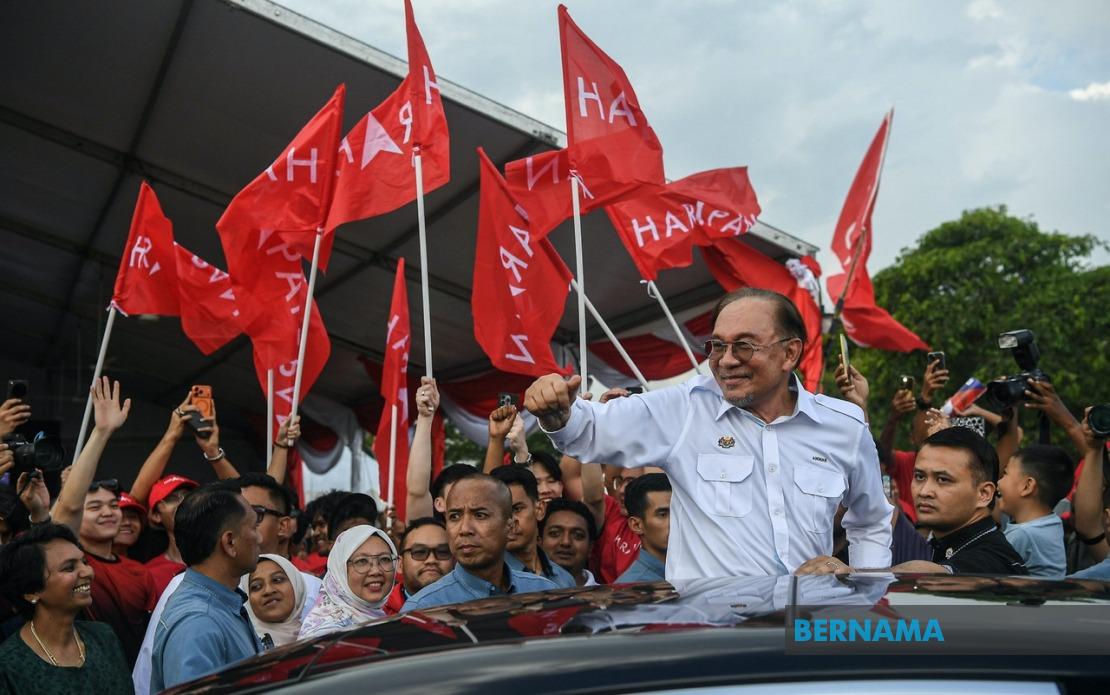
As the 16th Johor State Election campaign has unfolded with considerable emphasis on digital marketing and online engagement strategies, traditional face-to-face campaigning has retained considerable influence among the state's older electorate. Research conducted by Bernama discovered that notwithstanding widespread adoption of platforms including TikTok and Facebook, numerous senior citizens continue to regard a candidate's physical appearance and direct interaction as meaningful indicators of authenticity. Many elderly voters expressed appreciation for the chance to observe candidates in person, assessing their personal demeanour, character traits and overall presentation before deciding how to cast their ballots.
Simultaneously, many respondents recognised that digital channels have evolved into valuable supplementary resources for political engagement, particularly for individuals facing time constraints, work obligations or physical limitations that make attendance at campaign rallies impractical. This acknowledgement reflects the growing reality that electoral messaging now operates across multiple platforms, each serving different segments of the voter base according to their circumstances and preferences.
A. Chandra, a 70-year-old retiree residing in the Perling state constituency, exemplifies this perspective. He emphasised that physically attending campaign gatherings delivers an atmosphere and engagement level that cannot be replicated through online streaming or digital content consumption. The interactive nature of in-person events—where voters can directly encounter candidates and political figures from various parts of Malaysia—creates an experience that virtual platforms simply cannot match, according to his assessment.
Maimunah Ismail, a 73-year-old housewife in the Sedeli constituency, similarly favours attending campaign events because the direct exposure provides clearer insight into a candidate's communication style and substantive policy positions. However, she noted that modern technology allows her to supplement this in-person engagement by following campaign developments through mobile social media while managing household responsibilities, demonstrating how older voters increasingly adopt flexible consumption habits across different media channels.
The testimony of Saadon Mohamad, a 72-year-old settler, reinforces the view that despite information about candidates being readily accessible online, the tangible excitement and communal atmosphere of physical campaigning offers something distinct that digital channels cannot fully replicate. This perspective highlights a psychological dimension of electoral participation that extends beyond mere information gathering to encompass the social and emotional experience of engaging with the democratic process.
Fairuz Saif, a 59-year-old Kempas voter, challenged assumptions about older citizens lacking digital competency while simultaneously arguing that online campaign effectiveness depends critically on how political parties communicate their messages. He advocated for simplified language and concise messaging in digital content to ensure accessibility across age groups, yet maintained that face-to-face campaigns retain superior effectiveness because candidates can provide immediate responses to voter questions and build stronger personal credibility.
M. Sivathramani, a 73-year-old retired civil servant with mobility constraints, illustrated how digital platforms genuinely solve practical problems for voters with physical limitations. He expressed gratitude that platforms like TikTok enable him to maintain political awareness without navigating crowded campaign venues, though he indicated a preference for attending events in person whenever circumstances permit. This pattern demonstrates that the digital-versus-traditional debate oversimplifies voter behaviour; rather, accessibility and necessity drive platform choices among different demographic groups.
Lee Lian Chen, a 58-year-old business owner in Bukit Permai, illustrated a strategic voter approach where social media serves an initial screening function for policy platforms and implementation capacity before candidates are evaluated through direct contact. Her emphasis on candidates' ability to deliver promised outcomes over five-year terms reflects how voters increasingly employ multiple information sources to make comprehensive electoral assessments rather than relying exclusively on single channels.
Dr Nazreena Mohammed Yasin from Universiti Tun Hussein Onn Malaysia's Department of Social Sciences provided expert context by observing that contemporary electoral politics demonstrates physical and digital campaigning functioning as complementary rather than competitive strategies. While social media has become a primary political information source for many voters, in-person campaigns continue maintaining emotional resonance by allowing voters to experience the election atmosphere directly, she noted. This observation recognises that voting behaviour involves both rational information processing and affective or emotional dimensions that different media engage differently.
Dr Nazreena further observed that voter information-seeking patterns vary significantly according to demographic background and generation. Older voters frequently continue relying on conventional media such as newspapers and television broadcasts, while many have simultaneously embraced digital platforms for their convenience and immediacy. Working-age voters often resort to social media as a practical mechanism for tracking campaign developments given time pressures and professional obligations that preclude attending physical rallies.
The academic perspective identifies an increasingly prevalent voting pattern where citizens adopt hybrid approaches, combining personal experiences from campaign events with information gathered through social media platforms before reaching ballot-box decisions. This multifaceted engagement strategy reflects sophisticated voter behaviour rather than simple demographic categories, suggesting that electoral campaign design must address multiple communication channels and engagement modalities to reach diverse constituencies effectively.
The significance of these findings extends beyond Johor's specific election context to broader Malaysian electoral dynamics. As the nation's electorate continues aging and digital adoption accelerates, understanding how different voter segments integrate multiple information sources becomes strategically crucial for political parties seeking broad-based support. The 2.7 million voters expected to participate in Johor's election represent a microcosm of contemporary Malaysian electoral behaviour, illustrating the complex interplay between traditional values around personal political engagement and modern technological convenience in shaping voting decisions.

