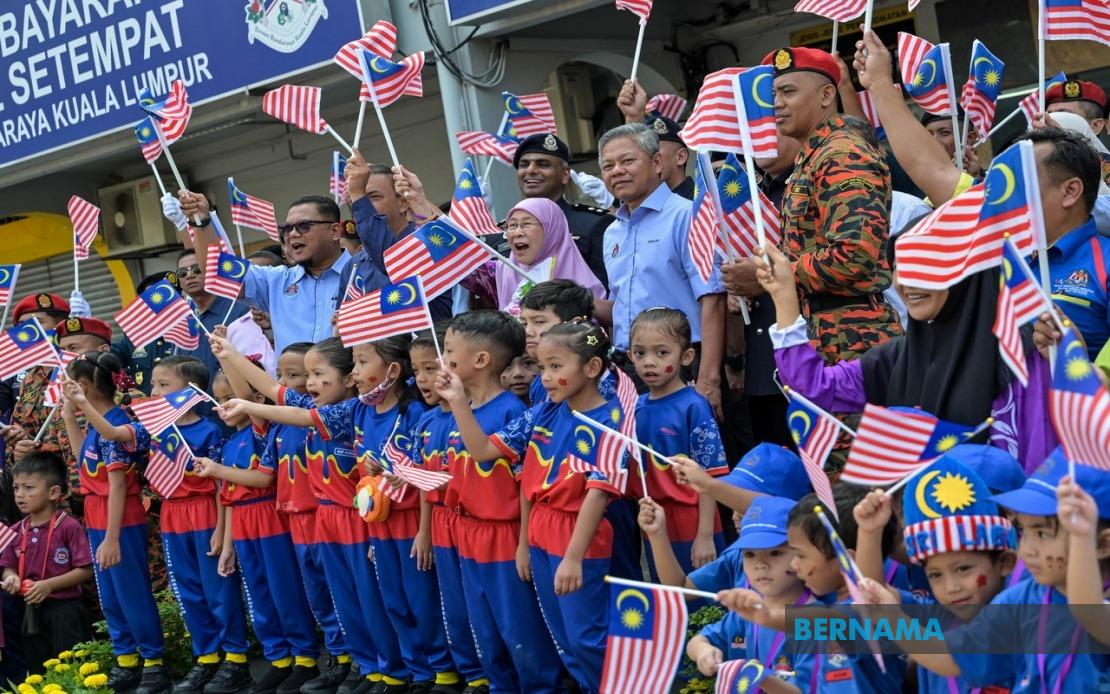
Datuk Seri Dr Wan Azizah Wan Ismail, the Prime Minister's wife and Member of Parliament for Bandar Tun Razak, has called for a deeper appreciation of what independence truly signifies for the nation, moving beyond the pageantry and patriotic imagery that typically characterize Malaysia's annual National Day commemorations. Speaking at the Semarak Merdeka Programme in Kuala Lumpur, she stressed that independence represents far more than the customary shouting of "Merdeka" and displaying of the Jalur Gemilang flag, but instead embodies the hard-won freedoms and the profound struggles undertaken by earlier generations in establishing the country as a sovereign nation. Her remarks underscore a growing sentiment among national leadership that Malaysians must engage with independence on a substantive level, recognizing it as a collective obligation to sustain the peace, unity and harmony that the nation has built over decades.
The timing of Dr Wan Azizah's message aligns with this year's National Day theme, "Malaysia Madani: Jiwa Merdeka", which extends beyond ceremonial observance to encompass broader national development priorities. The theme endeavors to weave together the abstract concept of the Malaysian spirit with concrete governmental objectives centered on improving living standards, ensuring fair access to opportunities for all citizens regardless of background, and reinforcing the bonds of social cohesion across Malaysia's diverse population. This framing suggests that the government views national independence not as a historical milestone to be commemorated passively, but as an ongoing commitment requiring active participation from all segments of society in building a nation that honors its founding principles while adapting to contemporary challenges.
Dr Wan Azizah presented Bandar Tun Razak, her parliamentary constituency, as a microcosm of Malaysia's multicultural identity and social achievement. The constituency comprises approximately 191,000 residents distributed across multiple ethnic communities: Malays constitute 60 percent of the population, Chinese residents account for 24 percent, and Indians make up 8 percent, with the remaining segments representing other groups. Drawing on data from the Malaysian Population and Housing Census, she characterized this demographic composition as evidence of a functioning, harmonious community where different ethnic and religious groups coexist and contribute to local development. This emphasis on Bandar Tun Razak's diversity carries particular significance in the Malaysian context, where maintaining interethnic harmony remains a central concern for policymakers and where demonstrations of successful multicultural integration carry outsized symbolic weight.
Beyond her ceremonial remarks, Dr Wan Azizah engaged in substantive social outreach by visiting three families residing in the Seri Pulau Pinang and Desa Tun Razak People's Housing Projects, community housing initiatives aimed at low-income Malaysians. During these visits, she presented financial assistance from the Social Security Organisation (PERKESO) and the Federal Territories Islamic Religious Council (MAIWP), illustrating how national institutions channel support to vulnerable segments of the population. This direct engagement with constituent families demonstrates the tangible ways in which national identity and independence translate into social protection mechanisms and targeted welfare interventions for those facing economic hardship or family crisis.
One recipient of assistance was K. Moganavalli, a 39-year-old woman who found herself as the primary caregiver for three young children following the sudden death of her husband, Edwin Anthony Dass, on August 2. Her husband had previously worked as both a lorry driver and Grab driver, supplementing household income through multiple employment arrangements common among middle and lower-income Malaysian workers. Moganavalli's situation exemplifies the economic vulnerabilities facing many Malaysian families, where the loss of a primary income earner through unexpected death creates immediate financial crisis and threatens family stability. Through PERKESO mechanisms, she received a one-time Funeral Management Benefit of RM3,000 to cover immediate burial expenses, alongside a monthly Survivor's Pension of RM1,118.33 designed to provide sustained income support. These payments, combined with additional Kotak Prihatin welfare assistance, represent the state's intervention in preventing acute family dissolution when breadwinners pass away.
Another beneficiary, Khalijah Binti Nazir, represents a different category of vulnerability common in Malaysian society. The 64-year-old single mother abandoned her employment to provide full-time care for two children, one of whom lives with hearing impairment requiring specialized attention and resources. Her circumstances illustrate how caregiving responsibilities, particularly within families where children face disabilities, can force individuals out of the labor force and into economic dependence on social assistance. Khalijah receives RM800 monthly through Baitulmal assistance, a religious-based welfare mechanism, supplemented by RM300 monthly distributed via the Boost eWallet platform and an additional RM150 under the Sumbangan Asas Rahmah scheme. Her son receives RM100 monthly under the same SARA programme, creating a layered approach to household support that combines religious charitable mechanisms, digital payment infrastructure, and targeted assistance schemes.
The layered welfare structure evident in these cases reflects Malaysia's multifaceted approach to social protection, incorporating secular statutory bodies like PERKESO, Islamic religious institutions, and newer digital payment platforms. This multiplicity of mechanisms suggests both the comprehensiveness of efforts to prevent extreme poverty and the complexity citizens navigate in accessing various assistance programs. For individuals like Khalijah and Moganavalli, the cumulative effect of these programs—ranging from funeral benefits to survivor pensions to monthly subsistence grants—provides crucial buffers against complete economic destitution. However, the relative modesty of individual monthly payments also underscores the ongoing challenges low-income Malaysians face in achieving genuine economic security even with government support.
The juxtaposition of Dr Wan Azizah's intellectual framing of independence with her concrete social outreach illustrates an emerging approach within Malaysian governance where national identity rhetoric becomes intertwined with welfare delivery. By connecting celebration of independence to immediate material support for struggling families, the government implicitly argues that independence's true value lies not in historical achievement but in its continued capacity to generate institutions and policies serving all citizens. This linkage proves particularly important in Malaysia's political context, where social cohesion and multiethnic harmony remain contested and where visible demonstration that the state protects vulnerable members across all communities carries strategic significance for maintaining national stability.
The geographic focus on Bandar Tun Razak—a constituency where Dr Wan Azizah represents residents—also reflects the localized nature of Malaysian politics, where Member of Parliament roles traditionally encompass significant responsibility for welfare provision and direct constituent service. The combination of her parliamentary position, her spousal status as the Prime Minister's wife, and her personal engagement with individual families creates a political presence that extends beyond national-level policymaking into neighborhood-level social work. This grassroots orientation remains crucial in Malaysian electoral and governance dynamics, where citizens often evaluate political performance through the lens of direct constituency benefits and personal attention from elected representatives.
The broader context for Dr Wan Azizah's message on independence also intersects with Malaysia's ongoing debates about national identity, social cohesion, and the government's role in protecting all citizens equitably. Her emphasis that independence represents a "shared responsibility" carries implications for how Malaysians of different backgrounds should understand their obligations to the nation and to each other. By framing independence not as a finished historical product but as an ongoing commitment requiring active cultivation, she repositions National Day observance from backward-looking commemoration to forward-looking affirmation of values and obligations. This reframing proves particularly relevant as Malaysia navigates questions about economic inequality, intercommunal relations, and the government's effectiveness in delivering inclusive development.
Looking forward, the intersection of Dr Wan Azizah's rhetoric emphasizing deeper appreciation of independence with concrete welfare provision to vulnerable families illustrates how Malaysian governance increasingly attempts to link national identity with material wellbeing. The success of this approach in building genuine social cohesion and shared national commitment will depend partly on whether Malaysia's institutions can reliably deliver the support programs represented by the assistance handed to families like Moganavalli's and Khalijah's. For Malaysian citizens and regional observers, these efforts signal that discussions of independence and national unity within Malaysia's political discourse increasingly incorporate obligations to ensure that all members of the national community can meet basic economic security—a shift that could reshape how Malaysia addresses its ongoing challenges in building inclusive, harmonious development across its diverse population.

