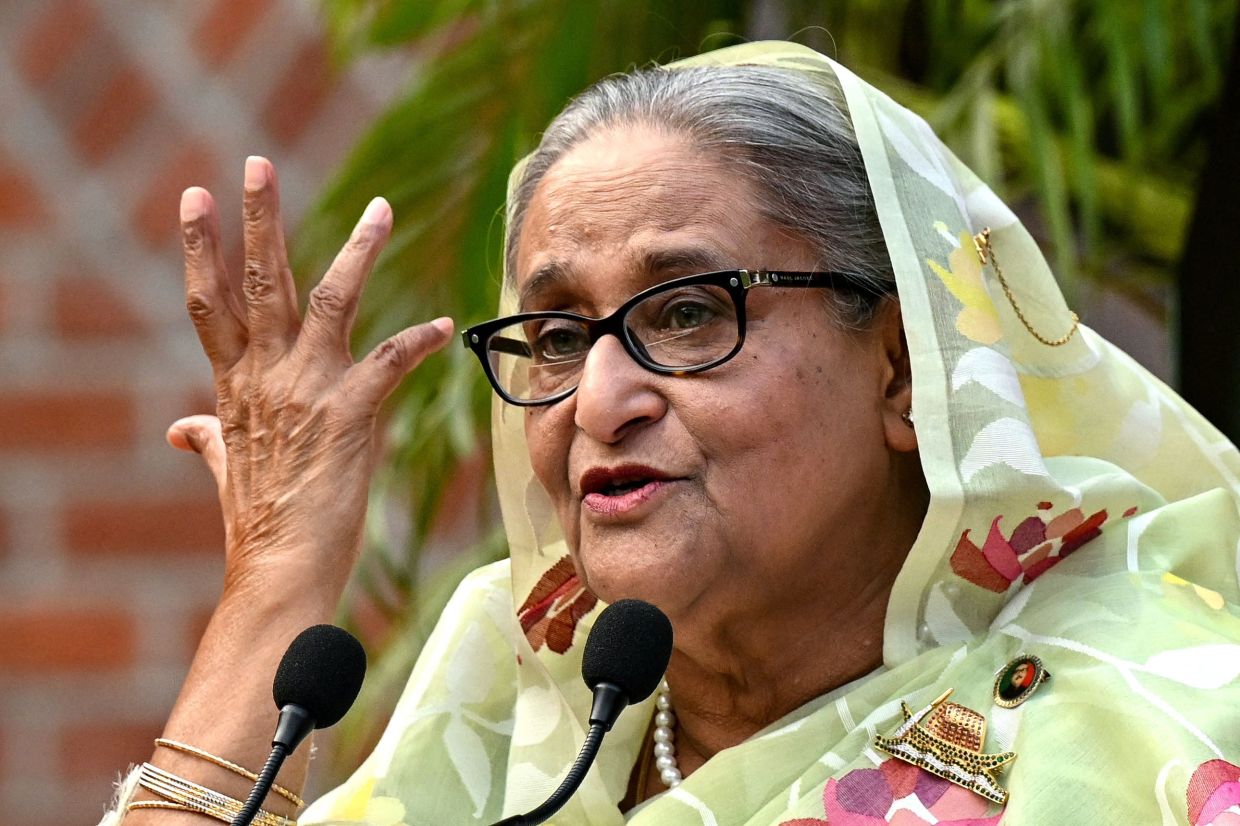
India's external affairs ministry moved swiftly on Tuesday to clarify that New Delhi bears no official responsibility for an upcoming virtual address by exiled Bangladesh former Prime Minister Sheikh Hasina, attempting to defuse growing tensions between the two neighbours over the politically fraught event. The statement came after Bangladesh formally raised concerns with the Indian government about allowing the speech, organised by the Foreign Correspondents' Club of South Asia on August 5 to mark two years since student-led protests forced Hasina from power. Ministry spokesperson Randhir Jaiswal emphasised that the event was being arranged by a private media organisation, with the Indian government maintaining complete distance from the proceedings and declining to endorse any views expressed at the forum.
The clarification reflected New Delhi's delicate balancing act between respecting Bangladesh's sovereignty concerns and upholding the rights of media organisations and individuals operating within Indian territory. Relations between the two South Asian neighbours have remained strained since Hasina's dramatic exit in August 2024, creating a complex diplomatic environment where even private events involving prominent Bangladeshi political figures carry significant weight. Bangladesh has made clear its displeasure at what it views as Indian soil being used for political activities by a fugitive, warning that such actions could undermine the recent warming of bilateral ties that both governments have been attempting to foster. The timing of India's clarification suggested New Delhi understood the sensitivity of the situation and sought to prevent the event from becoming a flashpoint in an already fragile relationship.
Meanwhile, Bangladesh authorities intensified their efforts to contain the impact of Hasina's anticipated speech by imposing strict restrictions on domestic media coverage. Information Adviser Zahed Ur Rahman issued a warning to all news outlets, citing a December 2024 order from Bangladesh's International Crimes Tribunal that explicitly prohibits media organisations and social media platforms from publishing, broadcasting, or otherwise disseminating Hasina's speeches, statements, interviews, or any audio or video recordings featuring her. This blanket ban represents an extraordinary measure that extends far beyond typical media guidelines and signals Dhaka's determination to prevent Hasina's message from reaching the domestic audience within Bangladesh, even indirectly through international sources. The prohibition underscores the politically charged nature of Hasina's continued presence in public discourse and reflects the interim government's concern that allowing her voice to be amplified could complicate its political position or mobilise opposition sentiment.
Hashina, now 78 years old and in exile in India since her government's collapse, has remained a polarising figure in Bangladeshi politics despite her physical absence from the country. The upcoming virtual address will mark her first public appearance through any medium since she fled Dhaka during the tumultuous protests, a significant moment that carries symbolic weight for both her supporters within the Awami League and her detractors who led the uprising against her administration. She faces a death sentence imposed in 2025 for crimes against humanity related to her government's response to the demonstrations, though she has dismissed the verdict as legally invalid. Observers have noted that despite these charges and the ban on her public statements, Hasina has maintained contact with party loyalists and has previously signalled her intention to return from exile around December to present herself in court, a move that could dramatically alter Bangladesh's domestic political landscape and test the new government's commitment to democratic norms and rule of law.
Hasina's decision to proceed with the August 5 address despite Bangladesh's warnings demonstrates her refusal to be silenced by the restrictions imposed against her. Her aide Abu Obaidha Arin stated unequivocally that the event would take place as scheduled, framing the address as an assertion of free expression beyond Bangladesh's borders and declaring that Dhaka's efforts to suppress dissent could not extinguish voices speaking from abroad. This defiant stance reflects the broader struggle between an interim government seeking to consolidate control and a prominent opposition figure seeking to maintain political relevance and mobilise support among her party's base. The content of Hasina's speech has not been disclosed by her advisors, leaving room for speculation about whether she will focus on justifying her previous administration, criticising the current government, or outlining plans for the Awami League's future political strategy.
The diplomatic tensions reveal deeper anxieties within Bangladesh about the nature of Hasina's exile and her continued political activities from Indian soil. Shama Obaed Islam, Bangladesh's State Minister for Foreign Affairs, has repeatedly conveyed Dhaka's concerns to New Delhi, emphasising that allowing Hasina and other senior Awami League figures to make political statements from within Indian territory potentially violates the principle of non-interference in bilateral relations. Bangladesh views these activities as a form of interference, even if not directly orchestrated by the Indian government, and has indicated that resolving the Hasina situation remains an important element in its broader relationship with India. The extradition request for Hasina that Bangladesh has filed adds another layer of complexity, as India has not granted the request, leaving Hasina in a protected position within Indian territory while Dhaka pursues legal remedies.
The evolution of India-Bangladesh relations since Hasina's ousting has been marked by careful diplomacy aimed at restoration of normal ties, particularly following the victory of Tarique Rahman's party in February's elections. Both governments have publicly signalled a desire to move past the tensions surrounding Hasina's presence, yet the underlying disputes continue to surface in seemingly routine matters such as media events. India's insistence on distinguishing between private organisations and official government policy reflects an effort to maintain cordial relations while respecting the independence of civil society institutions within its borders. However, Dhaka appears unconvinced by such distinctions, viewing any platform granted to Hasina as problematic and expecting India to exercise greater control over activities that could be perceived as politically supportive of an exiled leader.
For Malaysian and broader Southeast Asian observers, the situation illuminates the challenges that regional governments face when managing exile and opposition figures, particularly when powerful neighbouring countries are involved. The case demonstrates how the presence of a prominent political figure in exile can become a persistent irritant in bilateral relations, creating diplomatic incidents around seemingly minor events and complicating efforts to normalise ties after political upheaval. It also raises questions about the balance between upholding democratic principles such as free expression and respecting the sovereignty of neighbouring nations, a tension that resonates across Southeast Asia where political transitions and exile situations remain relevant concerns. The media ban imposed by Bangladesh, moreover, reflects broader trends in the region toward controlling information narratives and restricting opposition voices, even when those voices operate from foreign locations.
Looking forward, the August 5 event is likely to proceed regardless of Bangladesh's objections, given India's firm stance on the matter and the private nature of the organising entity. However, the controversy surrounding the event has already achieved one of Dhaka's objectives by drawing international attention to its displeasure and publicly reaffirming its official position that Hasina remains a fugitive and political opponent. The restrictions on domestic media coverage will limit the immediate domestic political impact within Bangladesh, though the speech may nonetheless circulate through digital channels and diaspora communities. The situation sets the stage for continued tension between the two governments on this issue, with the question of whether Hasina will actually attempt to return in December potentially serving as the next flashpoint in an already complicated relationship that neither country appears eager to allow to deteriorate further despite the underlying frictions.

