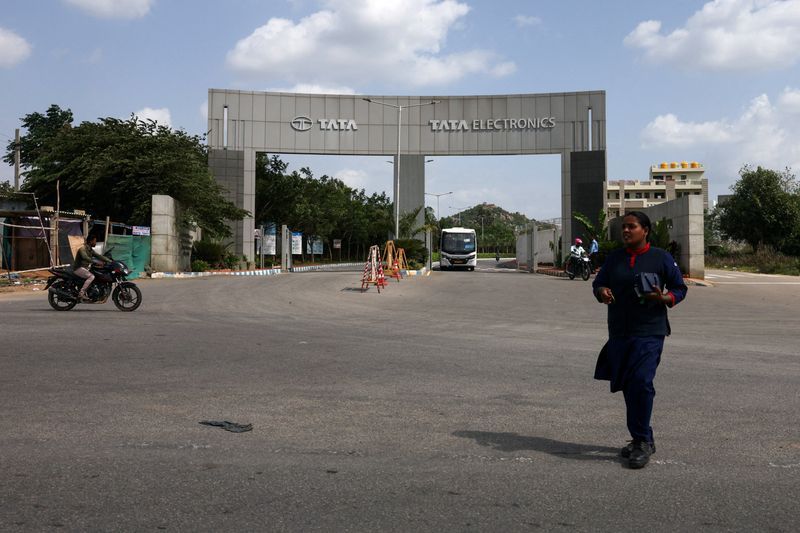
India's Ministry of Electronics and Information Technology has confirmed it is investigating a significant data breach at Tata Electronics, which serves as a crucial supplier for Apple's iPhone manufacturing operations in the country. The incident, made public through statements by S. Krishnan, the ministry's secretary, represents a watershed moment in India's oversight of technology supply chain security, particularly as the nation positions itself as a vital alternative manufacturing hub to China.
The compromised data includes highly sensitive technical documentation related to Apple's yet-to-be-released iPhone 18 Pro and Pro Max models, which the technology giant plans to unveil in September. Among the exposed materials are detailed component lists, supplier identification information that Apple keeps confidential from its public supply chain databases, and photographic evidence of the unreleased devices. A ransomware group is believed to have orchestrated the theft, subsequently publishing the stolen files on the dark web—a move that underscores the growing sophistication of cybercriminals targeting the world's largest technology companies.
The gravity of this breach extends far beyond a single corporate embarrassment. Apple's manufacturing ecosystem depends on an intricate web of global suppliers working in coordination with carefully guarded secrecy. The leak of supplier identities and their specific component responsibilities threatens to unravel competitive advantages that Apple has cultivated through decades of supply chain management. Competitors could potentially approach the revealed suppliers directly, or governments could use the information to apply pressure on manufacturers producing critical components for Apple's products.
S. Krishnan's public acknowledgment that India's Computer Emergency Response Team, the nation's primary agency responsible for cybersecurity incident management, has been engaged in the investigation signals the seriousness with which New Delhi views the breach. The involvement of this federal body indicates that authorities are treating the incident not merely as a private corporate matter but as a threat to India's credibility as a reliable manufacturing destination for sensitive technology products. As India aggressively pursues contracts to diversify global iPhone production away from China and Vietnam, such incidents could undermine government efforts to attract further semiconductor and electronics manufacturing investments.
The breach is particularly damaging because it exposes the specific architectural decisions Apple has made for its upcoming flagship models. The component lists and supplier designations reveal manufacturing strategy, cost structures, and technological priorities that Apple considers strategically sensitive. This information becomes exponentially more valuable to competitors and technology intelligence gathering operations when coupled with photographic evidence of the devices themselves, which allows for reverse engineering efforts and feature analysis before the official announcement.
Tata Electronics' response has included engagement with global forensic consultants to conduct a comprehensive security audit. This decision reflects the scale of the investigation required and the international dimensions of the breach. However, the incident has also prompted questions about how a supplier holding some of Apple's most closely guarded manufacturing secrets could experience such a significant security failure. Supply chain security in India has historically lagged behind international standards, and this breach may accelerate demand for stronger information security protocols among domestic technology manufacturing firms.
The timing of the breach is particularly consequential given Apple's expansion of iPhone assembly in India. The company has been steadily increasing production volumes in the country as part of its broader strategy to reduce dependence on China and hedge geopolitical risks. A successful cyberattack on a key Indian supplier could complicate Apple's confidence in ramping up further manufacturing operations domestically, potentially slowing India's ascent in the global electronics manufacturing hierarchy.
Interestingly, the breach has exposed vulnerabilities across multiple technology companies simultaneously. Documents from Tesla, Qualcomm, and TSMC have also surfaced on the dark web in connection with the Tata Electronics incident, suggesting either that the cybercriminals had access to multiple networks or that Tata Electronics maintained repositories of sensitive data belonging to other companies. This broader exposure indicates systemic weaknesses in how Indian facilities manage and secure information belonging to their multinational clients, raising concerns about the viability of India as a trusted custodian of sensitive technology intellectual property.
The investigation by Indian authorities will likely examine not only how the breach occurred but also whether existing legal frameworks adequately protect sensitive foreign technology data stored domestically. India's data protection laws, including the recently implemented Digital Personal Data Protection Act, may need to be interpreted or potentially amended to address the specific requirements of companies handling pre-release technology information. The outcome of this investigation could shape future data security requirements for technology suppliers operating in India and potentially influence multinational companies' willingness to relocate sensitive manufacturing operations to the country.
For Malaysia and other Southeast Asian nations competing for technology manufacturing investments, the Tata Electronics breach serves as a cautionary tale about the importance of robust cybersecurity infrastructure and regulatory oversight. As regional countries position themselves as alternatives to China for electronics manufacturing, the ability to assure multinational corporations that their intellectual property and trade secrets will be protected becomes a critical competitive advantage. The incident underscores that building trust in supply chain security requires not only private sector vigilance but also credible government involvement in incident response and prevention.
The broader implications extend to how technology supply chains will be restructured in response to this and similar breaches. Companies may begin insisting on enhanced encryption, air-gapped systems, and compartmentalized access to sensitive information at supplier facilities. These requirements could create barriers for smaller manufacturers and potentially consolidate supply chains around fewer, more sophisticated facilities with stronger security postures. India's response to this investigation will therefore influence not only its own position in global electronics manufacturing but also regional competitors' strategies for attracting and retaining high-value technology production.

