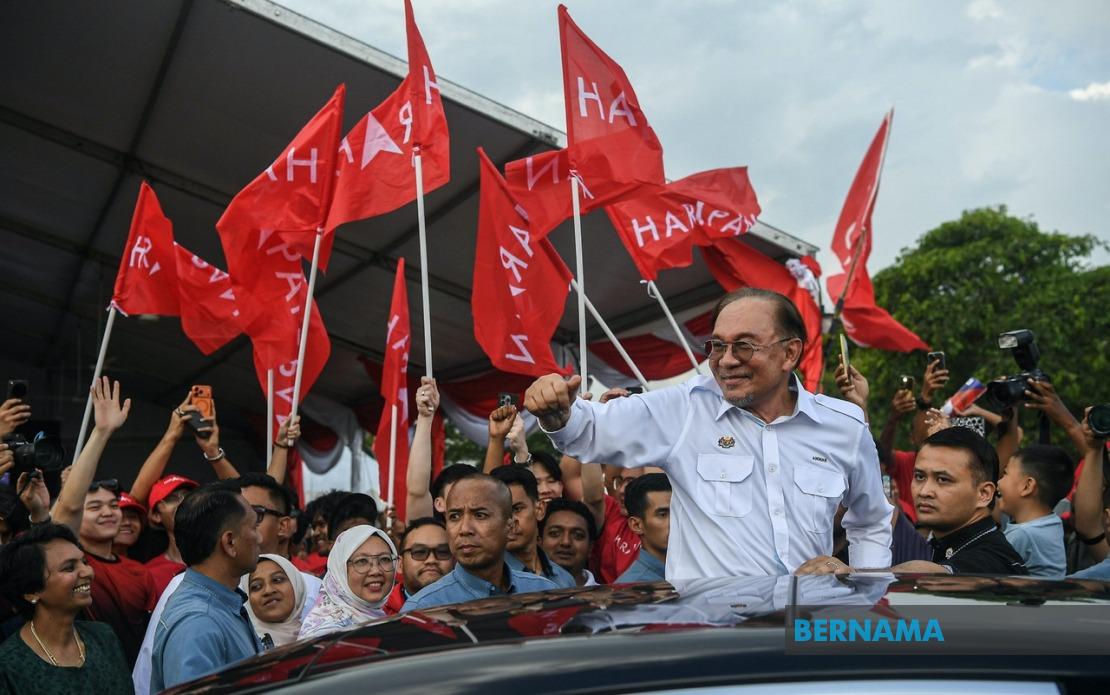
The Indian community in Johor should base their electoral decisions on the tangible performance and demonstrated achievements of Pakatan Harapan under Prime Minister Datuk Seri Anwar Ibrahim, according to PKR Central Leadership Council member Dr Gunaraj George. Speaking ahead of the state election, he argued that the ruling coalition has successfully restored what he termed "Nambikei"—a Tamil word denoting confidence and faith—among Malaysian communities of all backgrounds through the implementation of the Malaysia MADANI agenda.
The Malaysia MADANI framework, which anchors government policy around principles of unity, justice and equal opportunity, represents a significant departure from the race-based political strategies that have historically dominated Malaysian politics, Dr Gunaraj suggested. He cautioned the Indian community against reverting to familiar electoral tactics built on vague promises and emotional appeals, instead urging voters to scrutinise specific policies and measurable outcomes that have been delivered to their communities.
At the heart of Dr Gunaraj's appeal is an assertion that Prime Minister Anwar Ibrahim has maintained consistency throughout his political career in advancing a vision centred on inclusive governance. According to the PKR leader, Anwar's fundamental belief rests on the conviction that Malaysia's growing sophistication and complexity cannot be adequately addressed through communal politics alone, but demands a policy-driven approach focused on practical solutions to the everyday challenges facing ordinary Malaysians. This philosophy underpins the MADANI agenda's emphasis on bridging racial and religious divides through concrete initiatives benefitting all communities.
Under the Unity Government's tenure, the administration has introduced various programmes targeting improved living standards across the population. These encompass measures to ease the cost of living burden, bolster educational infrastructure and quality, generate employment opportunities across sectors, provide entrepreneurial support mechanisms and strengthen social welfare systems for vulnerable groups. For the Indian community specifically, Dr Gunaraj pointed to several recent developments as evidence of this commitment to meaningful change rather than rhetorical gestures.
A key indicator of government commitment to Indian community development has been the substantial financial injection into the Malaysian Indian Community Transformation Unit, known as MITRA. The government has allocated an additional RM50 million on top of the existing RM100 million budgetary baseline, effectively expanding the fund by half. This expansion signals a willingness to invest in institutional capacity for addressing community-specific challenges, from economic participation to social cohesion initiatives that MITRA undertakes across the country.
Entrepreneurship funding has similarly received enhanced support, with particular emphasis on empowering minority business owners. The Tekun Nasional entrepreneur fund dedicated to supporting Indian entrepreneurs has been boosted to RM100 million, while a parallel RM100 million allocation flows to Amanah Ikhtiar Malaysia to specifically target women entrepreneurs from disadvantaged communities. These figures represent substantial commitments of public resources toward generating economic opportunity and wealth creation within communities that have historically faced systemic barriers to business development and capital access.
Educational investment has emerged as another priority area, with the government announcing RM50 million earmarked for Tamil school development in January. This dedication to vernacular education reflects acknowledgment of the cultural and linguistic preservation concerns important to the Indian community, while simultaneously signalling that such investments need not compete with but can complement broader national educational objectives. The combination of Tamil school funding with broader skills training and educational assistance programmes demonstrates a multifaceted approach to human capital development.
Beyond these flagship announcements, Dr Gunaraj emphasised that the Indian community has accessed numerous socio-economic development schemes, educational support mechanisms, professional skills training opportunities and entrepreneurial pathways that collectively have generated tangible improvements in community wellbeing metrics. The accumulation of these initiatives, rather than any single flagship programme, forms the basis of the argument that the MADANI Government has substantively advanced Indian community interests.
Dr Gunaraj characterised the forthcoming Johor state election as a pivotal opportunity for voters to determine the state's developmental trajectory by choosing administrations with proven competence in delivering development outcomes, maintaining governance stability and enhancing overall living standards. He suggested that the Indian electorate has evolved in political maturity, increasingly evaluating political parties according to demonstrated track records and the practical benefits their policies have generated, rather than succumbing to aspirational rhetoric or unfulfilled commitments.
The appeal to voters emphasises a shift from perception-based to evidence-based political decision-making. Dr Gunaraj contended that the Indian community possesses the analytical capacity and information access necessary to evaluate competing claims and assess which parties have genuinely delivered improvements relevant to their daily lives. This framing implicitly challenges voters to move beyond historical patterns of political allegiance and instead engage in critical assessment of contemporary governance performance.
Pakatan Harapan is fielding candidates across all 56 state seats in the 16th Johor state election, with the alliance comprising 20 PKR candidates, 19 from Amanah and 17 from DAP. This distribution reflects the broader coalition arrangement characterising Malaysia's Unity Government at the federal level, bringing together ethnically and ideologically diverse parties under a unified programme. The allocation of candidacies potentially enables the coalition to present diverse representation across electoral districts, although the differential seat allocations among partner parties reflects their respective numerical strengths within the alliance.

