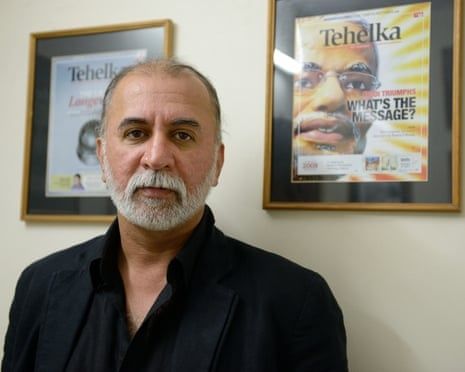
An Indian appeals court has convicted Tarun Tejpal, the 63-year-old founder and former editor of Tehelka magazine, of raping a junior colleague in a significant reversal of a 2021 acquittal. The Bombay High Court's decision marks a major development in a case that has cast a long shadow over Indian journalism and the media industry's treatment of workplace sexual assault. Tejpal, who has consistently denied the allegations throughout the decade-long legal proceedings, now faces sentencing as the appellate bench rejected the trial court's earlier exoneration.
The alleged assault occurred in November 2013 when Tejpal, then at the height of his influence as editor of Tehelka, entered a hotel lift at a five-star establishment in Goa during an event and attacked the young journalist working under his supervision. The incident was reported to authorities and Tejpal was arrested, spending seven months in custody before securing bail from India's Supreme Court. The case immediately attracted intense media scrutiny given Tejpal's prominent position in Indian journalism and the standing of Tehelka as a publication known for investigative reporting and social commentary.
The original trial court in Goa acquitted Tejpal in 2021 of all charges, including rape, sexual harassment, and wrongful restraint, a verdict that stunned many observers and raised questions about the adequacy of evidence presented during the trial. The Goa government, dissatisfied with the acquittal, filed an appeal before the Bombay High Court challenging the trial court's reasoning and verdict. On Thursday, August 6, the appeals bench set aside the acquittal and rendered a conviction, fundamentally altering the legal outcome of this protracted case.
Sunita Sawant, the police investigator who led the original probe, expressed vindication at the conviction, telling reporters that the verdict represented an important moment for women in the workplace. She highlighted the significance of the judgment in affirming that the survivor had fought for her rights throughout an extended and often gruelling legal process. The investigator's remarks underscored the broader implications of the case beyond the individuals involved, positioning the verdict as a statement about institutional accountability in the media and professional sectors more broadly.
Tejpal's ability to appeal the conviction to India's higher courts remains intact, ensuring that the legal battle may continue despite Thursday's verdict. His defence team is likely to pursue further appeals, potentially extending the case through multiple layers of India's judicial system. The extended legal timeline reflects a broader pattern in Indian sexual assault cases, where appeals and procedural challenges can stretch investigations and trials across many years, testing the endurance and resolve of survivors who must relive traumatic experiences through repeated courtroom appearances.
The timing of the original alleged assault in 2013 placed the Tejpal case within a broader reckoning with sexual violence in India. Just weeks before the Goa incident, the fatal gang rape of a 23-year-old student on a New Delhi bus in December 2012 had triggered massive public protests, international condemnation, and significant amendments to India's criminal laws governing sexual assault. That high-profile crime transformed the national conversation around women's safety and institutional responses to sexual violence. The Tejpal case emerged as another significant test of whether Indian institutions could effectively hold powerful men accountable for sexual misconduct.
For Tehelka magazine, the case proved catastrophic to its institutional credibility and standing. The publication, which had built its reputation on hard-hitting investigative journalism and coverage of social justice issues, found itself at the centre of a scandal that revealed troubling dynamics within its own walls. The revelation that such misconduct could occur within an organisation that publicly championed women's rights and social accountability created a profound irony that damaged the magazine's moral authority. The magazine continued publishing under new leadership following Tejpal's departure, but it has struggled to recover the cultural influence and journalistic standing it once commanded.
The conviction carries significance for Malaysian and Southeast Asian media sectors, where power imbalances in newsrooms and inadequate mechanisms for addressing sexual harassment remain widespread concerns. The case demonstrates that high-profile positions and institutional prestige provide no shield against accountability when proper legal mechanisms are invoked. It also highlights the prolonged nature of seeking justice through courts in the region, a reality that often discourages survivors from coming forward. The decade-long journey from alleged assault to conviction in the Tejpal case reflects systemic delays that characterise sexual assault litigation across South Asia.
The verdict also raises important questions about the adequacy of evidence presented in the trial court proceedings that led to acquittal. The appellate bench's willingness to overturn the lower court's verdict suggests that either new evidence was presented on appeal or the appellate judges interpreted existing evidence differently. This discrepancy between the trial and appellate judgments points to potential weaknesses in how sexual assault cases are initially investigated, prosecuted, or adjudicated at trial level. Such inconsistencies can undermine public confidence in the justice system and highlight the need for specialised training among trial judges handling sexual assault cases.
Workplace dynamics and power imbalances in Indian journalism were brought into sharp focus through this case. Tejpal's position as editor gave him authority over the survivor's professional future, creating a context in which reporting the assault carried career risks. Many journalists in India, particularly those from marginalised backgrounds, face similar power imbalances that discourage reporting misconduct. The case has contributed to broader conversations within Indian media organisations about institutional mechanisms for protecting journalists and ensuring that workplaces remain safe from sexual harassment and assault.
As Tejpal awaits sentencing, the judgment represents a moment of reckoning for Indian media and raises expectations that institutional accountability must extend to those wielding significant professional influence. The case will likely feature prominently in discussions about media ethics, workplace safety, and institutional responsibility in Indian journalism for years to come. For Southeast Asian newsrooms grappling with similar issues, the Tejpal conviction demonstrates both the possibility of accountability and the exhausting legal processes required to achieve it.

